Category
page 1Endangered diaspora languages

Yiddish
thumb|The opening page of the 1828 Yiddish-written Jewish holiday of Purim play Esther, oder die belohnte Tugend from [[Fürth (by Nürnberg), Bavaria]]

Romani
language of the Romani people belonging to the Indo-Aryan branch of the Indo-European language family

Judaeo-Spanish
Judaeo-Spanish or Judeo-Spanish (autonym , Hebrew script: ), also known as Ladino or Judezmo, Sephardi or Spaniolit, is a Romance language derived from Castilian Old Spanish.
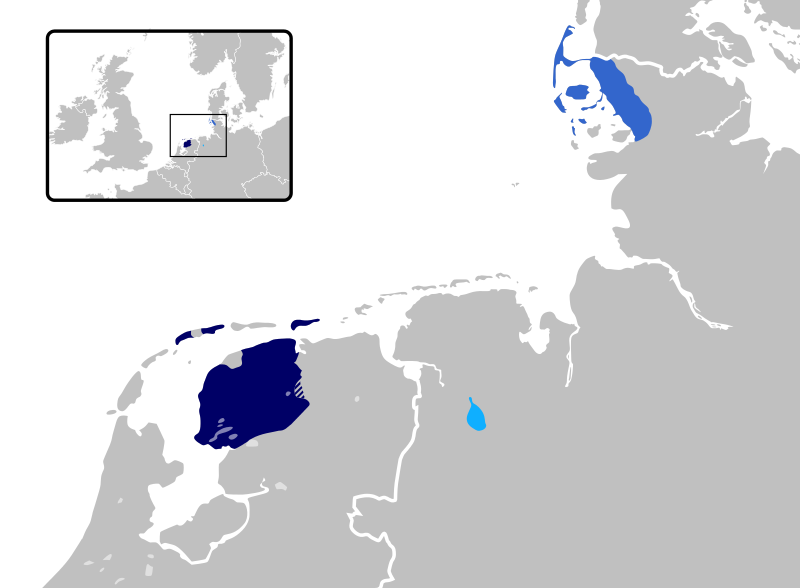
Saterland Frisian
last living dialect of the East Frisian language

Western Armenian
one of the two languages of the Armenian language branch

Istro-Romanian
Romance language of the Balkans
Arbëresh
Albanian dialect spoken in Italy
Badaga
southern Dravidian language (Tamil–Kannada branch) spoken mostly by people in the Nilgiri Hills of Southern India
Louisiana French
French variety spoken in Louisiana, United States
Griko
dialect of Italiot Greek
Judeo-Berber
group of languages
Calabrian Greek
variety of Italiot Greek spoken by the Griko people in Calabria
Algherese
dialect

Arvanitic
Arvanitika (; Arvanitika: , ; Greek: , ), also known as Arvanitic, is the variety of Albanian traditionally spoken by the Arvanites, a population group in Greece. Arvanitika was brought to Southern Greece during the late Middle Ages by Albanian settlers who moved south from their homeland in present-day Albania in several waves. The dialect preserves elements of medieval Albanian, while also being significantly influenced by the Greek language. Arvanitika is today endangered, as its speakers have been shifting to the use of Greek and most younger members of the community no longer speak it.
Judæo-Italian
language group
Judeo-Moroccan
Judeo-Arabic variety of Morocco
Pannonian Rusyn
Slavic language
Hunsrik
Hunsrik (natively Hunsrik , Hunsrückisch or Hunsrickisch and Portuguese hunsriqueano or hunsriqueano riograndense), also called Riograndese Hunsrik, ''''' or ''''', is a Moselle Franconian language derived primarily from the Hunsrückisch dialect of West Central German which is spoken in parts of South America. A co-official language in the Brazilian municipalities of Antônio Carlos, Santa Maria do Herval, and São João do Oeste, Hunsrik is spoken in the states of Rio Grande do Sul, Santa Catarina, and Paraná, as well as some regions of neighboring Paraguay and Argentina. It has been an integral
Colonia Tovar
Germanic language spoken in Venezuela
Gullah
creole language spoken by the Gullah people in US
Judeo-Malayalam
Judeo-Malayalam (, '; , ') is the traditional language of the Cochin Jews (also called Malabar Jews), from Kerala, in southern India, spoken today by a few dozen people in Israel and by fewer than 25 people in India. Judeo-Malayalam is the only known Dravidian Jewish language.
Canadian Gaelic
Scottish Gaelic dialects of eastern Canada

Slavomolisano
thumb|right|Bilingual street sign in Montemitro in Italian and Molise Croatian
Slavomolisano, also known as Molise Slavic or Molise Croatian (; ), is a variety of Shtokavian Croatian spoken by Italian Croats in three villages – Montemitro (), Acquaviva Collecroce () and San Felice del Molise () – in the province of Campobasso, in the Molise Region of southern Italy. There are fewer than 1,000 active speakers, and fewer than 2,000 passive speakers.
talian
dialect
Palenquero
Palenquero (sometimes spelled Palenkero) or Palenque () is a Spanish-based creole language spoken in Colombia. It is believed to be a mixture of Kikongo (a language spoken in present-day Central African countries of the Angola, Gabon, the Democratic Republic of the Congo, the Republic of the Congo) and Spanish. However, there is not sufficient evidence to indicate that Palenquero is strictly the result of a two-language contact. It could also have absorbed elements of local indigenous languages.
Haketia
Haketia ( Ḥakkītīyā; al-Ḥakītiya; ) (also written as Hakitia or Haquitía) is an endangered Jewish Romance language also known as Djudeo Spañol, Ladino Occidental, or Western Judaeo-Spanish. It was historically spoken by the North African Sephardim in the Moroccan cities of Tétouan, Tangier, Asilah, Larache, Chefchaouen, Ksar el-Kebir, and the Spanish towns of Ceuta and Melilla. Tetuani Ladino was also spoken in Oran, Algeria. One of the distinctions between Ladino and Haketia (Haquetia) is that the latter incorporates Moroccan Arabic.
Judeo-Tunisian Arabic
language
Texas German
group of German language dialects spoken by descendants of German immigrants who settled in Texas in the mid-19th century
Hulaulá
modern Jewish Aramaic language, often called Neo-Aramaic or Judeo-Aramaic
Gallo-Italic of Sicily
group of Gallo-Italic dialects spoken in central-eastern Sicily
Lishanid Noshan
language
Kanikkaran
language
Lishana Deni
language
Chipilo Venetian dialect
dialect of the Venetian language spoken in Chipilo, Mexico
Sankethi
South Dravidian language closely related to Tamil
Faetar
Franco-Provençal dialect group spoken in two communities in the province of Foggia, Italy
Italiot Greek
language
Patuet
Patuet (from the French ) is the dialect of the Catalan language that was spoken in the Maghreb, mainly in Algeria, during the French administration. Mainly of Menorca, Alicante and Roussillon origin, it was characterized by French and Arabic influences and, in turn, influenced the French slang of the pied-noir. After the Pieds-noirs exodus that followed the independence of Algeria, in 1962, most of the population was dispersed throughout France (majority), Roussillon and a minority in the province of Alicante, Spain. The Fort-de-l'Eau Neighborhood Association holds an annual meeting of Algeri