Category
page 1Endoparasites
Strepsiptera
Strepsiptera (), from Ancient Greek στρέψις (strépsis), meaning "turning around", and πτερόν (pterón), meaning "wing", are an order of insects with eleven extant families that include about 600 described species. They are endoparasites of other insects, such as bees, wasps, leafhoppers, silverfish, and cockroaches. Females of most species never emerge from the host after entering its body, finally dying inside it. The early-stage larvae do emerge because they must find an unoccupied living host, and the short-lived males must emerge to seek a receptive female in her host. They are believed to

Rafflesiaceae
thumb|Illustration of Rhizanthes (then known as Brugmansia), a Rafflesiaceae species from Der Bau und die Eigenschaften der Pflanzen (1913).

Apicomplexa
The Apicomplexa (also called Apicomplexia; single: apicomplexan) are organisms of a large phylum of mainly parasitic alveolates. Most possess a unique form of organelle structure that comprises a type of non-photosynthetic plastid called an apicoplastwith an apical complex membrane. The organelle's apical shape is an adaptation that the apicomplexan applies in penetrating a host cell.

Mitrastemon
Mitrastemon is a genus of two widely disjunct species of parasitic plants. It is the only genus within the family Mitrastemonaceae. Mitrastemon species are root endoparasites, which grow on Fagaceae. It is also a non-photosynthetic plant that parasitizes other plants such as Castanopsis sieboldii.

Medusozoa
Medusozoa is a clade in the phylum Cnidaria, and is often considered a subphylum. It includes the classes Hydrozoa, Scyphozoa, Staurozoa and Cubozoa. Medusozoans are distinguished by having a medusa stage in their often complex life cycle, a medusa typically being an umbrella-shaped body with stinging tentacles around the edge. With the exception of some Hydrozoa (and Polypodiozoa), all are called jellyfish in their free-swimming medusa phase.
==Naming==
The Medusozoa are named after Medusa from ancient Greek mythology.

Eucestoda
Eucestoda is the larger of the two subclasses of flatworms in the class Cestoda (the other subclass being Cestodaria) whose members are commonly known as tapeworms. Larvae have six posterior hooks on the scolex (head), in contrast to the ten-hooked Cestodaria. All tapeworms are endoparasites of vertebrates, living in the digestive tract or related ducts. Examples are the pork tapeworm (Taenia solium) with a human definitive host, and pigs as the secondary host, and Moniezia expansa, the definitive hosts of which are ruminants.

Mediterranean flour moth
species of insect

Ditylenchus dipsaci
species of worm

Mermithidae
Mermithidae is a family of nematode worms that are endoparasites in arthropods. As early as 1877, Mermithidae was listed as one of nine subdivisions of the Nematoidea. Mermithidae are confused with the horsehair worms of the phylum Nematomorpha that have a similar life history and appearance.

Conops flavipes
species of fly
Rozella
Rozella is a fungal genus of obligate endoparasites of a variety of hosts, including Oomycota, Chytridiomycota, and Blastocladiomycota. Rozella was circumscribed by French mycologist Marie Maxime Cornu in 1872. Considered one of the earliest diverging lineages of fungi, the widespread genus contains 27 species, with the most well studied being Rozella allomycis. Rozella is a member of a large clade of fungi referred to as the Cryptomycota/Rozellomycota. While some can be maintained in dual culture with the host, most have not been cultured, but they have been detected, using molecular techniqu

Ibaliidae
The Ibaliidae are a small family of the hymenopteran superfamily Cynipoidea. Ibaliidae differ from most of the cynipoids by the larvae being parasitoids on other wasp larvae in the group Siricidae. The Ibaliidae comprise three extant genera of fairly large wasps, with a total of 20 species, and is a sister group to the rest of the cynipoids except the small subfamily Austrocynipidae.

Conops ceriaeformis
species of fly
intracellular parasite
bacterium cause of many diseases
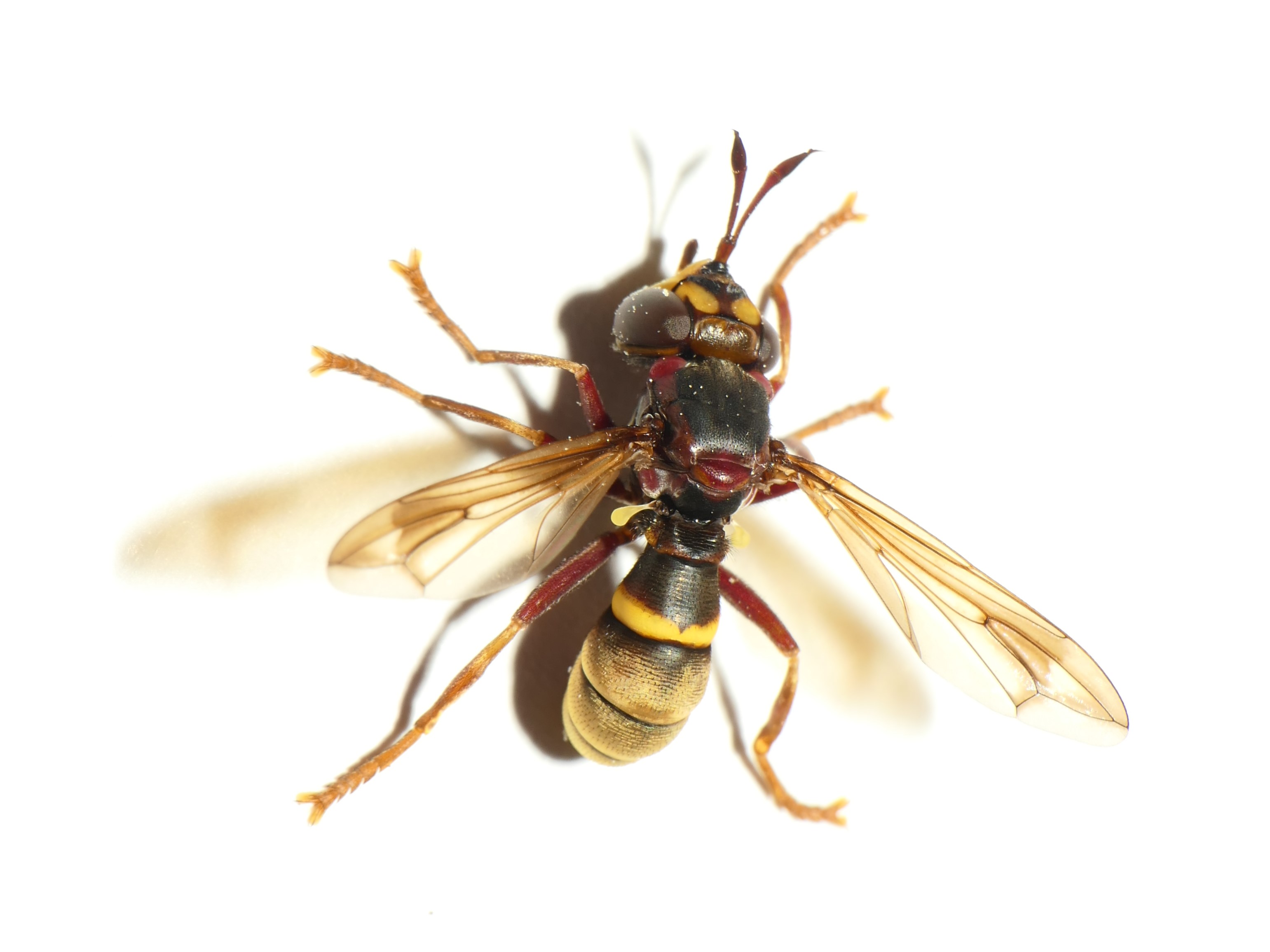
Conops vesicularis
species of insect
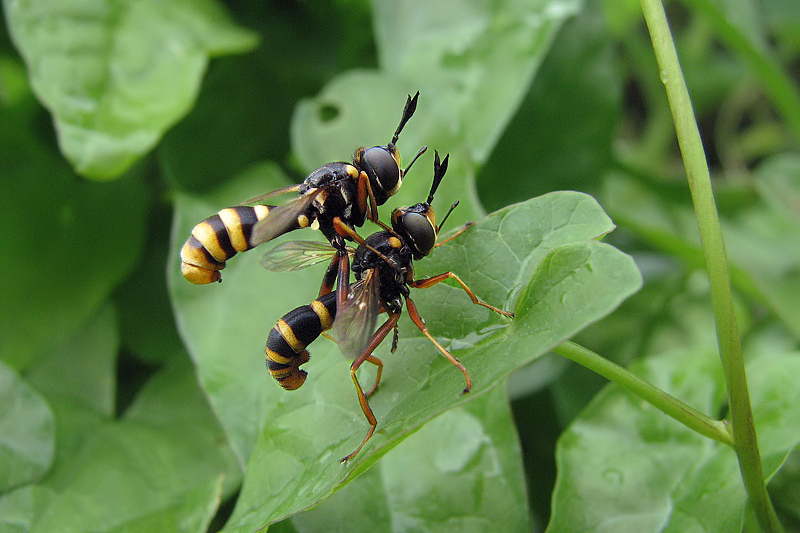
Conops quadrifasciatus
species of insect
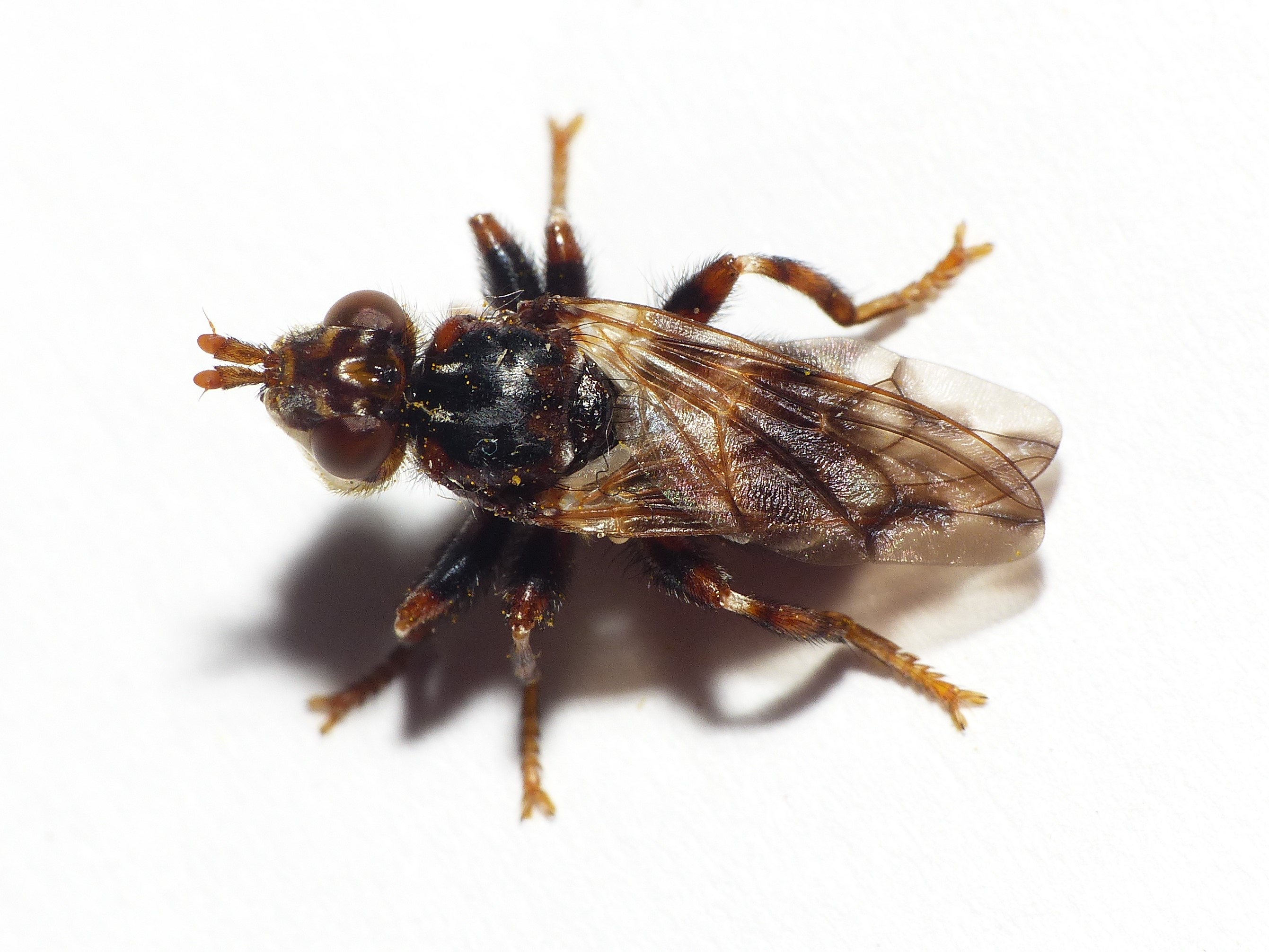
Myopa buccata
species of insect
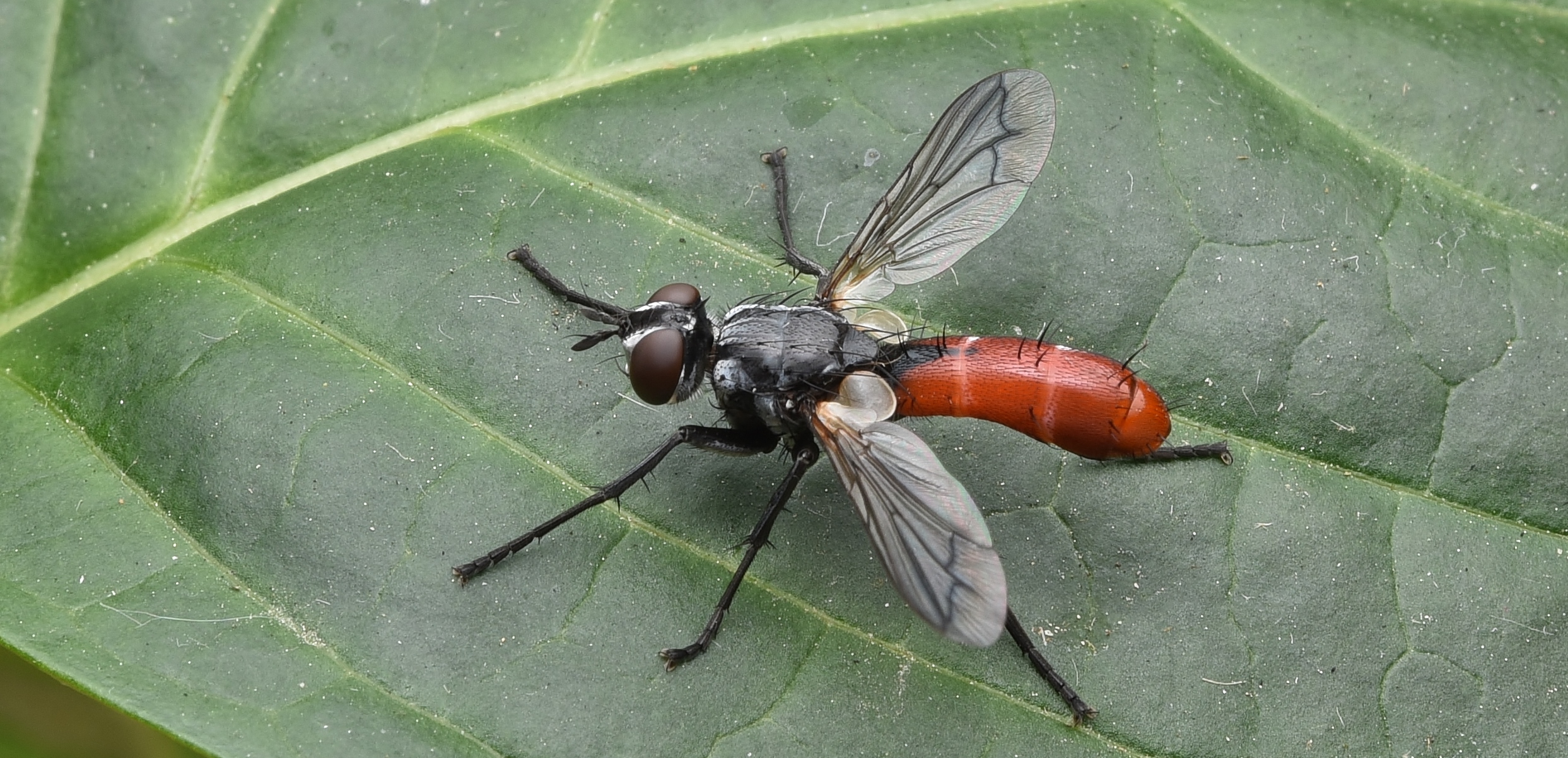
Cylindromyia bicolor
species of insect

Polystoma integerrimum
species of worm
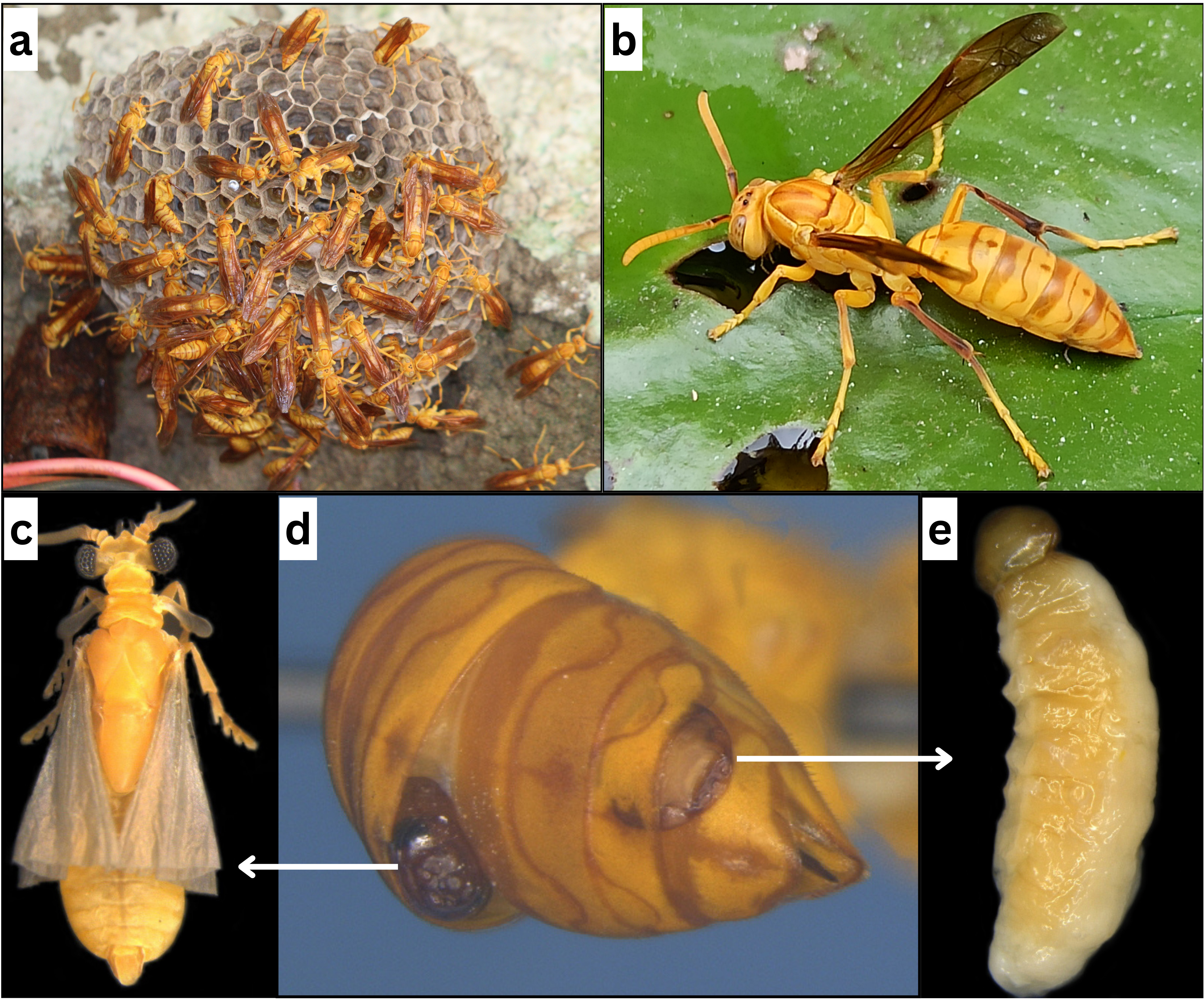
Xenos
genus of insects
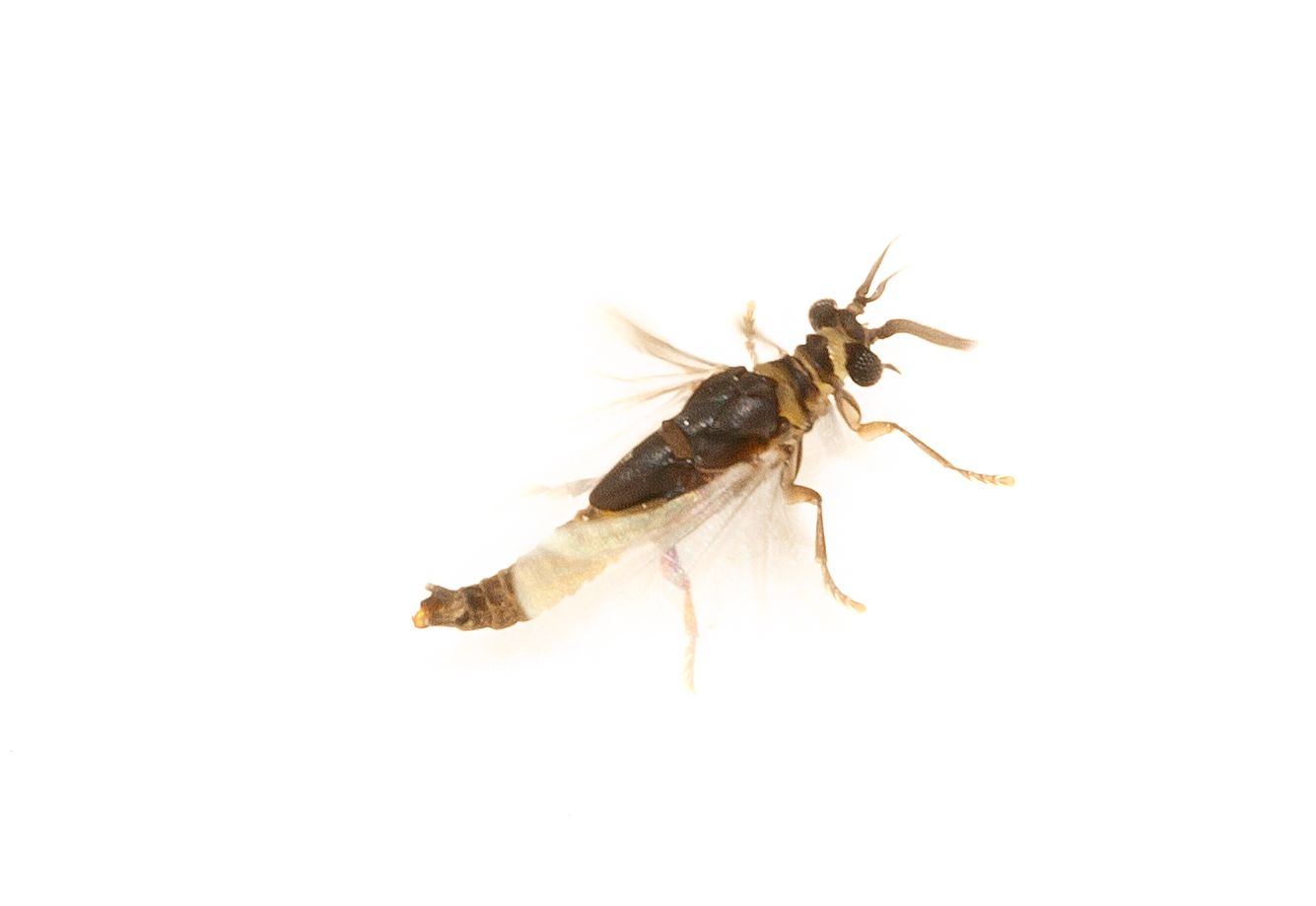
Xenos vesparum
species of insect

Sicus ferrugineus
species of insect

Thecophora atra
species of insect
Filicollis anatis
species of worm
Loxothylacus panopaei
species of crustacean

Radopholous similis
species of worm

Conops strigatus
species of fly
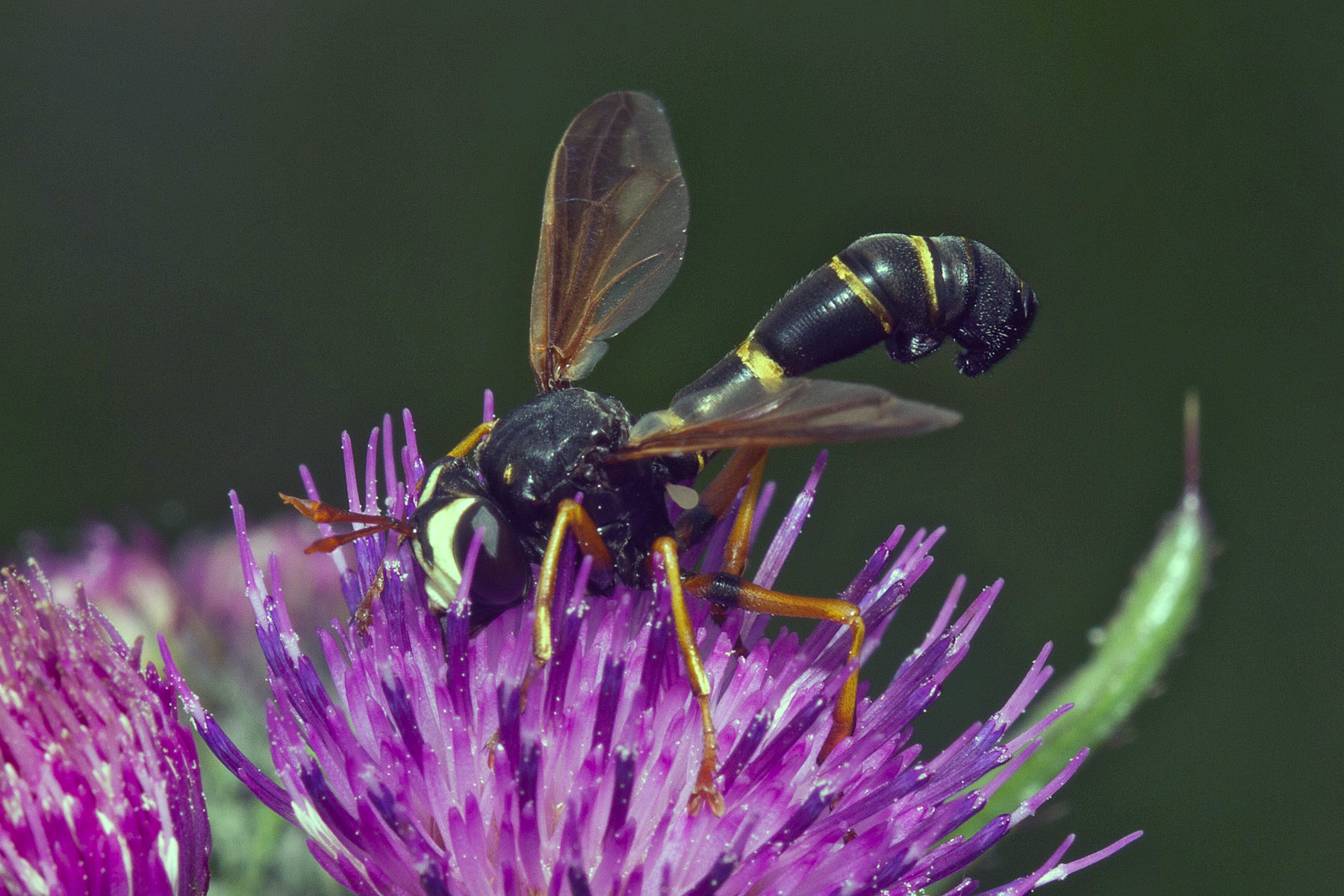
Physocephala nigra
species of fly
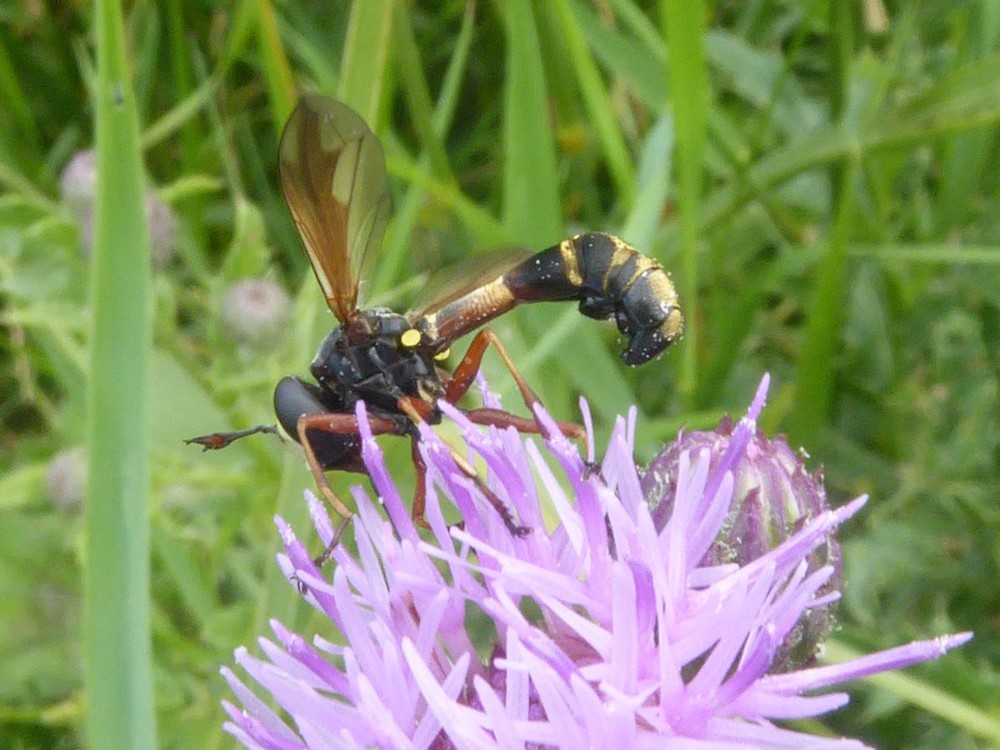
Physocephala rufipes
species of fly

Banchinae
Banchinae is a subfamily of ichneumonid parasitoid wasps containing about 1,500 species; the genera Glypta and Lissonota are very large. The three tribes (Banchini, Glyptini and Atrophini) are all distributed worldwide.
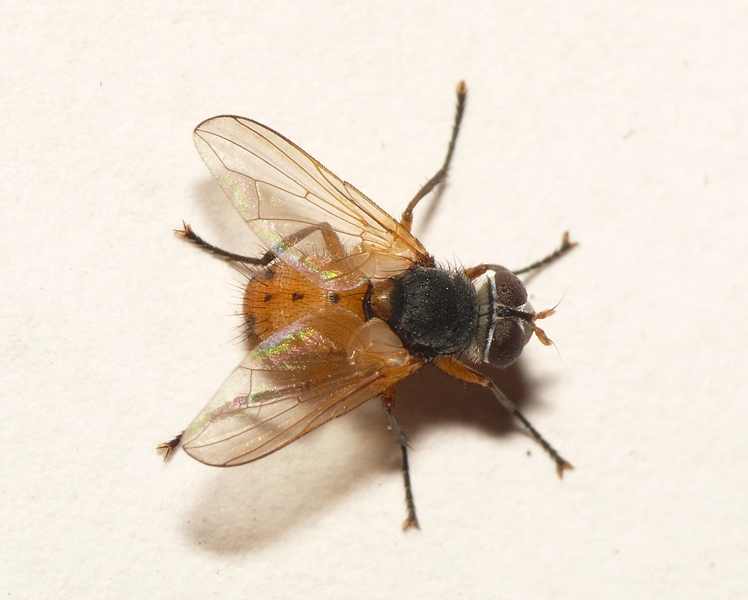
Subclytia rotundiventris
species of insect
Acrocera orbiculus
species of small-headed fly
Booponus
Booponus is a genus of blow flies in the family Calliphoridae. Most species are endoparasites of large mammals.

Encarsia perniciosi
species of insect
Cylindromyia propusilla
species of insect
Senostoma
Senostoma is a genus of parasitoid tachinid flies in the family Tachinidae. Endemic to Australasia, the flies are medium-sized, bristly, and long-legged.

Comperiella bifasciata
species of insect

Myopa dorsalis
species of insect

Stephanostomum baccatum
species of worm
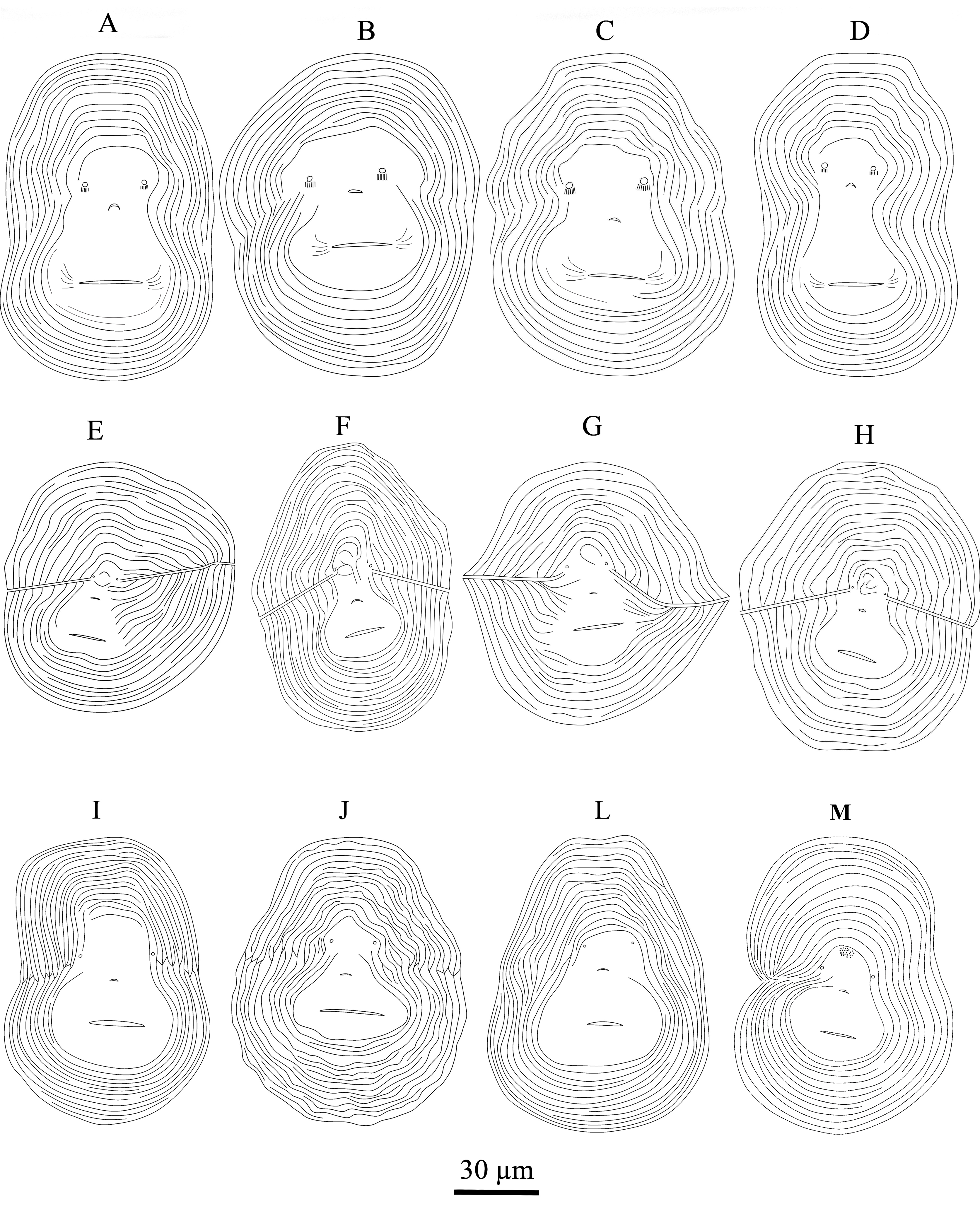
Meloidogyne enterolobii
species of worm

Thompsonia
genus of crustaceans
Candidatus Sukunaarchaeum mirabile
'"Candidatus Sukunaarchaeum mirabile"' (provisional name) is a species of archaea of which only the DNA is known, but which already presents several particularities: it is a holoparasite of the dinoflagellate Citharistes regius and is the first known parasitic archaean. Its DNA, the smallest known for an archaeon, codes for only proteins necessary for reproduction.
Pratylenchus brachyurus
species of worm

Homalometron pallidum
species of worm
Acrocerinae
Acrocerinae is a subfamily of small-headed flies in the family Acroceridae. Their larvae are endoparasites of araneomorph spiders, with the exception of Carvalhoa appendiculata which can develop as ectoparasitoids on their host spiders. Traditionally, the subfamily included the genera now placed in Cyrtinae and Ogcodinae, but the subfamily in this sense was found to be polyphyletic and was split up in 2019.