Category
page 1English poems

Manfred
closet drama by Lord Byron

Bilbo's Last Song
poem
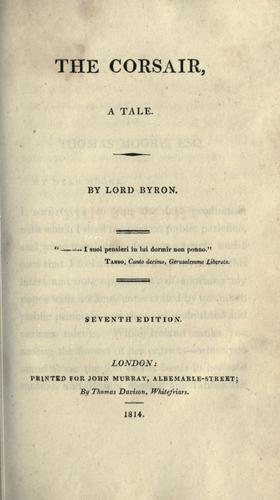
The Corsair
1814 tale in verse by George Gordon Byron

The Giaour
poem by Lord Byron

She Walks in Beauty
poem written by Lord Byron in 1814

Adonais
thumb|1821 title page, Pisa, Italy: Ollier.
Adonais: An Elegy on the Death of John Keats, Author of Endymion, Hyperion, etc. () is a pastoral elegy written by Percy Bysshe Shelley for John Keats in 1821, and widely regarded as one of Shelley's best and best-known works. The poem, which is in 495 lines in 55 Spenserian stanzas, was composed in the spring of 1821 immediately after 11 April, when Shelley heard of Keats's death (seven weeks earlier). It is a pastoral elegy, in the English tradition of John Milton's Lycidas. Shelley had studied and translated classical elegies. The title of the poe

The Bride of Abydos
poem by Lord Byron
The Tragicall Historye of Romeus and Juliet
narrative poem by Arthur Brooke

Parisina
poem of Lord Byron
Something old
traditional rhyme

Astrophel and Stella
sonnet sequence by Philip Sidney
Lord Randall
traditional song
The Complaint: or Night-Thoughts on Life, Death, & Immortality
thumb
thumb|A page from Night-Thoughts, illustrated by William Blake

The Siege of Corinth
1816 poem written by Lord Byron

For the Fallen
poem by Laurence Binyon
I Wanna Be Yours
poem by John Cooper Clarke

The Spider and the Fly
1829 poem by Mary Howitt

Beppo
1817 poem written by Lord Byron

Queen Mab
poem by Percy Bysshe Shelley

To the Virgins, to Make Much of Time
1648 poem by Robert Herrick

Darkness
poem written by Lord Byron

The Prophecy of Dante
1821 poem by Lord Byron

Hours of Idleness
book by Lord Byron

Hudibras
alt=An engraving depicting Hudibras overcoming a fiddle player and placing him in the stocks. Above the stocks, the fiddle and its case are displayed.|thumb|One of twelve engravings illustrating the adventures of Hudibras by William Hogarth.
Hudibras () is a vigorous satirical poem, written in a mock-heroic style by Samuel Butler (1613–1680), and published in three parts in 1663, 1664 and 1678. The action is set in the last years of the Interregnum, around 1658–60, immediately before the restoration of Charles II as king in May 1660.
Mounseer Nongtongpaw
poem