Category
page 1English Renaissance plays

Romeo and Juliet
tragedy by William Shakespeare

Hamlet
The Tragedy of Hamlet, Prince of Denmark, often shortened to Hamlet (), is a tragedy written by William Shakespeare sometime between 1599 and 1601. It is Shakespeare's longest play. Set in Denmark, the play depicts Prince Hamlet and his attempts to exact revenge against his uncle, Claudius, who has murdered Hamlet's father in order to seize his throne and marry Hamlet's mother.

Macbeth
upright=1.2|thumb|A poster for a American production of Macbeth, starring Thomas W. Keene. Depicted, counter-clockwise from top-left, are: Macbeth and Banquo meeting the witches, the aftermath of the murder of Duncan, Banquo's ghost, Macbeth dueling Macduff, and Macbeth.

Othello
thumb|Othello and Desdemona in Venice by [[Théodore Chassériau, 1850]]
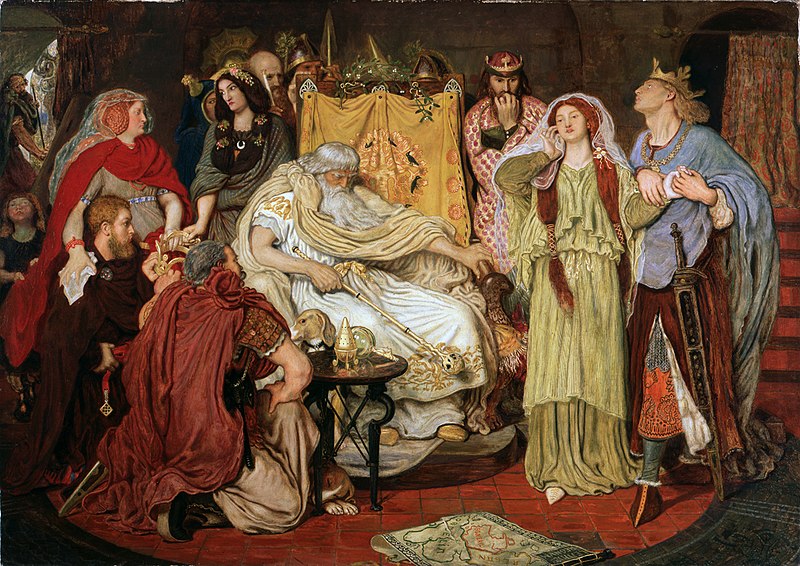
King Lear
tragedy by William Shakespeare

A Midsummer Night's Dream
play by William Shakespeare

The Tempest
play by William Shakespeare

Julius Caesar
play by William Shakespeare

Twelfth Night
comedy by William Shakespeare

As You Like It
pastoral comedy by William Shakespeare

Antony and Cleopatra
tragedy by William Shakespeare

The Two Gentlemen of Verona
play by William Shakespeare

The Taming of the Shrew
play by Shakespeare

The Comedy of Errors
early play by William Shakespeare

Much Ado About Nothing
comedy play by William Shakespeare

Richard III
Shakespearean history play
.jpg)
Coriolanus
thumb|John Philip Kemble as Coriolanus by [[Thomas Lawrence, 1798]]

Titus Andronicus
play by Shakespeare

Measure for Measure
play by Shakespeare

Timon of Athens
play by Shakespeare
Troilus and Cressida
play by William Shakespeare

The Winter's Tale
play by Shakespeare
Henry V
play by Shakespeare

The Merry Wives of Windsor
play written by Shakespeare

All's Well That Ends Well
play by Shakespeare
Love's Labour's Lost
comedy play by William Shakespeare
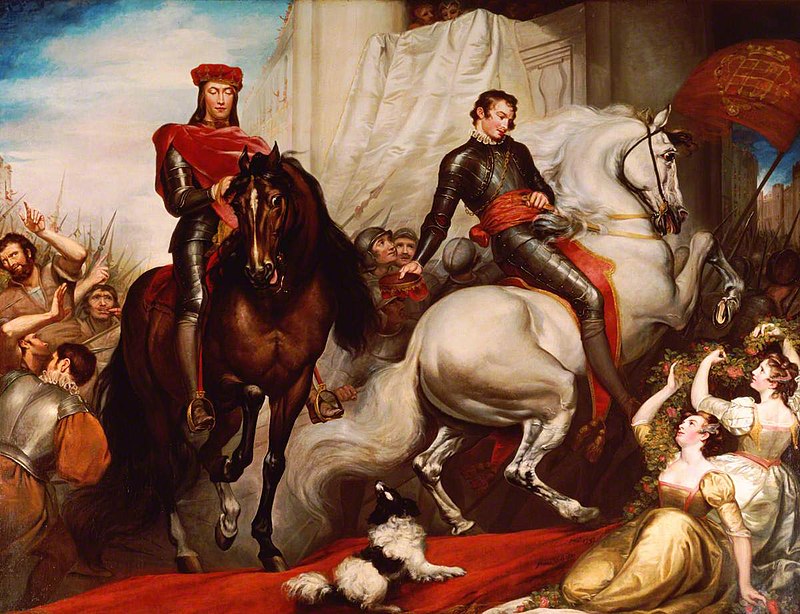
Richard II
history play by William Shakespeare

Henry IV, Part 1
play by Shakespeare

Cymbeline
thumb|right|302x302px|Imogen (Cymbeline)|Imogen in her bedchamber in Act II, scene ii, when Iachimo witnesses the mole under her breast. Painting by [[Wilhelm Ferdinand Souchon, 1872]]
Cymbeline (), also known as The Tragedie of Cymbeline or Cymbeline, King of Britain, is a play by William Shakespeare set in Ancient Britain () and based on legends that formed part of the Matter of Britain concerning the early historical Celtic British King Cunobeline. Although it is listed as a tragedy in the First Folio, modern critics often classify Cymbeline as a romance or even a comedy. Like Othello and '
King John
play by Shakespeare
Pericles, Prince of Tyre
play written in part by William Shakespeare
Henry VIII
history play by Shakespeare
Henry IV, Part 2
play by Shakespeare

The Tragical History of Doctor Faustus
play by Christopher Marlowe
Henry VI, Part 1
play by Shakespeare
The Two Noble Kinsmen
play partly written by William Shakespeare
Henry VI, Part 2
play by Shakespeare
Henry VI, Part 3
play by Shakespeare

The Jew of Malta
play by Christopher Marlowe
Edward III
play often attributed to Shakespeare

Volpone
thumb|An illustration for an 1898 edition of Volpone by Aubrey Beardsley.
Volpone (, Italian for "sly fox") is a comedy play by English playwright Ben Jonson first produced in 1605–1606, drawing on elements of city comedy and beast fable. A merciless satire of greed and lust, it remains Jonson's most-performed play, and it is ranked among the finest Jacobean era comedies.

The Spanish Tragedy
Play by Thomas Kyd

'Tis Pity She's a Whore
tragedy written by John Ford

Edward II
play by Christopher Marlowe

Tamburlaine
thumb|right|An Marlowe portrait|anonymous portrait, often believed to show Christopher Marlowe. [[Corpus Christi College, Cambridge.]]
Tamburlaine the Great is a play in two parts by Christopher Marlowe. It is loosely based on the life of the Central Asian emperor Timur (Tamerlane/Timur the Lame, d. 1405). Written in 1587 or 1588, the play is a milestone in Elizabethan public drama; it marks a turning away from the clumsy language and loose plotting of the earlier Tudor dramatists, and a new interest in fresh and vivid language, memorable action, and intellectual complexity. Along with Thomas

The Duchess of Malfi
1623 tragedy by John Webster

Ur-Hamlet
The Ur-Hamlet (the German prefix Ur- means "original") is a play by an unknown author, thought to be either Thomas Kyd or William Shakespeare, dated by scholars to the second half of 1587. No copy of the play survives today. The play was staged in London, more specifically at The Theatre in Shoreditch as recalled by Elizabethan author Thomas Lodge. It includes a character named Hamlet; the only other known character from the play is a ghost who, according to Thomas Lodge in his 1596 publication Wits Misery and the Worlds Madnesse, cries "Hamlet, revenge!"
The History of Cardenio
lost Shakespearean play, mostly rewritten as "Double Falsehood" by another playwright

Sir Thomas More
Eponymous Elizabethan play by Anthony Munday

Dido, Queen of Carthage
play by Marlowe
Gorboduc
English play from 1561

The Massacre at Paris
play by Christopher Marlowe
Stationers' Register
record book of the Stationers' Company of London
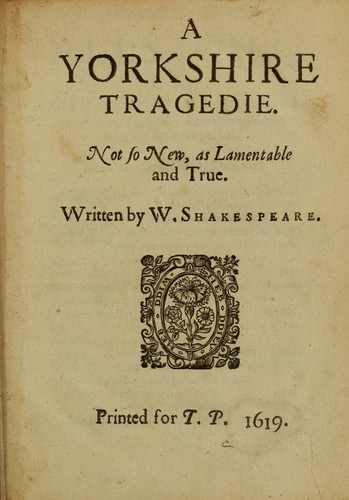
A Yorkshire Tragedy
play probably mistakenly attributed to Shakespeare
The Alchemist
play written by Ben Jonson

The Revenger's Tragedy
1607 play written by Thomas Middleton
Arden of Faversham
play

Thomas Lord Cromwell
play (probably mistakenly) attributed to Shakespeare

revenge play
dramatic genre in which the protagonist seeks revenge

Comus
masque by Milton