Category
page 1Ephesus

Ephesus
Ephesus ( ; ; ; may ultimately derive from ) was an ancient Greek city on the coast of Ionia, in present-day Selçuk in İzmir Province, Turkey. It was built in the 10th century BC on the site of Apasa, a city-state that was also the capital of Arzawa, by Attic and Ionian Greek colonists. During the Classical Greek era, it was one of twelve cities that were members of the Ionian League. The city came under the control of the Roman Republic in 129 BC.
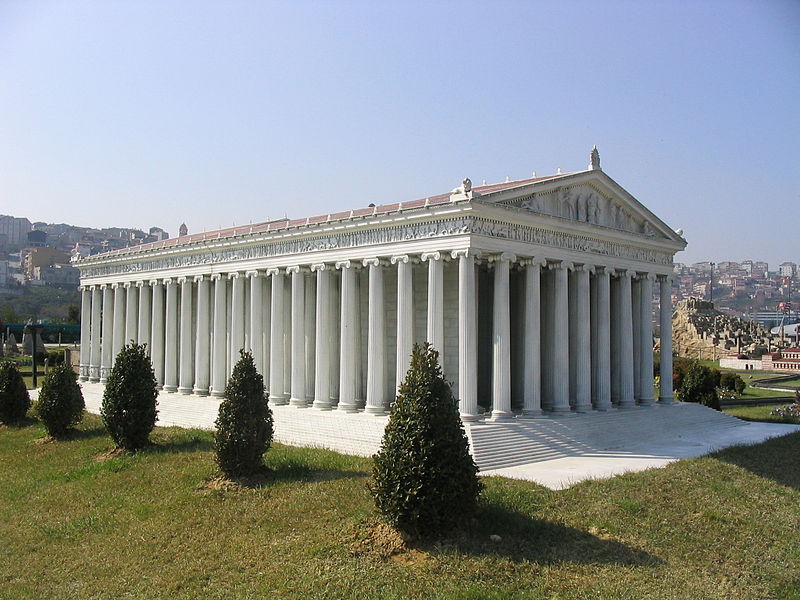
Temple of Ephesian Artemis
temple in Ephesus, one of the Seven Wonders of the Ancient World

Assumption of Mary
the bodily taking up of the Virgin Mary into Heaven at the end of her earthly life, dogma of the Catholic Church

First Council of Ephesus
ecumenical council in Ephesus in June–July 431, convened by Emperor Theodosius II
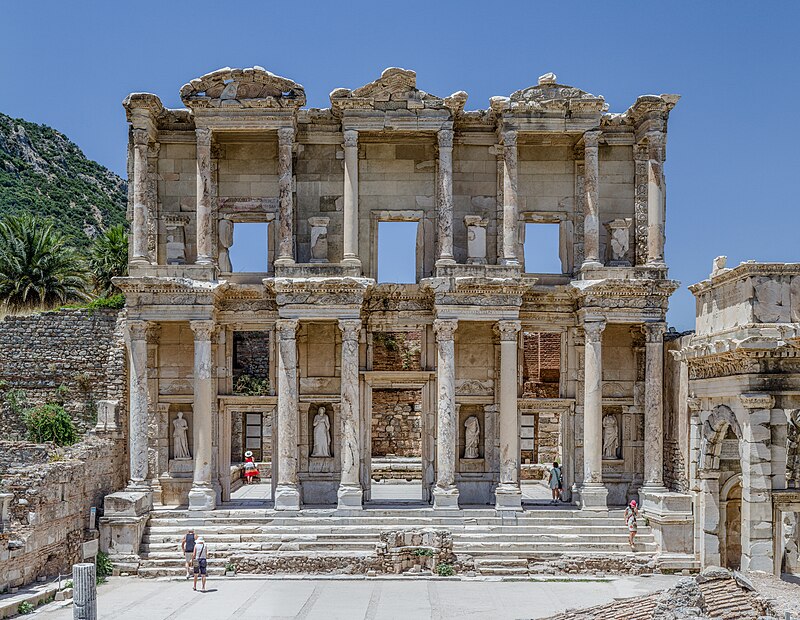
Library of Celsus
library constructed over the burial of the Roman senator Ti. Iulius Celsus Polemaeanus in Ephesus
House of the Virgin Mary
Catholic and Muslim shrine located on Mt. Koressos
Second Council of Ephesus
Christian synod in 449 CE
Miles gloriosus
ancient Roman play by Plautus

Timarete
thumb|right|150px| Detail of a miniature of Thamyris (Timarete) painting her picture of the goddess Diana, N. France,(Rouen) 15th century .
Timarete () (or Thamyris, Tamaris, Thamar; 5th century BC), was an ancient Greek painter.
Basilica of St. John
church building located on the Ayasoluk by Ephesus
.jpg)
Şirince
Şirince (), also known as Kirkintzes (), is a neighbourhood in the municipality and district of Selçuk, İzmir Province, Turkey. Its population is 456 (2022). It is about east of the town Selçuk and about 8 kilometres from Ephesus. The area around the village has history dating back to Hellenistic period (323–31 BC). Pottery finds made around the village between 2001 and 2002 by Ersoy and Gurler indicate the presence of seven villages and nine farmsteads in the area dating back to ancient and medieval times. On the road up you will see the remains of several Roman aqueducts as the village was a
.JPG)
Chersiphron
thumb|150px|Model of the Temple of Artemis at [[Ephesus]]
Chersiphron (; ; fl. 6th century BC) was a Greek architect from Knossos in ancient Crete who designed the Temple of Artemis at Ephesus. The original temple was destroyed in the 7th century BC, and about 550 BC Chersiphron and his son Metagenes began a new temple, the Artemision, which became one of the Seven Wonders of the Ancient World in each of its three manifestations. It was burned by Herostratus in July 356 BC and rebuilt again.
Ephesus Archaeological Museum
museum in Selçuk District
Church of Mary
very large church complex and adjoining buildings in Ephesus
Metropolis of Ephesus
vacant ecclesiastical diocese in Anatolia

Metagenes
thumb | right | alt=Side view of a reconstructed model of the Metagenes method for moving heavy stones. Ancient Beit Shean, Scythopolis | Side view of a reconstructed model of the Metagenes method for moving heavy stones. Ancient Beit Shean, Scythopolis
Metagenes () was a man in ancient Crete, son of the Greek Cretan architect Chersiphron, and was also an architect himself.
Ephesian Tale
ancient Greek novel by Xenophon of Ephesos
Manuel Philes
Byzantine poet
Battle of Ephesus
1147 battle during the Second Crusade
authorship of the Johannine works
overview about the authorship of the Johannine works
Acts 19
Acts of the Apostles, chapter 19
Ephesos Museum
museum in Austria
Parthian Monument
monument with relief sculpture from the archaeological site of Ephesus
Third Council of Ephesus
council in Ephesus, 475 CE
book burning at Ephesus
event in the New Testament
Ephesia Grammata
ancient Greek magical formula from the 5th or 4th century BCE
Olimpie
Olimpie (also spelled Olympie) is an opera in three acts by Gaspare Spontini. The French libretto, by Armand-Michel Dieulafoy and Charles Brifaut, is based on the by Voltaire (1761). Olimpie was first performed on 22 December 1819 by the Paris Opéra at the Salle Montansier. When sung in Italian or German, it is usually given the title Olimpia.
Ayasuluk Hill
Ancient mound and part of Ephesus UNESCO World Heritage Site
Temple of the Emperors (Ephesus)
temple constructed on two-storied substructions to the west of the State Agora in Ephesus
Hypatius of Ephesus
metropolitan of Ephesus