Category
page 1Epistolary novels

Frankenstein
Frankenstein; or, The Modern Prometheus is an 1818 Gothic novel written by English author Mary Shelley. Frankenstein tells the story of Victor Frankenstein, a young scientist who creates a sapient creature from different body parts in an unorthodox scientific experiment. Shelley started writing the story when she was 18 and staying in Bath, and the first edition was published anonymously in London on 1 January 1818, when she was 20. Her name first appeared in the second edition, which was published in Paris in 1821.
.jpg)
Dracula
Dracula is an 1897 Gothic horror novel by Irish author Bram Stoker. The narrative is related through letters, diary entries, and newspaper articles. It has no single protagonist and opens with English solicitor Jonathan Harker taking a business trip to stay at the castle of a Transylvanian nobleman, Count Dracula. Revealing his true nature as a vampire, Dracula moves to England and plagues the seaside town of Whitby. Harker joins a group led by Abraham Van Helsing who hunt and kill the Count.

The Sorrows of Young Werther
novel by Johann Wolfgang von Goethe

Sophie's World
1991 novel by Jostein Gaarder

epistolary novel
novel written as a series of letters

The Sign of Four
novel by Arthur Conan Doyle

The Tenant of Wildfell Hall
1848 novel by Anne Brontë

Poor Folk
1846 novel by Fyodor Dostoyevsky

Flowers for Algernon
short story by Daniel Keyes, later expanded into a novel
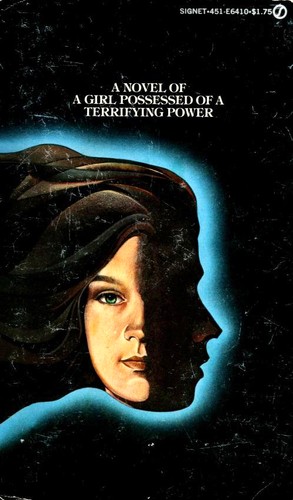
Carrie
1974 novel by Stephen King

Les Liaisons dangereuses
1782 epistolary novel by Pierre Choderlos de Laclos
Persian Letters
1721 literary work by Charles-Louis de Secondat, baron de Montesquieu

The Moonstone
novel by Wilkie Collins

Cloud Atlas
2004 novel by David Mitchell

The Perks of Being a Wallflower
1999 coming-of-age epistolary novel

Lady Susan
novel by Jane Austen
Julie, or the New Heloise
book by Jean-Jacques Rousseau

Daddy-Long-Legs
American epistolary novel
Memoirs of Hadrian
novel by Marguerite Yourcenar
World War Z
2006 novel by Max Brooks
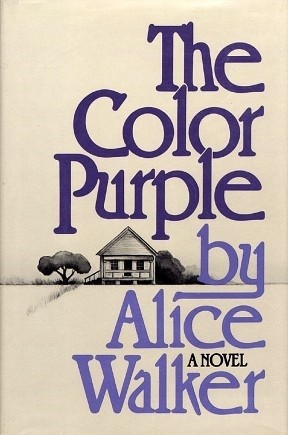
The Color Purple
1982 novel by Alice Walker

The Collector
novel by John Fowles

The Woman in White
novel by Wilkie Collins

The Screwtape Letters
satirical, epistolary Christian apologetic novel by C. S. Lewis

The White Tiger
book by Aravind Adiga
Pamela; or, Virtue Rewarded
1740 novel by Samuel Richardson

Gone Girl
2012 novel by Gillian Flynn
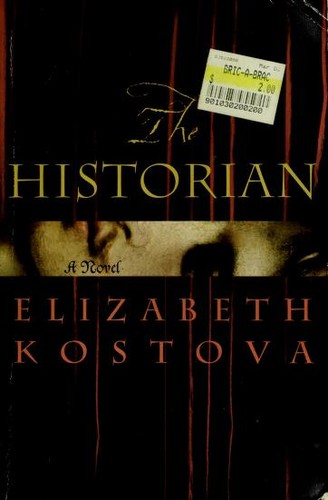
The Historian
2005 novel by Elizabeth Kostova

Hyperion
c. 1797 novel by Friedrich Hölderlin

The Prestige
1995 novel by Christopher Priest

Anne of Windy Poplars
novel by Lucy Maud Montgomery

House of Leaves
2000 novel by Mark Z. Danielewski

We Need to Talk About Kevin
2003 novel by Lionel Shriver
Clarissa
18th century epistolary novel by Samuel Richardson
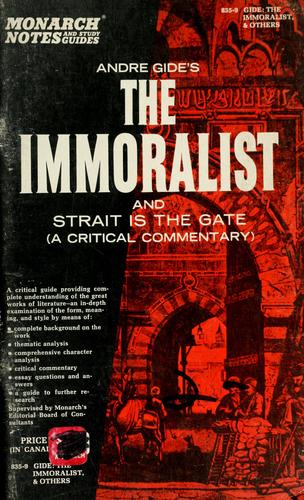
Strait is the Gate
1909 novel by André Gide
Letters of a Portuguese Nun
book published anonymously by Claude Barbin

Water for Elephants
2006 novel by Sara Gruen

Poor Things
1992 novel by Alasdair Gray
Mémoires de deux jeunes mariées
book by Honoré de Balzac

Herzog
novel by Saul Bellow
Ohrid Apostle
12th-century Glagolitic manuscript

Gilead
2004 novel by Marilynne Robinson

Aline and Valcour
1793 novel by Marquis de Sade

Piranesi
2020 novel by Susanna Clarke
The Tale of Two Lovers
1444 novel by Enea Silvio Piccolomini

The Passage
2010 novel by Justin Cronin
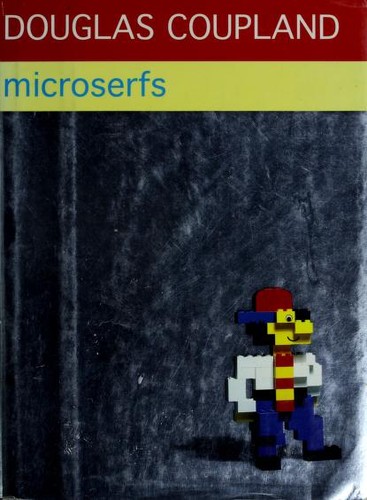
Microserfs
Microserfs is an epistolary novel by Douglas Coupland published by HarperCollins in 1995. It first appeared in short story form as the cover article for the January 1994 issue of Wired magazine and was subsequently expanded to full novel length. Set in the early 1990s, it captures the state of the technology industry before Windows 95, and anticipates the dot-com bubble of the late 1990s.

Doctor Glas
novel by Hjalmar Söderberg

Parable of the Sower
1993 science fiction novel by Octavia E. Butler

The Power of Sympathy
book by William Hill Brown

Evelina
'''''Evelina, or the History of a Young Lady's Entrance into the World''''' is a novel written by English author Frances Burney and first published in 1778. Although published anonymously, its authorship was revealed by the poet George Huddesford in what Burney called a "vile poem".

The Ides of March
novel by Thornton Wilder
The Plant
novel by Stephen King
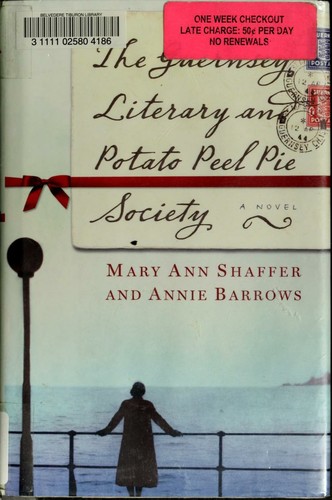
The Guernsey Literary and Potato Peel Pie Society
book by Mary Ann Shaffer

Where'd You Go Bernadette
2012 novel by Maria Semple

An Apology for the Life of Mrs. Shamela Andrews
novel by Henry Fielding

Redgauntlet
Redgauntlet is an 1824 historical novel by Sir Walter Scott, one of the Waverley novels, set primarily in Dumfriesshire, southwest Scotland, in 1765, and described by Magnus Magnusson (a point first made by Andrew Lang) as "in a sense, the most autobiographical of Scott's novels." It describes a plot to start a fictional third Jacobite Rebellion, and includes "Wandering Willie's Tale", a famous short story which frequently appears in anthologies.
Dear Enemy
1915 novel by Jean Webster
The Romans
Doctor Who serial

Augustus
1972 novel by John Edward Williams