Category
page 1Error

error
An error (from the Latin , meaning 'to wander') is an inaccurate or incorrect action, thought, or judgement.

false friend
words in two languages that sound similar but have very different meanings

confirmation bias
tendency of people to favor information that confirms their beliefs or hypotheses
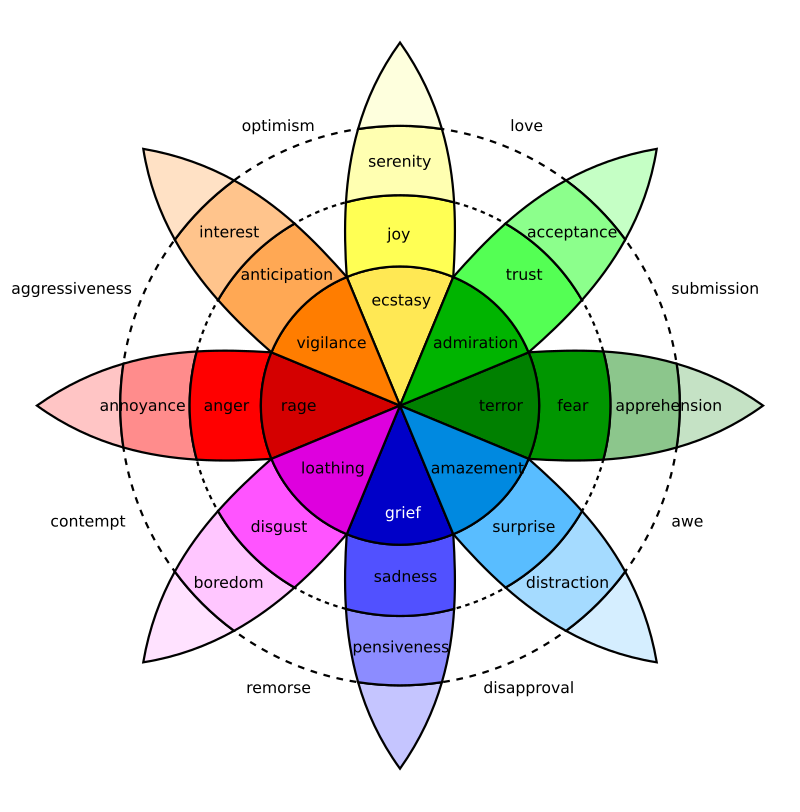
mental confusion
In psychology, confusion is the quality or emotional state of being bewildered or unclear. The term acute mental confusion is often used interchangeably with delirium in the International Statistical Classification of Diseases and Related Health Problems and the Medical Subject Headings publications to describe the pathology. These refer to the loss of orientation, or the ability to place oneself correctly in the world by time, location and personal identity. Mental confusion is sometimes accompanied by disordered consciousness (the loss of linear thinking) and memory loss (the inability to co
straw man argument
form of argument and an informal fallacy based on giving the impression of refuting an opponent's argument, while actually refuting an argument that was not presented by that opponent
halo effect
tendency for positive impressions of a person, company, brand or product in one area to positively influence one's opinion or feelings in other areas

self-fulfilling prophecy
prediction that directly or indirectly causes itself to become true, by the very terms of the prophecy itself, due to positive feedback between belief and behavior
trial and error
fundamental method of problem-solving, characterized by repeated, varied attempts which are continued until success, or until the practicer stops trying

false dilemma
informal fallacy involving falsely limited alternatives, when in fact there is at least one additional option

groupthink
Groupthink is a psychological phenomenon that occurs within a group of people in which the desire for harmony or conformity in the group results in an irrational or dysfunctional decision-making outcome. Cohesiveness, or the desire for cohesiveness, in a group may produce a tendency among its members to agree at all costs. This causes the group to minimize conflict and reach a consensus decision without critical evaluation.
begging the question
type of fallacy, where a proposition is assumed as a premise, which itself needs a proof and directly entails the conclusion
typographical error
mistake made in typing printed material

agnotology
thumb|right|upright=1.35 |Having called conclusions about human-caused climate change "alarmist", contrary to the [[scientific consensus on climate change, Republican Senator Jim Inhofe displayed a snowball—in winter—as evidence the globe was not warming, in a year that was found to be Earth's warmest to date. The director of NASA's Goddard Institute for Space Studies distinguished local weather in a single location in a single week from global climate change.]]
Within the sociology of knowledge, agnotology (formerly agnatology) is the study of deliberate, culturally cultivated ignorance or do
false memory
memory of events that actually did not happen
source criticism
process of evaluating an information source
confabulation
Confabulation is a memory error consisting of the production of fabricated, distorted, or misinterpreted memories about oneself or the world. It is generally associated with certain types of brain damage (especially aneurysm in the anterior communicating artery) or a specific subset of dementias. While still an area of ongoing research, the basal forebrain is implicated in the phenomenon of confabulation. People who confabulate present with incorrect memories ranging from subtle inaccuracies to surreal fabrications, and may include confusion or distortion in the temporal framing (timing, seque
fundamental attribution error
tendency for people to under-emphasize situational explanations for an individual's observed behavior while over-emphasizing dispositional and personality-based explanations
self-deception
Self-deception or self-delusion is a process of denying or rationalizing away the relevance, significance, or importance of opposing evidence and logical argument. Self-deception involves convincing oneself of a truth (or lack of truth) so that one does not reveal any self-knowledge of the deception.

erratum
thumb|Jules César tome 2 – p. 585 – Erratum
An erratum or corrigendum (: errata, corrigenda) (comes from ) is a correction of a published text. Generally, publishers issue an erratum for a production error (i.e., an error introduced during the publishing process) and a corrigendum for an author's error. It is usually bound into the back of a book, but for a single error a slip of paper detailing a corrigendum may be bound in before or after the page on which the error appears. An erratum may also be issued shortly after its original text is published.
margin of error
statistic expressing the amount of random sampling error in a survey's results
type I and type II errors
concepts from statistical hypothesis testing
hindsight bias
tendency to perceive past events as more predictable than they actually were at the time
cryptomnesia
Cryptomnesia occurs when a forgotten memory returns without it being recognized as such by the subject, who believes it is something new and original. It is a memory bias whereby a person may falsely recall generating a thought, an idea, a tune, a name, or a joke; they are not deliberately engaging in plagiarism, but are experiencing a memory as if it were a new inspiration.
false balance
media bias in which journalists present an issue as being more balanced between opposing viewpoints than the evidence supports
cognitive distortion
exaggerated or irrational thought pattern involved in the onset and perpetuation of psychopathological states
false consciousness
in Marxism, the ways in which material, ideological, and institutional processes conceal exploitation and legitimizes the existence of different classes
human error
action with unintended consequences, that is often the primary cause or contributing factor in disasters and accidents
.jpg)
covfefe
Covfefe is a word, widely presumed to be a typographical error, that Donald Trump used in a tweet during his first term as President of the United States. It quickly became an Internet meme.
escalation of commitment
human behavior pattern in which an individual or group facing increasingly negative outcomes from a decision, action, or investment nevertheless continues the behavior instead of altering course
irrationality
Irrationality is cognition, thinking, talking, or acting without rationality.
splitting
failure in thought to bring together both positive qualities and negative aspects of people into a cohesive whole
illusory truth effect
tendency to believe false information when repeated
category mistake
semantic or ontological error
artifact
error in the perception or representation of any visual or aural information
superiority bias
cognitive bias wherein a person overestimates their own qualities and abilities
Swiss cheese model
model used in risk analysis and risk management illustrates that, with layered security, each layer provides protection from certain types of attacks but has weaknesses
false confession
admission of guilt for a crime for which the confessor is not responsible
retraction
act of withdrawing, refuting, or reversing an academic or scientific paper, or a statement therein, by its authors, their institution, or its publishers
false etymology
popularly held but false belief about the origin or derivation of a specific word
in-group favoritism
pattern of favoring members of one's in-group over out-group members
Retraction Watch
organization reporting scientific paper retraction

Seven Blunders of the World
Mohandas Gandhi's list of negative qualities
blooper
thumb|Bloopers from the filming of The Summer I Turned Pretty (TV series)|The Summer I Turned Pretty.
A blooper, or gag reel, is a short clip from a film, television program or video production, usually a deleted scene, which includes a mistake made by a member of the cast or crew. It also refers to an error made during a live radio or TV broadcast or news report, usually in terms of misspoken words or technical errors.

counterflow driving
act of driving a motor vehicle against the intended direction of traffic

omission bias
tendency to favor inaction over action, and to judge harmful action as worse than inaction
Guy Goma
Congolese student
Dewey Defeats Truman
erroneous newspaper headline about the 1948 U.S. presidential election
thought-terminating cliché
commonly used phrase used to propagate cognitive dissonance
personal equation
actor–observer asymmetry
cognitive bias where actors tend to attribute the causes of their behavior to stimuli inherent in the situation, while observers tend to attribute behavior to stable dispositions of the actor
error analysis
study of kind and quantity of error, or uncertainty, that may be present in the solution to a problem
misinformation effect
effect where episodic memories become less accurate because of post-event information
near miss
unplanned event that has the potential to cause, but does not actually result in human injury, environmental or equipment damage
infallibility
Infallibility refers to unerring judgment, being absolutely correct in all matters and having an immunity from being wrong in even the smallest matter. It can be applied within a specific domain, or it can be used as a more general adjective. The term has significance in religion, epistemology and theology, and its meaning and significance in both fields is the subject of continued debate.
digital artifact
undesired or unintended alteration in data introduced in a digital process by an involved technique and/or technology
ghost characters
erroneous kanji included in the Japanese JIS X 0208 standard and later in Unicode
dord
The word dord is a dictionary error in lexicography. It was accidentally created, as a ghost word, by the staff of G. and C. Merriam Company (now part of Merriam-Webster) in the New International Dictionary, second edition (1934). That dictionary defined the term as a synonym for density used in physics and chemistry in the following way:
dord (dôrd), n. Physics & Chem. Density.
minimisation
type of deception
system justification theory
theory within social psychology that people have several underlying needs that can be satisfied by the defense and justification of the status quo
Postage stamp design error
Mistake made during postage stamp design