Category
page 1Ethnic groups in Russia

Russians
Russians ( ) are an East Slavic ethnic group native to Eastern Europe. Their mother tongue is Russian, the most spoken Slavic language. The majority of Russians adhere to Orthodox Christianity, ever since the Middle Ages. By total numbers, they compose the largest Slavic and European nation.

Tatars
thumb|upright=1.4|Share of Tatars in regions of Russia, 2010 census

Azerbaijanis
Azerbaijanis (; , ), Azeris or Azerbaijani Turks (, ) are a Turkic ethnic group living mainly in the Azerbaijan region of northwestern Iran and the Republic of Azerbaijan. They are the largest ethnic group in the Republic of Azerbaijan and the second-largest ethnic group in neighboring Iran and Georgia. They speak the Azerbaijani language, belonging to the Oghuz branch of the Turkic languages, and predominantly practice Shia Islam.

Armenians

Kazakhs
The Kazakhs are a Turkic ethnic group native to Central Asia and Eastern Europe. They share a common culture, language and history that is closely related to those of other Turkic peoples. The majority of ethnic Kazakhs live in their transcontinental nation state of Kazakhstan.

Ukrainians
Ukrainians (, ) are an East Slavic ethnic group native to Ukraine. Their native tongue is Ukrainian, and the majority adhere to Eastern Orthodoxy. At around 46 million worldwide, Ukrainians are the second largest Slavic ethnic group after Russians.

Sámi people
Finno-Ugric peoples

Ainu people
ethnic group in Japan and Russia
.jpg)
Uzbeks
The Uzbeks () are a Turkic ethnic group native to Central Asia, being the largest Turkic ethnic group in the area. They comprise the majority population of Uzbekistan, next to Tajiks and Karakalpak minorities, and also form minority groups in Afghanistan, Tajikistan, Kyrgyzstan, Kazakhstan, Turkmenistan, Russia, and China. Uzbek diaspora communities also exist in Turkey, Saudi Arabia, United States, Ukraine, Pakistan, and other countries.

Crimean Tatars
Turkic ethnic group, an indigenous people of Crimea

Tajiks
Tajiks (Persian: تاجیکان, Tajik: Тоҷикон), also spelled Tadzhiks or Tadjiks, are a group of various Persianate Eastern Iranian groups of people native to Central Asia, living mainly in Afghanistan, Tajikistan and Uzbekistan. Even though the term Tajik does not refer to a cohesive cross-national ethnic group, Tajiks are the largest ethnicity in Tajikistan, and the second-largest in both Afghanistan and Uzbekistan. They speak variations of Persian, a west Iranian language. In Tajikistan, since the 1939 Soviet census, its small Pamiri and Yaghnobi ethnic groups are included as Tajiks. In China, t

Chuvash people
Turkic ethnic group

Bashkir people
The Bashkirs ( , ) or Bashkorts (, ; , ) are a Turkic ethnic group indigenous to Russia. They are concentrated in Bashkortostan, a republic of the Russian Federation and in the broader historical region of Badzhgard, which spans both sides of the Ural Mountains, where Eastern Europe meets North Asia. Smaller communities of Bashkirs also live in the Republic of Tatarstan, Perm Krai the oblasts of Chelyabinsk, Orenburg, Tyumen, Sverdlovsk, Kurgan and other regions in Russia; sizeable minorities exist in Kazakhstan.
.jpg)
Turkmens
Turkmens (, , , ) are a Turkic ethnic group native to Central Asia, living mainly in Turkmenistan, northern and northeastern regions of Iran and north-western Afghanistan. Sizeable groups of Turkmens are found also in Uzbekistan, Kazakhstan, and the North Caucasus (Stavropol Krai). They speak the Turkmen language, which is classified as a part of the Eastern Oghuz branch of the Turkic languages.
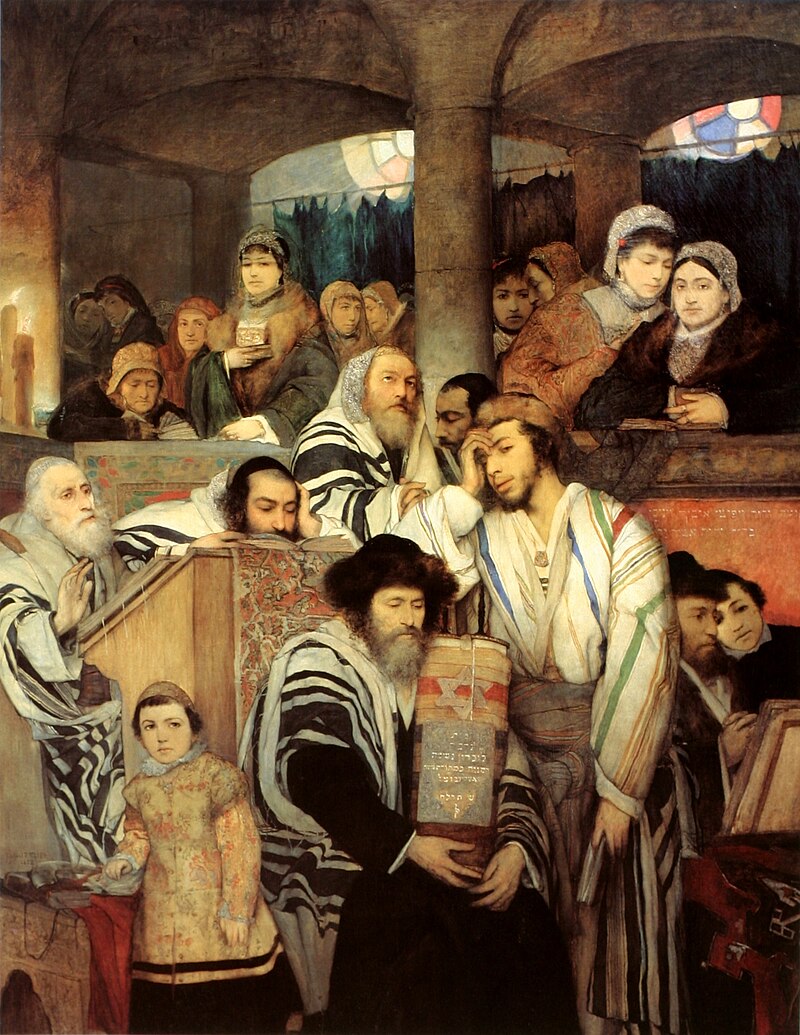
Ashkenazi Jews
Jewish diaspora of Central, Western and Eastern Europe

Romanians
Romanians (, ; dated exonym Vlachs) are a Romance-speaking ethnic group and nation native to Central, Eastern, and Southeastern Europe. Romanians share a common culture,
history, ancestry and language and live primarily in Romania and Moldova. There is a debate regarding the ethnic categorisation of the Moldovans, concerning whether they constitute a subgroup of the Romanians or a completely different ethnic group. The origin of the Romanians is also fiercely debated, one theory suggests that the ancestors of Romanians are the Daco-Romans, while the other theory suggests that Romanians are ma

Yakuts
The Yakuts or Sakha (, ; , ) are a Turkic ethnic group native to North Siberia, primarily the Republic of Sakha (Yakutia) in the Russian Federation. They also inhabit some districts of the Krasnoyarsk Krai. They speak Yakut, which belongs to the Siberian branch of the Turkic languages.

Gagauz
Turkic people of southern Bessarabia

Mari people
ethnic group

Kalmyks
Kalmyks (), archaically anglicised as Calmucks (), are the only Mongolic people found in Europe, residing in the easternmost part of the European Plain.

Evenki people
ethnic group

Chukchis
ethnic group

Aleuts
Aleuts ( ; (west) or (east) ) are the Indigenous people of the Aleutian Islands, which are located between the North Pacific Ocean and the Bering Sea. Both the Aleuts and the islands are politically divided between the U.S. state of Alaska and the Russian administrative division of Kamchatka Krai. This group is also known as the Unangax̂ in Unangam Tunuu, the Aleut language. There are 13 federally recognized Aleut tribes in the Aleut Region of Alaska. In 2000, Aleuts in Russia were recognized by government decree as a small-numbered Indigenous people.

Komi people
ethnic group
.svg)
Rusyns
Rusyns, also known as Carpatho-Rusyns, Carpatho-Russians, Ruthenians, or Rusnaks, are an East Slavic ethnic group from the Eastern Carpathians in Central and Eastern Europe. They speak Rusyn, an East Slavic language variety, treated variously as either a distinct language or a dialect of the Ukrainian language. As traditional adherents of Eastern Christianity, the majority of Rusyns are Eastern Catholics, though a minority of Rusyns practice Eastern Orthodoxy.
%20kvinner%20og%20barn%20foran%20inngangen%20til%20teltet%20sitt.%20(6435260555).jpg)
Nenets
The Nenets (; ), in the past also called 'Samoyeds' or 'Yuraks', are a Samoyedic ethnic group native to the Russian Arctic, in the Russian Far North. According to the latest census in 2021, there were 49,646 Nenets in the Russian Federation, most of them living in the Yamalo-Nenets Autonomous Okrug, Nenets Autonomous Okrug and Taymyrsky Dolgano-Nenetsky District stretching along the coastline of the Arctic Ocean near the Arctic Circle between Kola and Taymyr peninsulas. The Nenets people speak either the Tundra or Forest Nenets languages. In the Russian Federation they have a status of Indigen

Karelians
Karelians (; ; ; ) are a Baltic Finnic ethnic group who are indigenous to the historical region of Karelia, which is today split between Finland and Russia. Karelians living in Russian Karelia are considered a distinct ethnic group closely related to Finnish Karelians, who are considered a subset of Finns. This distinction historically arose from Karelia having been fought over and eventually split between Sweden and Novgorod, resulting in Karelians being under different cultural spheres.

Altai people
Turkic people living in the Siberian Altai Republic, Russia
.svg)
Moldovans
Moldovans, sometimes referred to as Moldavians (, , ), are an ethnic group native to Moldova, who mostly speak the Romanian language, also referred to locally as Moldovan. Moldovans form significant communities in Romania, Italy, Ukraine and Russia.

Mansi people
ethnic group

Khanty people
thumb|200px|right|Khanty family standing in front of a chum (tent)|chum, their traditional tent
thumb|200px|Most Khanty people live in the Khanty–Mansi Autonomous Okrug in western [[Siberia]]
The Khanty (), also known in older literature as Ostyaks (), are a Ugric Indigenous people, living in Khanty–Mansi Autonomous Okrug, a region historically known as "Yugra" in Russia, together with the Mansi. In the autonomous okrug, the Khanty and Mansi languages are given co-official status with Russian. In the 2021 Census, 31,467 persons identified themselves as Khanty. Of those, 30,242 were resident in
%20(6859416536).jpg)
Karakalpaks
The Karakalpaks, or Qaraqalpaqs (; ), are a Turkic ethnic group native to Karakalpakstan in Northwestern Uzbekistan. During the 18th century, they settled in the lower reaches of the Amu Darya and in the (former) delta of Amu Darya on the southern shore of the Aral Sea. The name Karakalpak comes from two words: qara meaning 'black' and qalpaq meaning 'hat'. The Karakalpaks number nearly 871,970 worldwide, out of which about 726,000 live in the Karakalpakstan region of Uzbekistan.

Khakass people
The Khakas or Khakass are a Turkic indigenous people of Siberia, who live in the republic of Khakassia, Russia. They speak the Khakas language.

Mordvins
Mordvins (also Mordvinians, Mordovians; ; no equivalents in Moksha and Erzya) is an official term used in Russia and the Soviet Union to refer both to Erzyas and Mokshas since 1928.
.png)
Kabarday
thumb|The percentage of the Circassian population in every district in Kabardino-Balkaria Republic
thumb|Yinal speaking Adyghe and Kabardian.
thumb|right|Kabardian dancers in traditional dress
thumb|right|Kabardian men in traditional dress
The Kabardians (Kabardian: Къэбэрдей адыгэхэр; Adyghe: Къэбэртай адыгэхэр; ) or Kabardinians are one of the twelve major Circassian tribes, representing one of the twelve stars on the green-and-gold Circassian flag. They are also commonly known by the plural terms Kabardin, Kebertei, or Kabarday. Along with the Besleney tribe, they speak a distinctive dialec
%20of%20Dast-i%20Qipchaq%22.%20Tabriz%20or%20Qavin%2C%20circa%201550.%20British%20Museum%2C%201948-10-9-056.jpg)
Kipchaks
thumb|A Safavid Iran|Safavid depiction of the [[Padishah (Emperor) of Dast-i Qipchaq ("Steppe of the Kipchaks"). Tabriz or Qavin, circa 1550. British Museum, Padishah (Emperor) of Dast-i Qipchaq, (1550). Possible portrait of Kazakh khan]]
thumb|The Cumania in Eurasia, 1200|alt=The Desht-i Kipchak in Eurasia, 1200

Dolgans
thumb|right|283px|A Dolgan man

Koryaks
thumb|300px|Settlement of Koryaks in the Far Eastern Federal District by urban and rural settlements in %, 2010 census
Koryaks () are an Indigenous people of the Russian Far East who live immediately north of the Kamchatka Peninsula in Kamchatka Krai and inhabit the coastlands of the Bering Sea. The cultural borders of the Koryaks include Tigilsk in the south and the Anadyr basin in the north.
Pontic Greeks
ethnic group

Oirats
Oirats (; ) or Oirds ( ; ), formerly known as Eluts and Eleuths ( or ; , Èlǔtè) are the westernmost group of Mongols, whose ancestral home is in the Altai region of Siberia, Xinjiang and western Mongolia.
Udi people
ethnic group
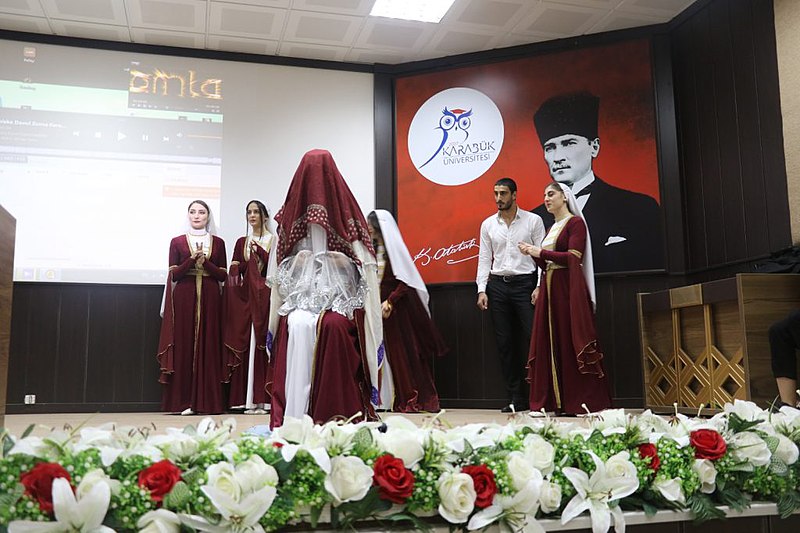
Meskhetian (Turks)
ethnic group

Setos
Setos (, , , ) are an indigenous Finnic people and linguistic minority that have historically lived in the borderlands between modern day Estonia and Russia. Setos have historically spoken the Seto language and been Orthodox Christians. The Seto language (like Estonian and Finnish) belongs to the Finnic group of the Uralic language family. Since the early 2000s, the Setos have sought greater recognition, rather than having their language considered a dialect of Estonian. Eastern Orthodox Christianity, with influences from local folk religions is widely practiced by the Seto peoples.

Evens
thumb|250px|The settlement of the Evens in the Russian Federation for 2010 in % of the total number of this nation in the Russian Federation
thumb|400px|Settlement of Evens in the Far Eastern Federal District by urban and rural settlements in%, 2010 census
Mountain Jews
Jewish group of Khazaria and the Caucus

Votes
Votians, also referred to as Votes, Vots and Vods (; ; ; ) are a Finnic ethnic group native to historical Ingria, the part of modern-day northwestern Russia that is roughly southwest of Saint Petersburg and east of the Estonian border-town of Narva. The Finnic Votic language spoken by Votians is close to extinction. The language is still spoken in three villages of historical Votia and by an unknown number of speakers in the countryside. The villages are Jõgõperä (Krakolye), Liivcülä (Peski), and Luuditsa (Luzhitsy). In the Russian 2020 census, 99 people identified as Votian.

Tofalar
The Tofalar (also Karagas or Tofa; Тофалары, тофа (tofa) in Russian) people are a Turkic people who live in Tofalariya, in the southwestern part of Nizhneudinsky District, Irkutsk Oblast of Russia. The Tofalar population is highly mixed with Russians due to the presence of Russian settlers and high rates of intermarriage.

Dungans
ethnic group

Volga Germans
Ethnic German inhabitants of the Volga region

Shors
thumb|500px|Resettlement of the Shors in the Siberian Federal District by urban and rural settlements in %, 2010 census
Tungusic peoples
ethnolinguistic family
Sybyrs
indigenous Turkic-speaking ethnic group of South Siberia

Pamiri people
The Pamiris, also known as Badakhshanis are an Eastern Iranian ethnic group, native to Central Asia, living primarily in Tajikistan (Gorno-Badakhshan), Afghanistan (Badakhshan), Siachen, Pakistan (Gilgit-Baltistan, Chitral) and China (Taxkorgan Tajik Autonomous County). They speak a variety of different languages, amongst which languages of the Eastern Iranian Pamir language group stand out. The languages of the Shughni-Rushani group, alongside Wakhi, are the most widely spoken Pamiri languages.

Chulyms
thumb|Distribution of Chulyms in 16th, 19th and 20th centuries
The Chulyms, also Chulym Tatars or Tom Karagas (self-designation: Татарлар, Tatarlar), are a Turkic people in the Tomsk Oblast and Krasnoyarsk Krai in Russia. In 2021, there were 382 Chulyms in Russia.
Ulch people
ethnic group
Hemshin peoples
ethnic group
Selkup people
people
Udege people
ethnic group
German-Russians
ethnic group

Nağaybäk
thumb|Percentage of Nağaybäk in Chelyabinsk Oblast
Nağaybäks ( ) are an ethnoreligious group of Volga Tatars in Russia, recognized as a separate people under Russian legislation. Most Nağaybäks live in the Nagaybaksky and Chebarkulsky Districts of the Chelyabinsk Oblast. They speak a sub-dialect of the Tatar language's middle dialect known as the Nagaibak dialect. Russian and Tatar historians usually treat the Nağaybäks as an integral part of Volga Tatars; a minority considers Nağaybäks a separate ethnicity in their own right. In the 1989 Russian census, 11,200 people identified themselves as