Category
page 1Ethnic groups in Ukraine

Tatars
thumb|upright=1.4|Share of Tatars in regions of Russia, 2010 census

Ukrainians
Ukrainians (, ) are an East Slavic ethnic group native to Ukraine. Their native tongue is Ukrainian, and the majority adhere to Eastern Orthodoxy. At around 46 million worldwide, Ukrainians are the second largest Slavic ethnic group after Russians.

Hungarians
Hungarians, also known as Magyars, are an ethnic group native to Hungary (), who share a common culture, language, history and ancestry. They also have a notable presence in former parts of the Kingdom of Hungary. The Hungarian language belongs to the Ugric branch of the Uralic language family, alongside the Khanty and Mansi languages.

Crimean Tatars
Turkic ethnic group, an indigenous people of Crimea

Chuvash people
Turkic ethnic group

Gagauz
Turkic people of southern Bessarabia
.svg)
Rusyns
Rusyns, also known as Carpatho-Rusyns, Carpatho-Russians, Ruthenians, or Rusnaks, are an East Slavic ethnic group from the Eastern Carpathians in Central and Eastern Europe. They speak Rusyn, an East Slavic language variety, treated variously as either a distinct language or a dialect of the Ukrainian language. As traditional adherents of Eastern Christianity, the majority of Rusyns are Eastern Catholics, though a minority of Rusyns practice Eastern Orthodoxy.
%20of%20Dast-i%20Qipchaq%22.%20Tabriz%20or%20Qavin%2C%20circa%201550.%20British%20Museum%2C%201948-10-9-056.jpg)
Kipchaks
thumb|A Safavid Iran|Safavid depiction of the [[Padishah (Emperor) of Dast-i Qipchaq ("Steppe of the Kipchaks"). Tabriz or Qavin, circa 1550. British Museum, Padishah (Emperor) of Dast-i Qipchaq, (1550). Possible portrait of Kazakh khan]]
thumb|The Cumania in Eurasia, 1200|alt=The Desht-i Kipchak in Eurasia, 1200
Pontic Greeks
ethnic group
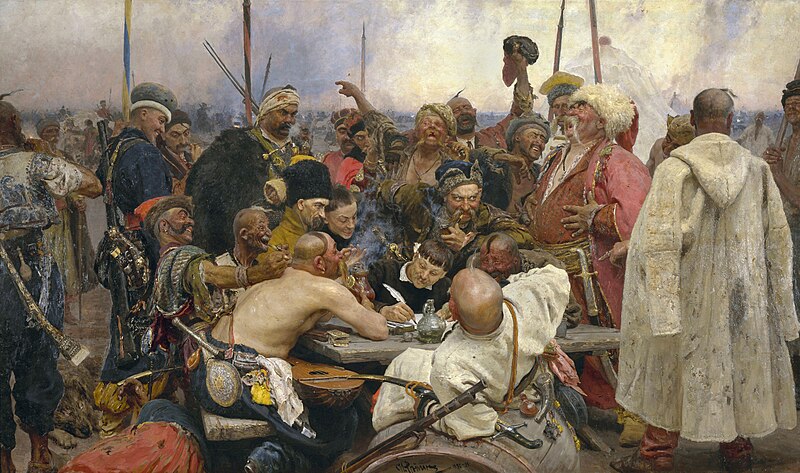
Zaporozhian Cossacks
group of Cossacks prominent in Central Ukraine in the 16th, 17th, and 18th centuries

Lipovans
The Lipovans or Lippovans are ethnic Russian Old Believers living in Romania, Ukraine, Moldova and Bulgaria who settled in the Principality of Moldavia, in the east of the Principality of Wallachia (Muntenia), and in the regions of Dobruja and Budjak during the 17th and 18th centuries. According to the 2011 Romanian census, there are a total of 23,487 Lipovans in Romania, mostly living in Northern Dobruja, in Tulcea County but also in Constanța County, and in the cities of Iași, Brăila and Bucharest. In Bulgaria, they inhabit two villages: Kazashko and Tataritsa.

Hutsuls
The Hutsuls are an East Slavic ethnic group spanning parts of western Ukraine and northern Romania (i.e. parts of Bukovina and Maramureș).
%20..jpg)
Lemkos
Lemkos (; ; ; ) are an ethnic group inhabiting the Lemko Region (; ) of Carpathian Rus', an ethnographic region in the Carpathian Mountains and foothills spanning Ukraine, Slovakia, and Poland.
Volga Tatars
term for a Turkic ethnic group living in the middle of the Volga River and north of the Ural River, which is the titular population of Tatarstan.

Koryo-saram
Koryo-saram ( ; , ) or Koryoin (; ) are ethnic Koreans of the mainland former Soviet Union who descend from Koreans who lived in the Russian Far East.
.jpg)
Molokans
The Molokans ( or , "dairy-eater") are a Russian Spiritual Christian and a Protestant sect that evolved from Eastern Orthodoxy in the East Slavic lands. Their traditions, especially dairy consumption during Christian fasts, did not conform to those of the Russian Orthodox Church, and they were regarded as heretics (). The term is an exonym used by their Orthodox neighbors. Members tend to identify themselves as Spiritual Christians (, ).

Urums
Urums (, ; , Urúm; Turkish and Crimean Tatar: Urum, ) are several groups of Turkic-speaking Greek Orthodox people native to Crimea, northeastern Turkey and Transcaucasia. The emergence and development of the Urum identity took place from 13th to the 17th centuries. Bringing together the Crimean Greeks along with Greek-speaking Crimean Alans and Crimean Goths, with other indigenous groups that had long inhabited the region, resulting in a gradual transformation of their collective identity.

Boykos
The Boykos or Boikos (; ; ; ), or simply Highlanders (; ), are an ethnolinguistic group located in the Carpathian Mountains of Ukraine, Slovakia, Hungary, and Poland. Along with the neighbouring Lemkos and Hutsuls, the Boykos are considered a sub-group of Rusyns and speak a distinct East Slavic dialect. Within Ukraine, the Boykos and other Rusyns are seen as a sub-group of ethnic Ukrainians. Boykos differ from their neighbors in dialect, dress, folk architecture, and customs.
Russians in Ukraine
ethnic group
Pannonian Rusyn
Slavic language
Hungarians in Ukraine
ethnic group in Ukraine

Poleshuks
The Poleshuks, or Polishchuks, also known as Polesians (, , , ) are the indigenous population of Polesia (also known as Polesie and Polissia). Their native speech forms a dialect continuum between the Belarusian and Ukrainian languages and includes recently codified West Polesian, as well as many local variations and sub-dialects.
.jpg)
Litvin
Litvin is a Slavic word for Lithuanians as well as all residents of the Grand Duchy of Lithuania in the 13th–18th centuries in general, which began to be used no later than the 16th century mostly by the East Slavs. Currently, Litvin or its cognates are still used in some European languages for Lithuanians.
history of the Jews in Ukraine
history of Ukrainian Jews, from 11th c. to modern times
Bessarabian Bulgarians
ethnic group
Bessarabia Germans
ethnic group who lived in Bessarabia between 1814 and 1940
Black Sea Germans
ethnic group in Ukraine

Volhynians
The Volhynians (, ) were an East Slavic tribe of the Early Middle Ages and the Principality of Volhynia in 987–1199.
Greeks in Ukraine
History of Greek people in Ukraine
Albanians in Ukraine
ethnic group
Romani people in Ukraine
ethnic group in Ukraine

Tutejszy
Tutejszy was a self-identification of Eastern European rural populations, who did not have a clear national identity. The term means "from here", "local" or "natives". Linguistically, the term is closely associated with speakers of the so-called prostaya mova ('simple speech'), an uncodified vernacular based on Belarusian dialects with influences from Polish, Russian, and Lithuanian.

Armenians in Ukraine
Armenian community in Ukraine
Czechs in Ukraine
ethnic group
Goryuns
Goryuns, also Horiuns or Horyuny (), a little-documented ethnic group of East Slavs living around Putyvl, now in the Sumy Oblast of north-eastern Ukraine, in the past in Kursk Governorate of the Russian Empire. The dialect of the Russian language spoken by Goryuns has some features of Belarusian and Ukrainian.
Ruska Roma
Romani ethnic group in Russia & Belarus
Romanians in Ukraine
ethnic group in Ukraine
Bulgarians in Ukraine
ethnic group
Poles in Ukraine
ethnic group in Ukraine
Servitka Roma
subgroup of Romani in Ukraine and Russia
Italians of Crimea
ethnic minority of Crimea
Tatars in Ukraine
ethnic group

Azerbaijanis in Ukraine
national minority in Ukraine

Turks in Ukraine
ethnic group in Ukraine
Belarusians in Ukraine
Belarusians are scattered throughout Ukraine.According to the 2001 census, there were 275,800 Belarusians living in Ukraine (0.6 percent of the total population of Ukraine). The majority of them (77.8 percent lived in cities).
Kurds in Ukraine
Koreans in Ukraine
ethnic group
Galician Germans
ethnic German population living in the Kingdom of Galicia and Lodomeria
Georgians in Ukraine
ethnic group
Ukrainian Serbs
ethnic group