Category
page 1Eubrachyura

Majoidea
Majoidea is a is a superfamily of crab which contains spider crabs, along with the decorator crabs.
Grapsoidea
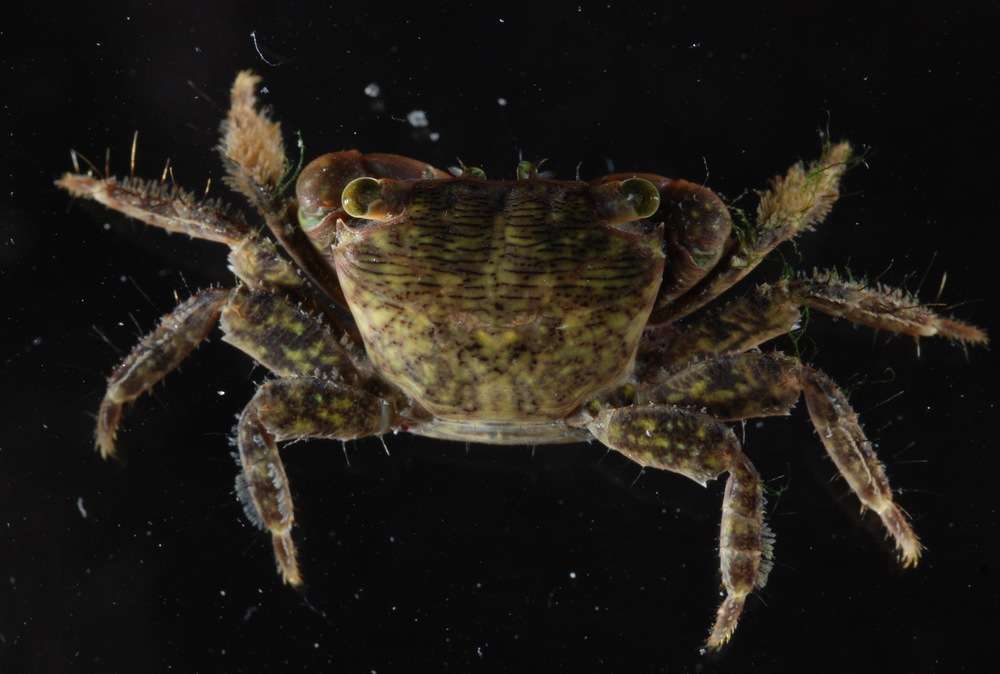
The Grapsoidea are a superfamily of crabs; they are well known and contain many taxa which are terrestrial (land-living), semiterrestrial (taking to the sea only for reproduction), or limnic (living in fresh water). Another well-known member with a more conventional lifestyle is the Chinese mitten crab, Eriocheir sinensis.
%20Figure%203.png)
Portunoidea
__NOTOC__
Cancroidea
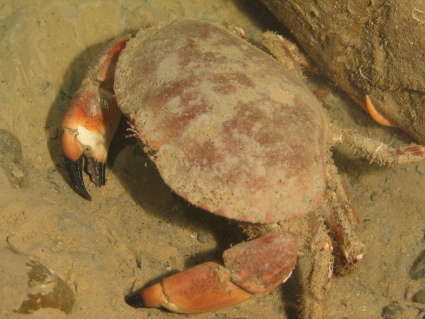
Cancroidea is a superfamily of crabs, comprising the families Atelecyclidae and Cancridae. Four other families have been separated into new superfamilies: Cheiragonidae into Cheiragonoidea, Corystidae into Corystoidea, and both Pirimelidae and Thiidae into Portunoidea. Montezumellidae has been moved from Cancroidea to his own Superfamily Montezumelloidea.
Ocypodoidea
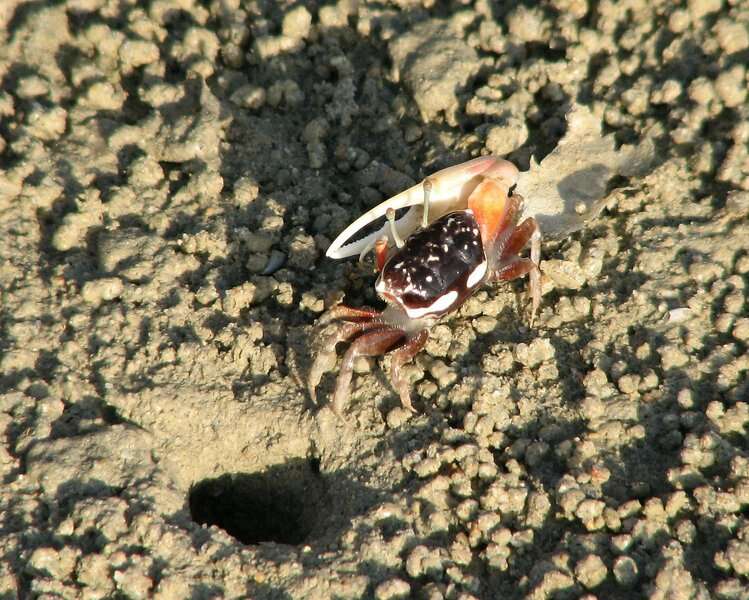
The Ocypodoidea, or ocypoid crabs, are a superfamily of crabs, named after the genus Ocypode. It contains the following families:
%20above%20the%20plate%20of%20mussels%20it%20was%20found%20in.jpg)
Pinnotheridae
thumb|A pea crab (exact genus and species unknown) above the plate of mussels it was found in
thumb|A yellow pea crab (exact genus and species unknown) has fallen out of the clam this sea otter is eating, and has landed on the sea otter's neck (in [[Moss Landing, California)]]

Heterotremata
Heterotremata (from Ancient Greek ἕτερος (héteros), meaning "different", and τρῆμα (trêma), meaning "hole") is a clade of crabs, comprising those crabs in which the genital openings are on the sternum in females, but on the legs in males. It comprises 68 families in 28 superfamilies.

Trichodactylidae
Trichodactylidae is a family of crabs, in its own superfamily, Trichodactyloidea. They are all freshwater animals from Central and South America, including some offshore islands, such as Ilhabela, São Paulo. Only one of the 50 species is known from the fossil record, Sylviocarcinus piriformis from the Miocene of Colombia. The family contains 15 genera in two subfamilies:
Subfamily Dilocarcininae Pretzmann, 1978
Bottiella Magalhães & Türkay, 1996
Dilocarcinus H. Milne-Edwards, 1853
Forsteria Bott, 1969
Fredilocarcinus Pretzmann, 1978
Goyazana Bott, 1969
Melocarcinus Magalhães & Türkay, 1996
Mor
Cryptochiridae
Cryptochiridae is a family of crabs known commonly as gall crabs or coral gall crabs. They live inside dwellings in corals and cause the formation of galls in the coral structure. The family is currently placed in its own superfamily, Cryptochiroidea.
Potamoidea
Potamoidea is a superfamily of freshwater crabs, comprising the two families Potamidae and Potamonautidae. Two previously recognised families, Deckeniidae and Platythelphusidae, are now treated as parts of the family Potamonautidae.
Eubrachyura
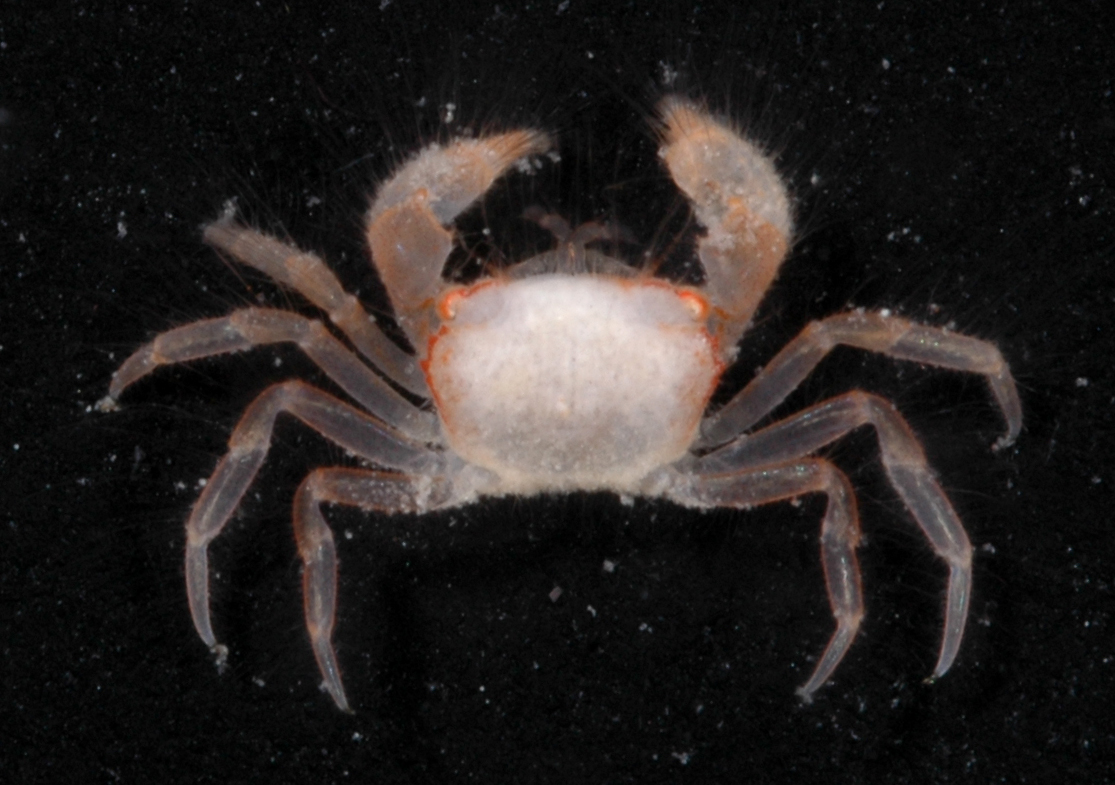
Eubrachyura is a group of decapod crustaceans (ranked as a "section") comprising the more derived crabs. It is divided into two subsections, based on the position of the genital openings in the two sexes. In the Heterotremata, the openings are on the legs in the males, but on the sternum in females, while in the Thoracotremata, the openings are on the sternum in both sexes. This contrasts with the situation in other decapods, in which the genital openings are always on the legs. Heterotremata is the larger of the two groups, containing the species-rich superfamilies Xanthoidea and Pilumnoidea
Aethridae
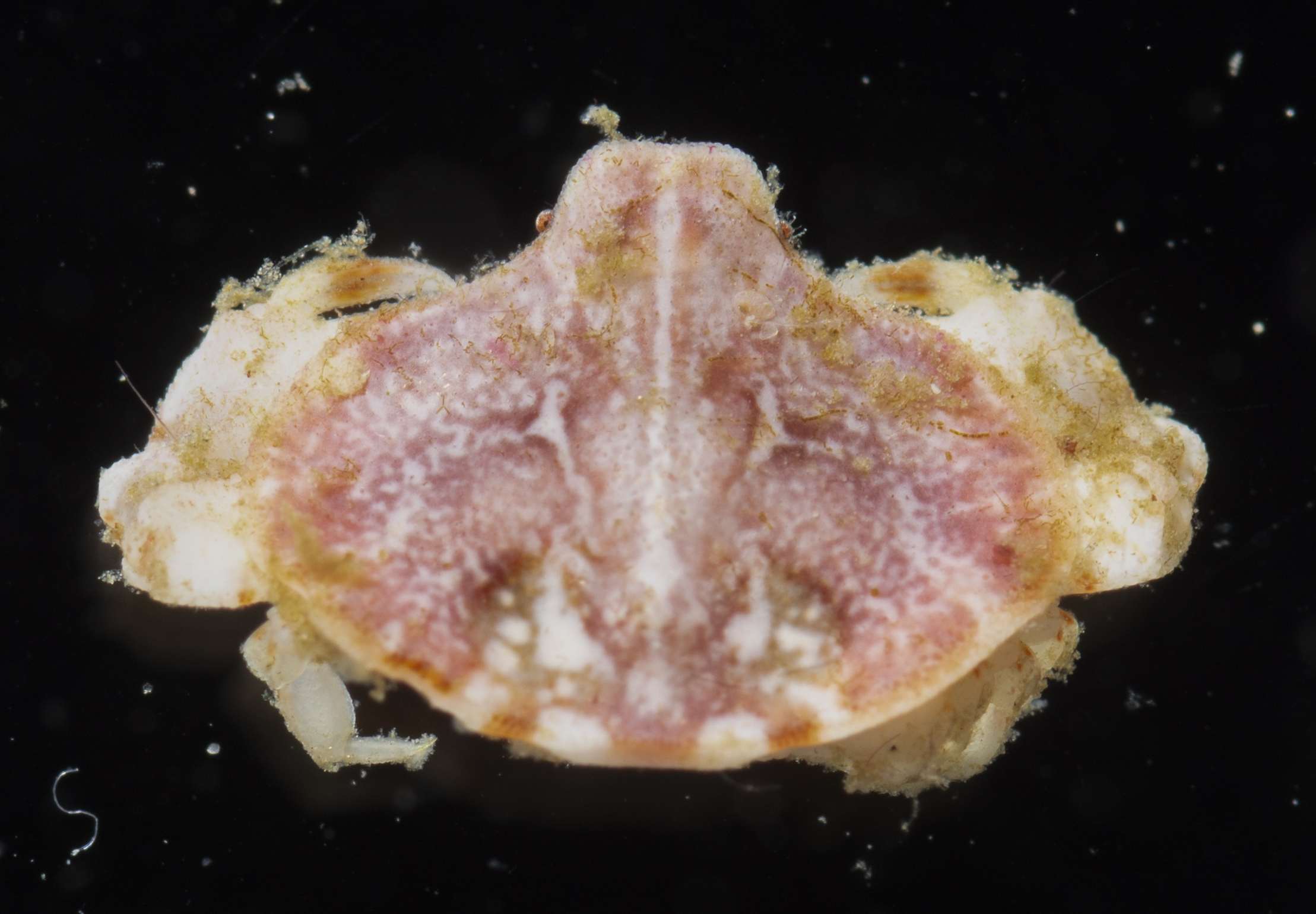
The Aethridae are a family of crabs in their own superfamily, Aethroidea. It contains these genera (extinct genera marked †):
Xanthoidea
Xanthoidea is a superfamily of crabs, comprising seven families. Formerly, a number of other families were included in Xanthoidea, but many of these have since been removed to other superfamilies. These include Carpilioidea, Eriphioidea, Hexapodoidea, Pilumnoidea and Trapezioidea. Even in this reduced state, Xanthoidea remains one of the most species-rich superfamilies of crabs.

Parthenopidae
Parthenopidae is a family of crabs, placed in its own superfamily, Parthenopoidea. It comprises nearly 40 genera, divided into two subfamilies, with three genera incertae sedis:
Calappoidea
Calappoidea is a superfamily of crabs comprising the two families Calappidae and Matutidae. The earliest fossils attributable to the Calappoidea date from the Aptian.
Thoracotremata
Thoracotremata is a clade of crabs, comprising those crabs in which the genital openings in both sexes are on the sternum, rather than on the legs. It comprises 17 families in four superfamilies .
Pseudothelphusidae
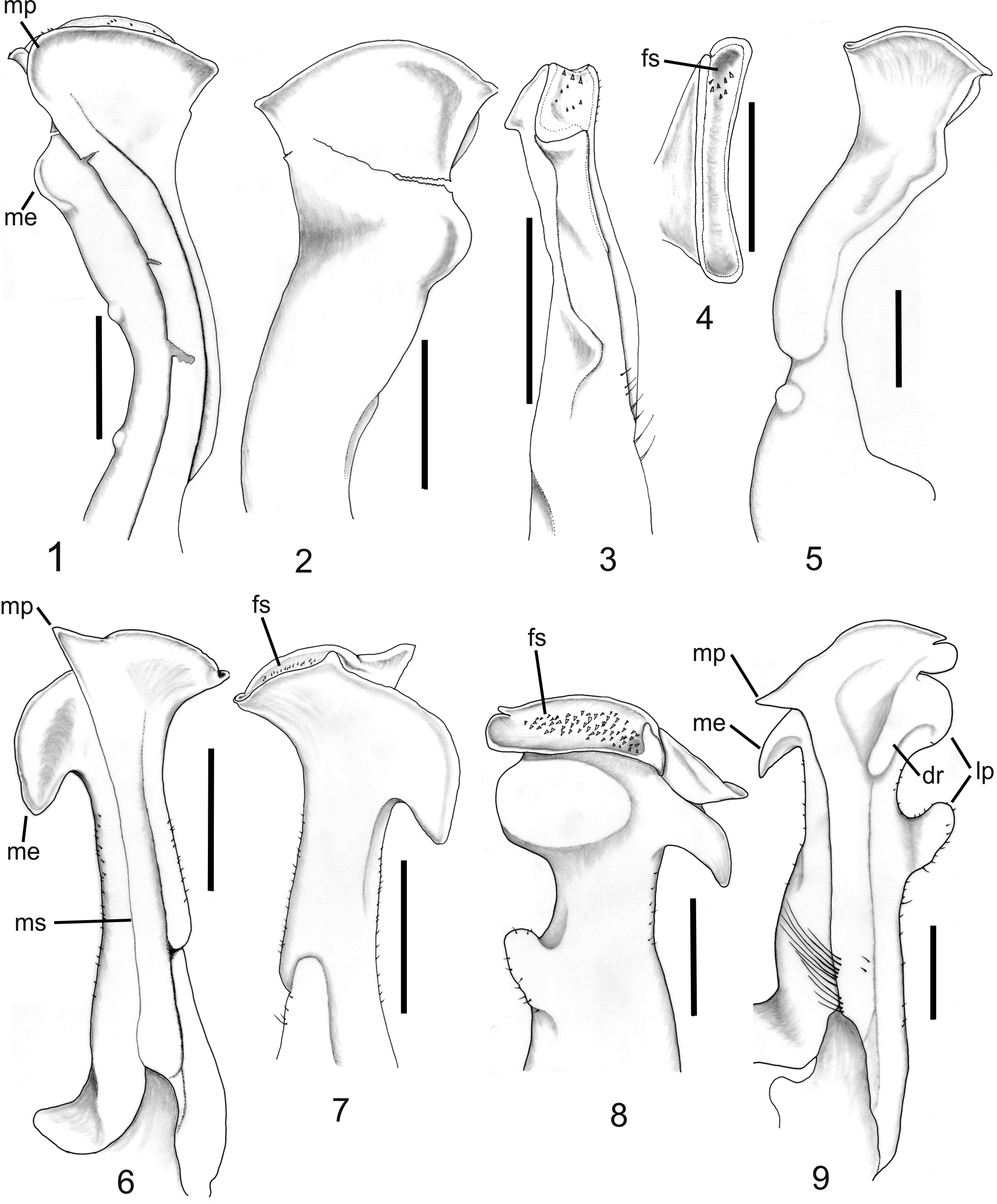
Pseudothelphusidae is a family of freshwater crabs found chiefly in mountain streams in the Neotropics. They are believed to have originated in the Greater Antilles and then crossed to Central America via a Pliocene land bridge. Some species of this family are troglobitic.
Eriphioidea
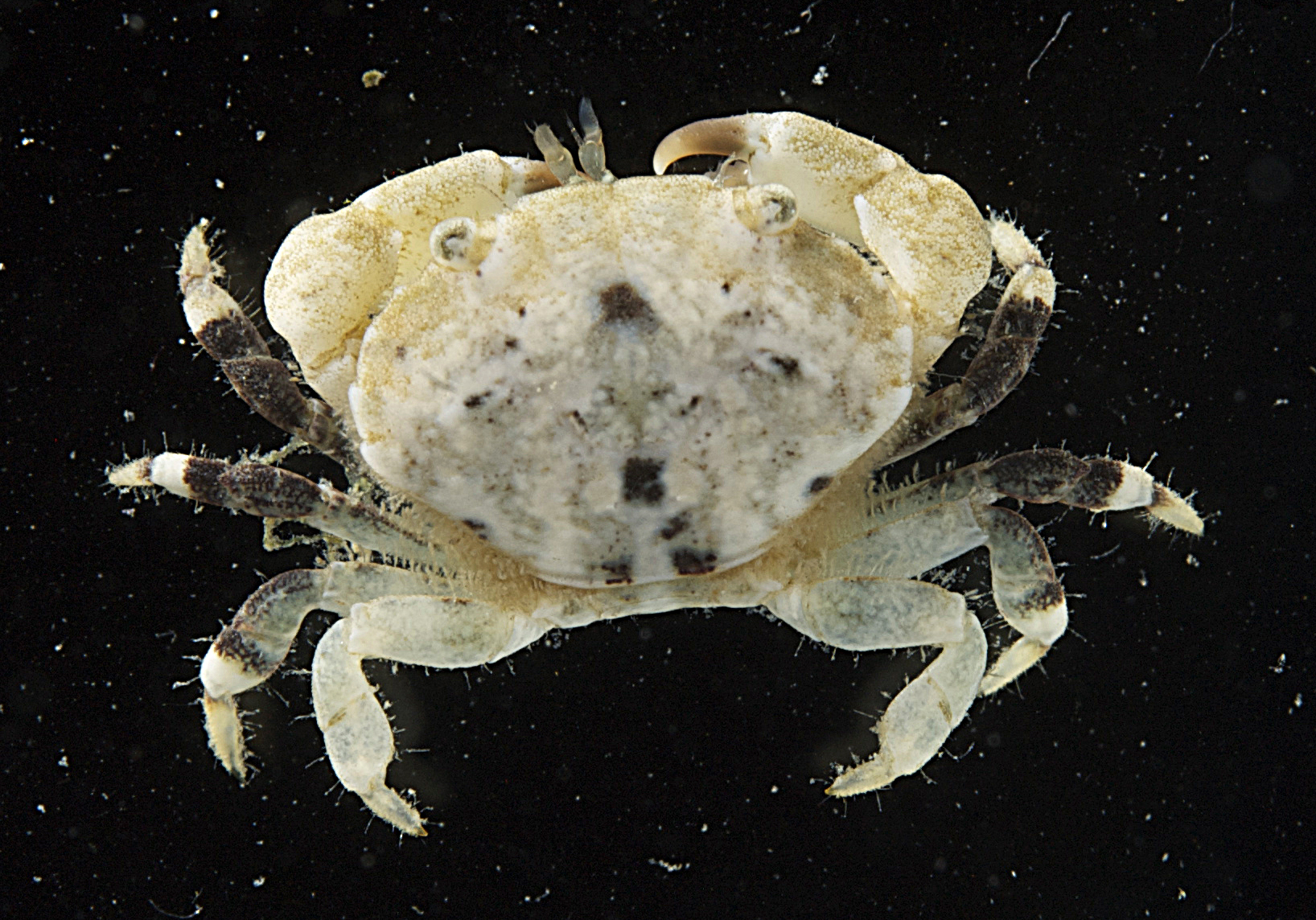
Eriphioidea is a superfamily of crabs. It contains six families:

Corystidae
Corystidae is a family of crabs, in its own superfamily, Corystoidea. It includes what was once thought to be the oldest Eubrachyuran fossil, Hebertides jurassica, thought to be dating from the Bathonian (Middle Jurassic); the species was subsequently reinterpreted as being Cenozoic in age. Corystidae contains ten extant and five extinct species in eight genera:
Corystes Bosc, 1802
Corystites Lőrenthey, in Lőrenthey & Beurlen, 1929
Gomeza Gray, 1831
Gomezinus † Collins, Lee & Noad, 2003
Harenacorystes † Van Bakel, Jagt, Artal & Fraaije, 2009
Hebertides † Guinot, De Angeli & Garassino, 2007
Jon

Bythograeidae
The Bythograeidae are a small family of blind crabs which live around hydrothermal vents. The family contains 16 species in six genera. Their relationships to other crabs are unclear. They are believed to eat bacteria and other vent organisms. Bythograeidae are a monophyletic, sister taxon of the superfamily Xanthoidea which split to inhabit hydrothermal vents around the Eocene.
Cheiragonidae
Cheiragonidae is a small family of crabs, sometimes called helmet crabs, placed in its own superfamily, Cheriagonoidea. It comprises three extant species, Erimacrus isenbeckii, Telmessus acutidens and Telmessus cheiragonus; there are no yet evidences of Cheiragonidae in the fossil record. Many of these crabs were formerly treated as members of the Atelecyclidae.
Pilumnoidea
Pilumnoidea is a superfamily of crabs, whose members were previously included in the Xanthoidea. The three families are unified by the free articulation of all the segments of the male crab's abdomen and by the form of the gonopods. The earliest fossils assigned to this group are of Eocene age.
Goneplacoidea
Goneplacoidea is a superfamily of crabs containing 11 extant families, and two families known only from fossils (marked "†").
Acidopsidae
† Carinocarcinoididae
Chasmocarcinidae
Conleyidae
Euryplacidae
Goneplacidae
Litocheiridae
† Martinocarcinidae
Mathildellidae
Progeryonidae
Scalopidiidae
Sotoplacidae
Vultocinidae
Belliidae
Belliidae is a family of crabs of the order Decapoda.
Trapezioidea
Trapezioidea is a superfamily of crabs. Its members live symbiotically with corals and have a fossil record stretching back to the Eocene.

Hexapodidae
Hexapodidae is a family of crabs, the only family in the superfamily Hexapodoidea. It has traditionally been treated as a subfamily of the family Goneplacidae, and was originally described as a subfamily of Pinnotheridae. Its members can be distinguished from all other true crabs by the reduction of the thorax, such that only seven sternites are exposed, and only four pairs of pereiopods are present. Not counting the enlarged pair of claws, this leaves only six walking legs, from which the type genus Hexapus, and therefore the whole family, takes its name. Some anomuran "crabs", such as porcel
Gecarcinucoidea
Gecarcinucoidea is a superfamily of freshwater crabs. Its members have been grouped into families in various ways, with some authors recognizing families such as "Deckeniidae", "Sundathelphusidae", and "Parathelphusidae", but now only the family Gecarcinucidae is currently recognized.
Palicoidea
Palicoidea is a superfamily of crabs, comprising the two families Crossotonotidae and Palicidae. Together, they contain 13 genera, including two genera in the Palicidae known only from fossils. The two families were previously treated as two subfamilies in a Palicidae of wider circumscription.
Family Crossotonotidae
Leucosioidea
Leucosioidea is a superfamily of crabs containing the two families Leucosiidae and Iphiculidae.
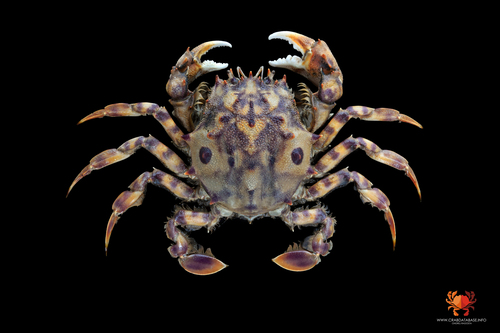
Orithyia sinica
species of crab
Dairoidea
Dairoidea is a superfamily of crabs, comprising two families which each contain a single genus: Dairidae (the living fossil Daira ) and Dacryopilumnidae (Dacryopilumnus) .
Pseudozioidea
Pseudozioidea is a superfamily of crabs, formerly treated in the Eriphioidea, Carpilioidea, Xanthoidea, Pilumnoidea and Goneplacoidea. A number of fossils from the Eocene onwards are known from the family Pseudoziidae. Eleven genera are recognised in three families:
Christmaplacidae Naruse & Ng, 2014
Christmaplax Naruse & Ng, 2014
Harryplax Mendoza & Ng, 2017
Pilumnoididae Guinot & Macpherson, 1987
Pilumnoides Lucas, 1844
Setozius Ng & Ahyong, 2013
Planopilumnidae Serène, 1984
Flindersoplax Davie, 1989
Haemocinus Ng, 2003
Planopilumnus Balss, 1933
Platychelonion Crosnier & Guinot, 1969
Rathbun
Dorippoidea
Dorippoidea is a superfamily of crabs. The earliest fossils attributable to the Dorippoidea date from the Late Cretaceous.
Retroplumidae
Retroplumidae is a family of heterotrematan crabs, placed in their own (monotypic) superfamily, Retroplumoidea.

Carpilioidea
thumb|Harpactoxanthopsis quadrilobata fossil, Middle Eocene, Venetia Region, northern Italy
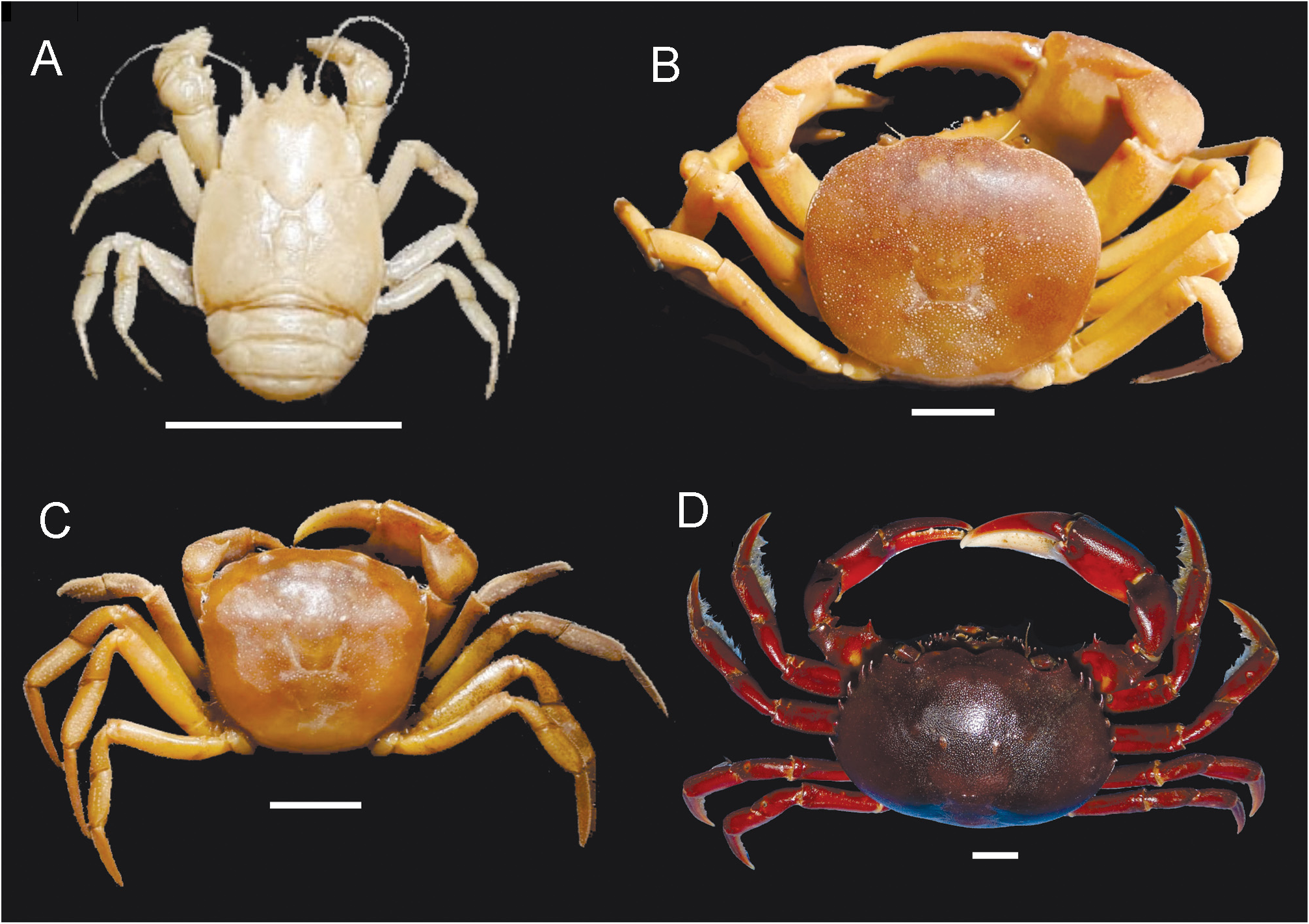
Dilocarcinus pagei
species of crustacean
Trapezia intermedia
species of crustacean