Category
page 1Evolution

evolution
Evolution is the change in the heritable characteristics of biological populations over successive generations. It occurs when evolutionary processes such as genetic drift and natural selection act on genetic variation, resulting in certain characteristics becoming more or less common within a population over successive generations. The process of evolution has given rise to biodiversity at every level of biological organisation.

natural selection
differential survival and reproduction of individuals in nature due to differences in phenotype; a key mechanism of evolution
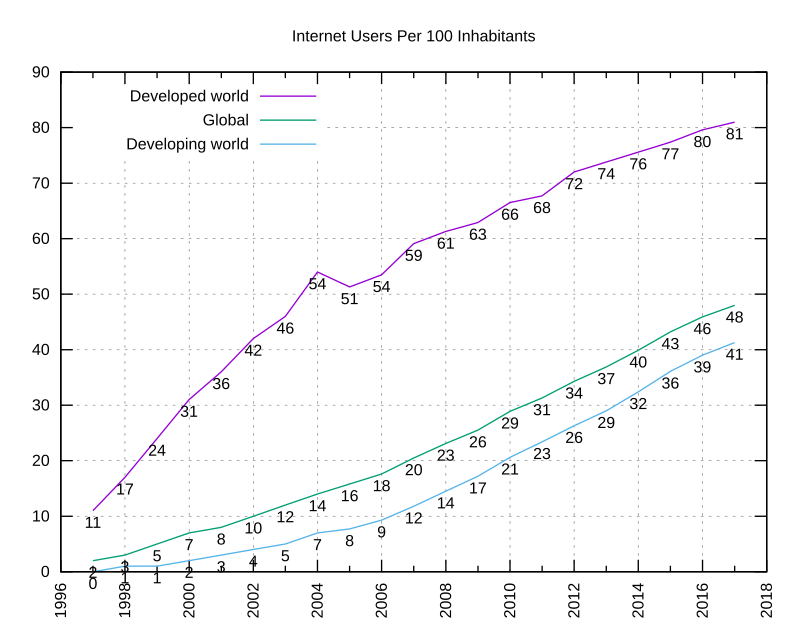
information society
form of society

Gaia hypothesis
paradigm that living organisms interact with their surroundings in a self-regulating system

Cambrian explosion
Portion of the Cambrian Period during which life vastly diversified

uniformitarianism
thumb|Hutton's Unconformity at [[Jedburgh.Above: John Clerk of Eldin's 1787 illustration.Below: 2003 photograph.]]
Uniformitarianism, also known as the Doctrine of Uniformity or the Uniformitarian Principle, is the assumption that the same natural laws and processes that operate in our present-day scientific observations have always operated in the universe in the past and apply everywhere in the universe. It refers to invariance in the metaphysical principles underpinning science, such as the constancy of cause and effect throughout space-time, but has also been used to describe spatiotempora
.jpg)
Historicism
Historicism is an approach in the study of phenomena, particularly social and cultural practices, including ideas and beliefs, which emphasizes understanding these phenomena through the historical processes by which they developed. The concept is widely applied in fields such as philosophy, anthropology, and sociology.
Darwin Awards
ironic award recognizing individuals who have died or became sterilized by their own actions
evolutionary algorithm
subset of evolutionary computation
natural landscape
original landscape formed by nature
evolutionary computation
subfield of artificial intelligence
antipredator adaptation
mechanism developed through evolution that assist prey organisms in their constant struggle against predators

sympatry
thumb|Sympatric pitcher plants, [[Nepenthes jamban (left) and Nepenthes lingulata (right) in Sumatran upper montane forest]]
In biology, two closely related species or populations are considered sympatric when they exist in the same geographic area and thus frequently encounter each other. An initially interbreeding population that splits into two or more distinct species sharing a common range exemplifies sympatric speciation. Such speciation may be a product of reproductive isolation — which prevents hybrid offspring from being viable or able to reproduce, thereby reducing gene flow&nbs
earliest known life form
putative fossilized microorganisms found near hydrothermal vents
catalytic triad
Set of three coordinated amino acids
accelerating change
perceived increase in the rate of technological change throughout history
evolutionary epistemology
ambiguous term applied to several concepts

nucleomorph
thumb|Diagram of a four membraned plastid containing a nucleomorph
Nucleomorphs are small, vestigial eukaryotic nuclei found between the inner and outer pairs of membranes in certain plastids. They are thought to be vestiges of red and green algal nuclei that were engulfed by a larger eukaryote. Because the nucleomorph lies between two sets of membranes, nucleomorphs support the endosymbiotic theory and are evidence that the plastids containing them are complex plastids. Having two sets of membranes indicate that the plastid, a prokaryote, was engulfed by a eukaryote, an alga, which was then e
industrial melanism
evolutionary effect
deep time
geologic time
technological evolution
theory describing technology development
evolutionary ethics
field of inquiry that explores how evolutionary theory might bear on our understanding of ethics or morality.
Level of support for evolution in society
discussion of variation in support for the theory of evolution by geopolitical distribution
Teleonomy
Teleonomy is the quality of apparent purposefulness and of goal-directedness of structures and functions in living organisms brought about by natural processes like natural selection. The term derives from two Greek words, τέλος, from τελε-, ("end", "goal", "purpose") and νόμος nomos ("law"). Teleonomy is sometimes contrasted with teleology, where the latter is understood as a purposeful goal-directedness brought about through human or divine intention. Teleonomy is thought to derive from evolutionary history, adaptation for reproductive success, and/or the operation of a program. Teleonomy is
Systematic Evolution of Ligands by Exponential Enrichment
trademark
extended evolutionary synthesis
set of theoretical concepts argued to be more comprehensive than the earlier modern synthesis of evolutionary biology that took place between 1918 and 1942
universal Darwinism
variety of approaches that extend the theory of Darwinism to other fields
Applications of evolution
practical application of biological evolution
homeosis
thumb|Antennapedia mutation
Coloration evidence for natural selection
early evidence for Darwinism from animal coloration
evolution of languages
development of languages throughout time
Evolutionary trade-offs
when evolution cannot enhance one trait without diminishing another
Disposable soma theory
theory of aging