Category
page 1Exegesis
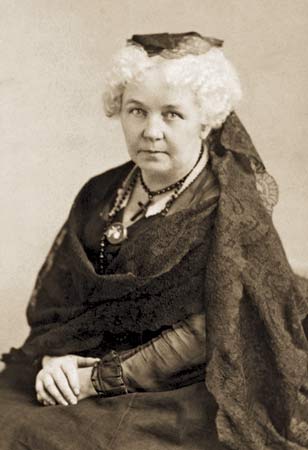
Elizabeth Cady Stanton
American writer, suffragist and Women's Rights activist (1815–1902)

textual criticism
branch of textual scholarship, philology, and literary criticism

midrash
thumb|250px|Title page, Midrash Tehillim
Midrash (; ; or midrashot) is an expansive Jewish Biblical exegesis using a rabbinic mode of interpretation prominent in the Talmud. The word itself means "textual interpretation", "study", or "exegesis", derived from the root verb (), which means "resort to, seek, seek with care, enquire, require".

exegesis
thumb|An English-language Bible open to the [[Book of Isaiah]]
Exegesis ( ; from the Greek , from , "to lead out") is a critical explanation or interpretation of a text. The term is traditionally applied to the interpretation of Biblical works. In modern usage, exegesis can involve critical interpretations of virtually any text, including not just religious texts but also philosophy, literature, or virtually any other genre of writing. The phrase Biblical exegesis can be used to distinguish studies of the Bible from other critical textual explanations.
Sarah Trimmer
author, editor; (1741-1810); married, in 1762, James Trimmer, of Brentford
master–slave morality
central theme of Friedrich Nietzsche's works
eisegesis
Eisegesis () is the process of interpreting text in such a way as to introduce one's own presuppositions, agendas or biases. It is commonly referred to as reading into the text. It is often done to justify or confirm a position already held.
Julia Evelina Smith
American activist, translator, author
Mekhilta
Mekhilta (; ), derived from the Mishnaic Hebrew term middah (), is used to denote a compilation of Jewish exegesis attributed to (or written by) a handful of members of Chazal ().