Category
page 1Extant Cretaceous first appearances

Rosaceae
Rosaceae (), the rose family, is a family of flowering plants that includes 4,828 known species in 91 genera.

Anguilliformes
Eels are ray-finned fish belonging to the order Anguilliformes (), which consists of eight suborders, 20 families, 164 genera, and about 1000 species. Eels undergo considerable development from the early larval stage to the eventual adult stage and are usually predators.

Ranunculaceae
Ranunculaceae ( , buttercup or crowfoot family; Latin "little frog", from "frog") is a large family of flowering plants, distributed worldwide.

Rosids
The rosids are members of a large clade (monophyletic group) of flowering plants, containing about 70,000 species, more than a quarter of all angiosperms.

bichir
Bichirs and the reedfish comprise Polypteridae , a family of archaic ray-finned fishes and the only family in the order Polypteriformes .
.jpg)
Zoraptera
The insect order Zoraptera, commonly known as angel insects and sometimes ground lice, contains small and soft bodied insects with two forms: winged with wings sheddable as in termites, dark and with eyes (compound) and ocelli (simple); or wingless, pale and without eyes or ocelli. They have a characteristic nine-segmented beaded (moniliform) antenna. Their mouthparts are adapted for chewing and are mostly found under bark, in dry wood or in leaf litter. The order is found on most continents, but are absent in places like Canada, New Zealand, Australia and Europe.
left|thumb|Winged fossil of Z

Theridiidae
Theridiidae, also known as the tangle-web spiders, cobweb spiders and comb-footed spiders, is a large family of araneomorph spiders first described by Carl Jakob Sundevall in 1833. This diverse, globally distributed family includes around 3,000 species in 128 genera, and is the most common arthropod group found in human dwellings throughout the world.

Myctophidae
Lanternfish (or myctophids, from the Greek μυκτήρ myktḗr, "nose" and ophis, "serpent") are small mesopelagic fish of the large family Myctophidae. One of two families in the order Myctophiformes, the Myctophidae are represented by 246 species in 33 genera, and are found in oceans worldwide. They are named after their conspicuous use of bioluminescence. Their sister family, the Neoscopelidae, are much fewer in number but superficially very similar; at least one neoscopelid shares the common name "lanternfish": the large-scaled lantern fish, Neoscopelus macrolepidotus.
.jpg)
Liquidambar
Liquidambar, commonly called sweetgum (star gum in the UK), gum, redgum, satin-walnut, styrax or American storax, is the only extant genus in the flowering plant family Altingiaceae and has 15 species. They were formerly often treated as a part of the Hamamelidaceae. They are native to southeast and east Asia, the eastern Mediterranean and North America. They are decorative deciduous trees that are used in the wood industry and for ornamental purposes.

Ixodidae
The Ixodidae are the family of hard ticks or scale ticks, one of the three families of ticks, consisting of 750 species, . They are known as 'hard ticks' because they have a scutum or hard shield, which the other major family of ticks, the 'soft ticks' (Argasidae), lack. They are ectoparasites of a wide range of host species, and some are vectors of pathogens that can cause human disease.

Stylommatophora
Stylommatophora is an order of air-breathing land snails and slugs, terrestrial pulmonate gastropod molluscs. This taxon includes most land snails and slugs. Stylommatophorans lack an operculum, but some close their shell apertures with temporary "operculum" (epiphragm) made of calcified mucus. They have two pairs of retractile tentacles, the upper pair of which bears eyes on the tentacle tips. All stylommatophorans are hermaphrodites.

Platanaceae
Platanaceae, the plane family, is a family of flowering plants in the order Proteales. The family consists of only a single extant genus Platanus, with twelve known species. The plants are tall trees, native to temperate and subtropical regions of the Northern Hemisphere. The hybrid London plane is widely planted in cities worldwide.
Alethinophidia
Common names: advanced snakes.
The Alethinophidia are an infraorder of snakes that includes all snakes other than blind snakes and thread snakes. Snakes have long been grouped into families within Alethinophidia based on their morphology, especially that of their teeth. More modern phylogenetic hypotheses using genetic data support the recognition of 19 extant families (see below), although the taxonomy of alethinophidian snakes has long been debated, and ultimately the decision whether to assign a particular clade to a particular Linnaean rank (such as a superfamily, family, or subfamily) is
Argasidae
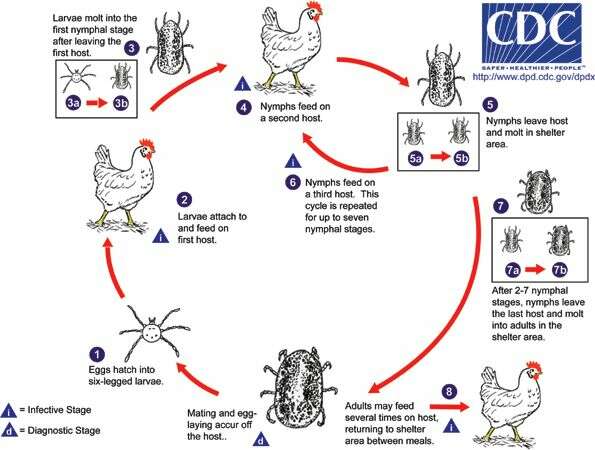
The Argasidae are the family of soft ticks, one of the three families of extant ticks. The family contains 220 species, although the composition of the genera is less certain, and more study is needed before the taxonomy is resolved. The Argasidae are very common in South Asia, along with around 100 other species of ticks from other lineages, making South Asia the region with the highest biodiversity of ticks worldwide. Soft ticks are resistant to desiccation and can live for several years in arid conditions.

Murex
Murex is a genus of medium to large sized predatory tropical sea snails. These are carnivorous marine gastropod molluscs in the family Muricidae, commonly called "murexes" or "rock snails".
Sciaridae
thumb|A sciarid ovipositing into a leaf of Urtica

Empididae
__NOTOC__
.jpg)
Dolichopodidae
Dolichopodidae, the long-legged flies, are a large, cosmopolitan family of true flies with more than 8,000 described species in about 250 genera. The genus Dolichopus is the most speciose, with some 600 species.

Pecten
genus of bivalves
Eutardigrade
Eutardigrada are a class of tardigrades (Tardigrada) without lateral appendages. Primarily freshwater bound, some species have secondarily gained the ability to live in marine environments (Halobiotus). By cryptobiosis many species are able to live temporarily in very dry environments. More than 700 species have been described.

Lingula
genus of brachiopods
superrosids
The superrosids are members of a large clade (monophyletic group) of flowering plants, containing more than 88,000 species, and thus more than a quarter of all angiosperms.

Mactridae
Mactridae, common name the trough shells or duck clams, is a family of saltwater clams, marine bivalve mollusks in the order Venerida.
Superasterids
The superasterids are members of a large clade (monophyletic group) of flowering plants, containing more than 122,000 species.

Odontaspis
thumb|250x250px|Fossil tooth of Odontaspis acutissima from the lower Burdigalian of Hérault, France. Max Rouger Collection.
Odontaspis (from 'tooth') and 'shield') is a genus of sand shark with two extant species.
Eubrachyura
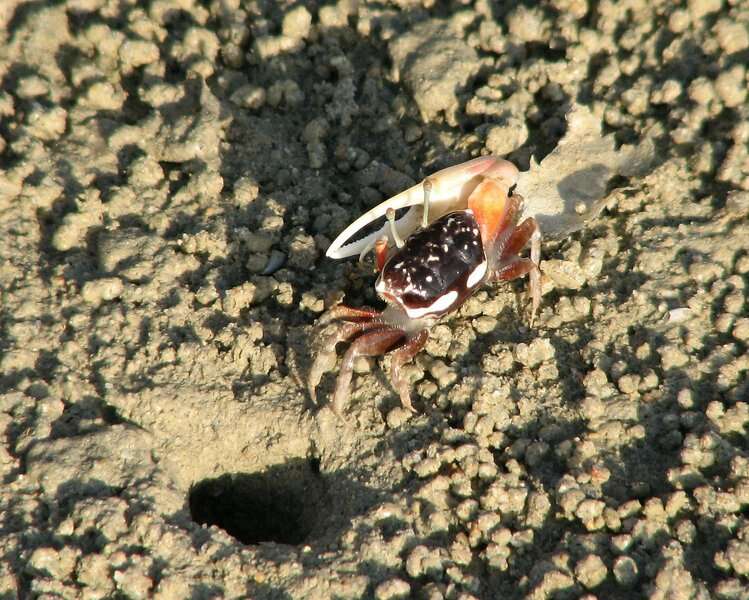
Eubrachyura is a group of decapod crustaceans (ranked as a "section") comprising the more derived crabs. It is divided into two subsections, based on the position of the genital openings in the two sexes. In the Heterotremata, the openings are on the legs in the males, but on the sternum in females, while in the Thoracotremata, the openings are on the sternum in both sexes. This contrasts with the situation in other decapods, in which the genital openings are always on the legs. Heterotremata is the larger of the two groups, containing the species-rich superfamilies Xanthoidea and Pilumnoidea
Margaritifera
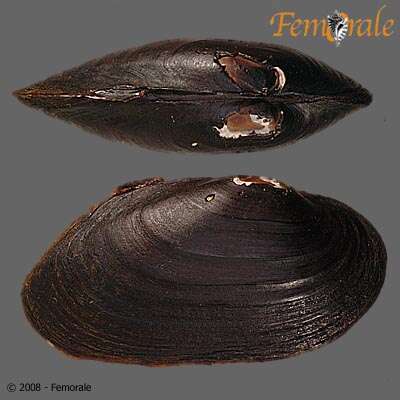
Margaritifera is a genus of freshwater mussels, aquatic bivalve molluscs in the family Margaritiferidae, the freshwater pearl mussels.
Calappidae
Calappidae is a family of crabs containing the following genera:

Carcharias
Carcharias, also known as sand tiger sharks, is a genus of mackerel sharks belonging to the family Carchariidae, of which it is the only extant member. Once bearing many prehistoric species, all have gone extinct with the exception of the critically endangered sand tiger shark.

Glycymeris
Glycymeris, common name the bittersweet clams, is a genus of saltwater clams, marine bivalve molluscs in the family Glycymerididae.

Centroberyx
Centroberyx, often referred to as nannygais, is a genus of ray-finned fishes found. It is found in the Indian Ocean and western Pacific Ocean, with its greatest species richness off southern Australia. They are reddish in colour and somewhat resemble the related soldierfish. Depending on species, they may have a maximum length of . They are found at depths of . Members of this genus are also known from fossils from the Cretaceous.
Mymarommatidae
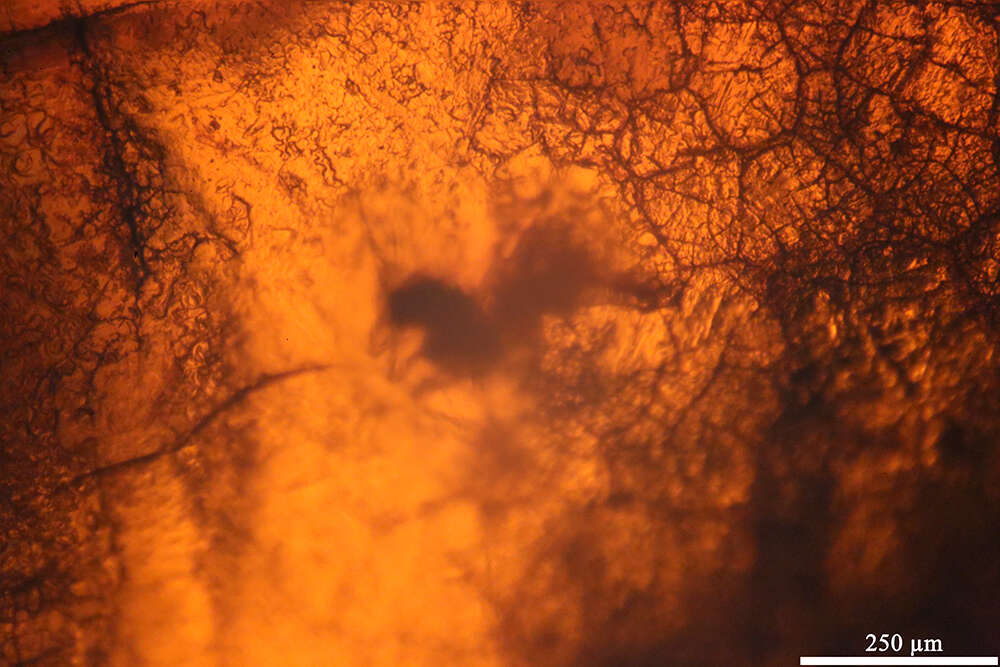
The Mymarommatidae, sometimes referred to as false fairy wasps, are a very small family of microscopic parasitic wasps. Only about half of the known species are living taxa (the others are fossils), but they are found worldwide.
Nephrops
Nephrops is a genus of lobsters comprising a single extant species, Nephrops norvegicus (the Norway lobster or Dublin Bay prawn), and several fossil species. It was erected by William Elford Leach in 1814, to accommodate N. norvegicus alone, which had previously been placed in genera such as Cancer, Astacus or Homarus. The genus name Nephrops comes from Ancient Greek νεφρός (nephrós), meaning "kidney", and ὄψ (óps), meaning "eye", and refers to the shape of the animal's compound eye.
Orthurethra
Orthurethra is a clade of air-breathing land snails, terrestrial pulmonate gastropod mollusks in the clade Stylommatophora.
Sigmurethra
Sigmurethra is a taxonomic category of air-breathing land snails and slugs, terrestrial pulmonate gastropod molluscs. This is an informal group which includes most land snails and slugs.
Lorica
genus of molluscs
Volutoidea
Volutoidea is a taxonomic superfamily of predatory sea snails, marine gastropod mollusks in the clade Neogastropoda.
Heptranchias
Heptranchias is a genus of sharks in the family Hexanchidae.
Mastotermes
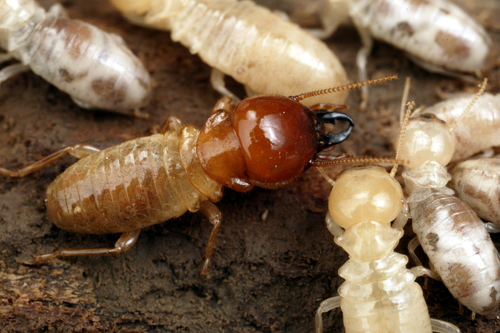
Mastotermes is a genus of termites. The sole living species is Mastotermes darwiniensis, found only in northern Australia. A number of extinct taxa are known from fossils. It is a very peculiar insect, the most primitive termite alive. As such, it shows notable similarities to cockroaches in the family Cryptocercidae, the termites' closest relatives. These similarities include the anal lobe of the wing and the laying of eggs in bunches, rather than singly. The termites were traditionally placed in the Exopterygota, but such an indiscriminate treatment makes that group a paraphyletic grade of b
Myrtea
Myrtea is a genus of bivalves, marine gastropod molluscs in the family Lucinidae.