Category
page 1Extracorporeal procedures
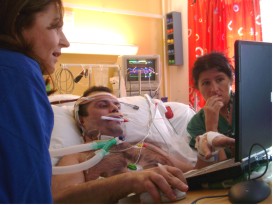
extracorporeal membrane oxygenation
extracorporeal technique of providing both cardiac and respiratory support
cardiopulmonary bypass
technique that temporarily takes over the function of the heart and lungs during surgery

apheresis
Apheresis (ἀφαίρεσις (aphairesis, "a taking away")) is a medical technology in which the blood of a person is passed through an apparatus that separates one particular constituent and returns the remainder to the circulation. It is thus an extracorporeal therapy.
renal replacement therapy
therapy that replaces the normal blood-filtering function of the kidneys

autotransfusion
Autotransfusion is a process wherein a person receives their own blood for a transfusion, instead of banked allogenic (separate-donor) blood. There are two main kinds of autotransfusion: Blood can be autologously "pre-donated" (termed so despite "donation" not typically referring to giving to one's self) before a surgery, or alternatively, it can be collected during and after the surgery using an intraoperative blood salvage device (such as a Cell Saver, HemoClear or CATS). The latter form of autotransfusion is utilized in surgeries where there is expected a large volume blood loss – e.g. aneu
hemofiltration
Hemofiltration, also haemofiltration, is a renal replacement therapy which is used in the intensive care setting. It is usually used to treat acute kidney injury (AKI), but may be of benefit in multiple organ dysfunction syndrome or sepsis. During hemofiltration, a patient's blood is passed through a set of tubing (a filtration circuit) via a machine to a semipermeable membrane (the filter) where waste products and water (collectively called ultrafiltrate) are removed by convection. Replacement fluid is added and the blood is returned to the patient.