Category
page 1Falisci

Civita Castellana
Italian comune

Montefiascone
thumb|Grave of Bishop Fugger featured in Est! Est! Est! legend.
Montefiascone is a town and comune of the province of Viterbo, in Lazio, central Italy. It stands on a hill on the southeast side of Lake Bolsena, about north of Rome.

Calcata
Calcata (locally ) is a comune and town in the Province of Viterbo in the Italian region Lazio, located north of Rome by car, overlooking the valley of river.
Rignano Flaminio
Italian comune

Capena
Capena (until 1933 called Leprignano) is a town and comune in the Metropolitan City of Rome, Lazio region (central Italy). The town has borrowed its modern name from a pre-Roman and Roman settlement that was to its north.

Corchiano
Corchiano is a town and comune in the province of Viterbo, Lazio, central Italy. It was an ancient settlement of the Faliscans and, in the Renaissance and later, a fief of the Farnese family.
Lake Bracciano
a lake of volcanic origin in the Italian region of Lazio, 32 km northwest of Rome. It is the second largest lake in the region and one of the major lakes of Italy.
Faliscan
language of the Faliscan civilization

Falerii Novi
thumb|250px|The apses of the church of Santa Maria di Falleri.

Falisci
thumb|300px|Map of early Italic and surrounding languages.
thumb|250px|Map c. 450 BC
thumb|300px|View from the general vicinity of Falerii to Monte Soratte on the southern border.
Lake Vico
lake in Lazio, Italy
Grattius
Grattius (or Gratius) Faliscus was a Roman poet who flourished during the life of Augustus (63 BC – 14 AD). He is known as the author of a Cynegetica, a poem on hunting.
Cimini Hills
Mountain range in Italy
Monti Sabatini
Mountain range in Italy
Titus Annianus
ancient Roman poet
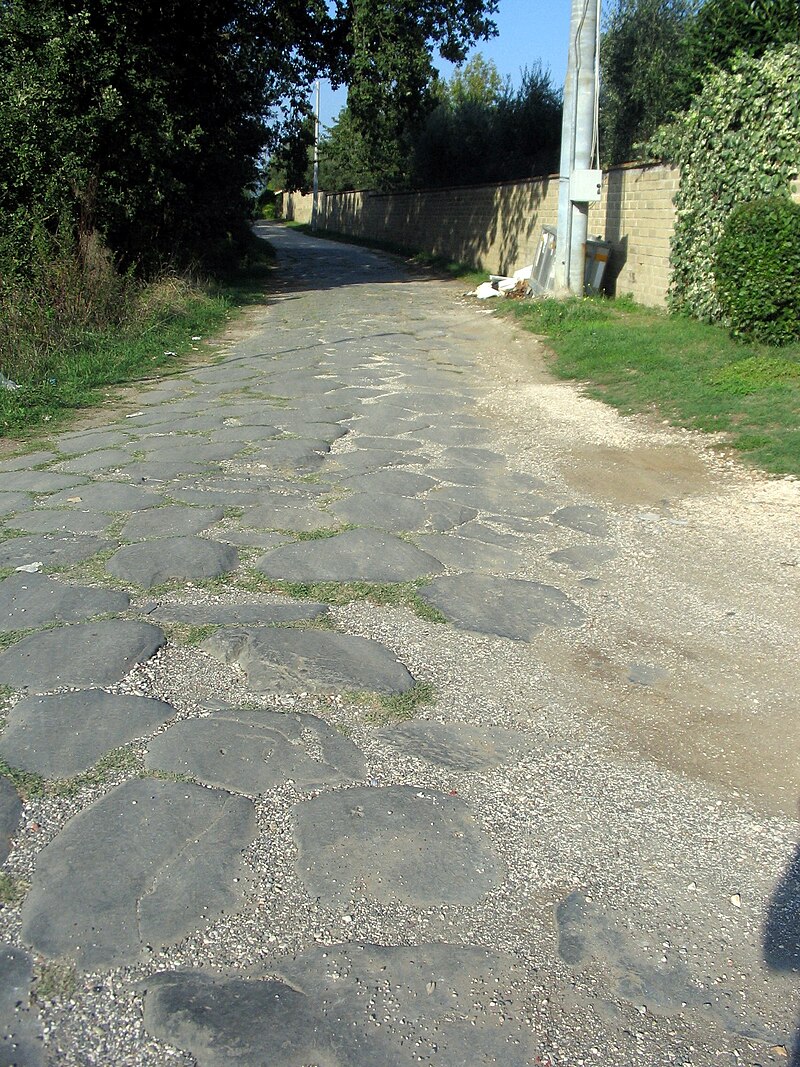
Fescennia
Fescennia or Fescennium was an ancient city of Etruscan/Faliscan origin, which is probably to be placed immediately to the north of the modern Corchiano, north west of Civita Castellana, in central Italy. The Via Amerina traverses it. At the Riserva S. Silvestro, walls exist. At Corchiano itself, however, similar walls may be traced, and the site is a strong and characteristic triangle between two deep ravines, with the third (west) side cut off by a ditch. Here, too, remains of two bridges may be seen, and several rich tombs have been excavated.