Category
page 1Feeling
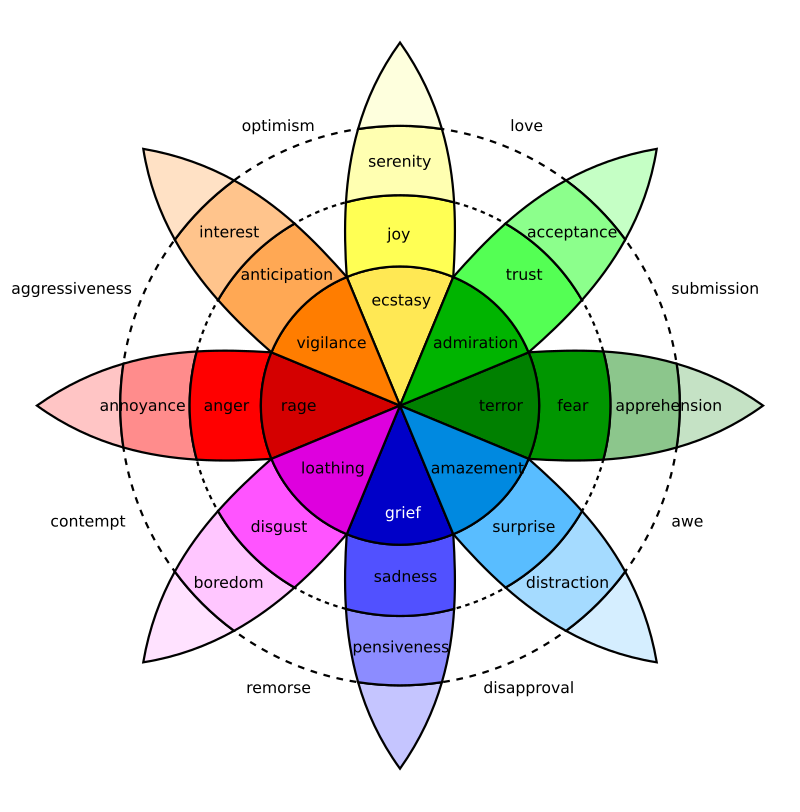
pleasure
Pleasure is an experience that feels good, that involves the enjoyment of something. It contrasts with pain or suffering, which are forms of feeling bad. It is closely related to value, desire and action: humans and other conscious animals find pleasure enjoyable, positive or worthy of seeking. A great variety of activities may be experienced as pleasurable, such as eating, having sex, listening to music or playing games. Pleasure is part of various other mental states such as ecstasy, euphoria and flow. Happiness and well-being are closely related to pleasure but not identical with it. There

feeling
According to the APA Dictionary of Psychology, a feeling is "a self-contained phenomenal experience"; feelings are "subjective, evaluative, and independent of the sensations, thoughts, or images evoking them". The term feeling is closely related to, but not the same as, emotion. Feeling may, for instance, refer to the conscious subjective experience of emotions. The study of subjective experiences is called phenomenology. Psychotherapy generally involves a therapist helping a client understand, articulate, and learn to effectively regulate the client's own feelings, and ultimately to take resp

suffering
thumb|Tragic mask on the [[façade of the Royal Dramatic Theatre in Stockholm, Sweden]]

respect
thumb|right|A sign entreating "silence and respect" at Arlington National Cemetery
Respect, also called esteem, is a positive feeling or deferential action shown towards someone or something considered important or held in high esteem or regard. It conveys a sense of admiration for good or valuable qualities. It is also the process of honoring someone by exhibiting care, concern, or consideration for their needs or feelings.
mood
relatively long lasting emotional, internal and subjective state

affect
experience of feeling or emotion

hygge
thumb|Illustration of a hygge situation, with Meik Wiking's The Little Book of Hygge
thumb|"Hygge" sign in a restaurant in Nørrebro
affect heuristic
type of heuristic in which emotional response, or "affect" in psychological terms, plays a lead role
creepiness
Creepiness is the state of being creepy, or causing an unpleasant feeling of fear or unease to someone and/or something. Certain traits or hobbies may make people seem creepy to others; interest in horror or the macabre might come across as 'creepy', and often people who are perverted or exhibit predatory behavior are called 'creeps'. The internet, especially some functions of social media, has been described as increasingly creepy. Adam Kotsko has compared the modern conception of creepiness to the Freudian concept of . The term has also been used to describe paranormal or supernatural phenom