Category
page 1Finance

capitalism
Capitalism is an economic system based on the private ownership of the means of production and its use for the purpose of obtaining profit. This socioeconomic system has developed historically in several stages, and is defined by a number of constituent elements: private property, profit motive, capital accumulation, competitive markets, commodification, wage labor, and an emphasis on innovation and economic growth. Capitalist economies may experience business cycles of economic expansion followed by recessions.

finance
Finance refers to monetary resources and to the study and discipline of money, currency, assets and liabilities. As a subject of study, it is a field of business administration which involves the planning, organizing, leading, and controlling of an organization's resources to achieve its goals. Based on the scope of financial activities in financial systems, the discipline can be divided into personal, corporate, and public finance.
asset
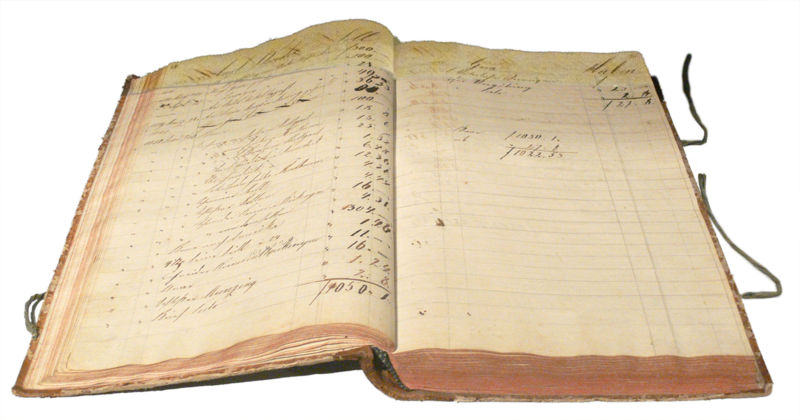
In financial accounting, an asset is any resource owned or controlled by a business or an economic entity. It is anything (tangible or intangible) that can be used to produce positive economic value. Assets represent value of ownership that can be converted into cash (although cash itself is also considered an asset).
The balance sheet of a firm records the monetary value of the assets owned by that firm. It covers money and other valuables belonging to an individual or to a business.
Total assets can also be called the balance sheet total.

renting
thumb|Notice of renting availability of a building in Kaohsiung, Taiwan
thumb|Notice of renting availability at the Villa Freischütz in Meran in 1911
Renting, also known as hiring or letting, is an agreement where a payment is made for the use of a good, service or property owned by another over a fixed period of time. Typically a written agreement is signed to establish the roles and expectations of both the tenant and landlord. There are many different types; a rental agreement tends to refer to short-term rental, whereas lease refers to longer-term rental, also known as leasing.
central business district
commercial and business area of a city; not necessarily synonymous with "city center"/"downtown"
liquidation
Liquidation is the process in accounting by which a company is brought to an end. The assets and property of the business are redistributed. When a firm has been liquidated, it is sometimes referred to as wound-up or dissolved, although dissolution technically refers to the last stage of liquidation. The process of liquidation also arises when customs, an authority or agency in a country responsible for collecting and safeguarding customs duties, determines the final computation or ascertainment of the duties or drawback accruing on an entry.
financial stability
state, property or ability of a financial system, organisation or individuals to dissipate financial imbalances that arise internally or externally as a result of significant adverse and unforeseeable circumstances
Profit motive
Motivation for businesses to maximize profits
Capital Markets Union
european economic policy initiative
Islamic Economics Organization of Iran
Islamic banking institution created in 1979 after the Islamic Revolution

Ettore Conti of Verampio, Count of Verampio
Italian businessman (1871-1972)