Category
page 1Financial economics

inflation
thumb|upright=1.6|Global rates of inflation in October 2025 among International Monetary Fund members
thumb|upright=1.6|UK and US monthly inflation rates from January 1989
behavioral economics
discipline of economy studying the effects of psychological, cognitive, emotional, cultural and social factors on decisions
external debt
total debt a country owes to foreign creditors

fundraising
thumb|Door to door fundraising frequently involves a hand-held collection box.
Fundraising or fund-raising is the process of seeking and gathering voluntary financial contributions by engaging individuals, businesses, charitable foundations, or governmental agencies. Although fundraising typically refers to efforts to gather money for nonprofit organizations, it is sometimes used to refer to the identification and solicitation of investors or other sources of capital for-profit enterprises.
goodwill
accounting term for the intangible asset recognized when a firm is purchased as a going concern
value added
in business: the difference between the sale price and the production cost of a product is the unit profit. In economics, the sum of the unit profit, the unit depreciation cost, and the unit labor cost is the unit value added.
financial literacy
possession of skills and knowledge to make informed and effective personal financial decisions
solvency
Solvency, in finance or business, is the degree to which the current assets of an individual or entity exceed the current liabilities of that individual or entity. Solvency can also be described as the ability of a corporation to meet its long-term fixed expenses and to accomplish long-term expansion and growth. This is best measured using the net liquid balance (NLB) formula. In this formula, solvency is calculated by adding cash and cash equivalents to short-term investments, then subtracting notes payable. There exist cryptographic schemes for both proofs of liabilities and assets, especial
commission
remuneration paid for brokering a sale or other transaction
subprime lending
term
market trend
tendency of a financial market to move in a particular direction over time
financial economics
branch of economics concerned with financial or monetary transactions
reserve requirement
type of regulation on commercial banks
international finance
financial services between nations
indexation
Indexation is a technique to adjust income payments by means of a price index, in order to maintain the purchasing power of the public after inflation, while deindexation is the unwinding of indexation. It is often used to make sure regular payments, such as pension payments keep pace with inflation, so that they have the same value in real terms over time.
risk premium
minimum amount of money by which the expected return on a risky asset must exceed the known return on a risk-free asset

financialization
thumb|350px|right|Share in Gross domestic product|GDP of US financial sector from 1860 to 2008
interest rate parity
equilibrium state for interest rates in two countries/currencies
valuation
process of estimating what an asset is financially worth
Modigliani–Miller theorem
theorem that in the absence of taxes, bankruptcy costs, agency costs, and asymmetric information, and in an efficient market, the enterprise value of a firm is unaffected by how that firm is financed
business valuation
process of determining economic value of an owner's interest
bid price
Stock Market
capital adequacy ratio
ratio of a bank's capital to its risk
ask price
in finance markets
consumer debt
amount owed by individual consumers (as opposed to amounts owed by businesses or governments)
returns
benefit distributed to the owner of a factor of production
country risk
risk of investing or lending in a country, arising from possible changes in the overall business environment

yield
in finance, a measure of the ex-ante return to a holder of the security
monopoly price
aspect of monopolistic markets
market anomaly
predictability in a financial market that seems to be inconsistent with (typically risk-based) theories of asset prices
biflation
Biflation (sometimes mixflation, indeflation, or compartflation) is a state of the economy, in which the processes of inflation and deflation occur simultaneously in different parts of the economy. The term was first coined in 2003 by F. Osborne Brown, a senior financial analyst at Phoenix Investment Group, and has later been widely used in the media. During the biflation, there is a simultaneous rise in prices (inflation) for commodities bought out of the basic income (earnings), and a parallel fall in prices (deflation) for goods bought mainly on credit. Biflation may be seen in the CPI comp

risk pool
one of the forms of risk management mostly practiced by insurance companies, with contributions and liabilities shared among multiple entities
financial innovation
types of securities
prime rate
interest rate at which banks lend to customers with good credit
portfolio optimization
process of selecting a portfolio
political risk
complications businesses and governments may face as a result of political decisions
Agflation
Agflation (or agrarian inflation) is an economic phenomenon of an advanced increase in the price for food and for industrial agricultural crops when compared with the general rise in prices or with the rise in prices in the non-agricultural sector. The term was increasingly used in the analytical reports, for example, by the investment banks Merrill Lynch in early 2007 and Goldman Sachs in early 2008. They used the term to denote a sharp rise in prices for agricultural products, or, more precisely, a rapid increase in food prices against the background of a decrease in its reserves, a relative
United States housing bubble
economic bubble in the United States in the 2000s and 2010s
quasilinear utility
function linear in one argument (generally the numeraire), used in economics and consumer theory
Journal of Financial Economics
journal
internal debt
part of the total government debt in a country that is owed to lenders within the country
Bull
stock market speculator
risk seeking
In economics, finance, and psychology, risk-seeking (also called risk-loving or risk preference) refers to a behavioral tendency to prefer uncertain options with potentially higher rewards over safer alternatives with lower expected value. In other words, risk-seeking individuals derive greater satisfaction or perceived utility from taking chances, even when the probable outcome may be less favorable. This is a big issue seen in stock trading, for example, in where people take the risk to either hold or sell their stocks depending on past market trends.
Forward exchange rate
Exchange rate of a currency on a future date
asset pricing
theory of how equities and debt instruments are valued
forward rate
future yield on a bond
Fundamental theorem of asset pricing
Necessary and sufficient conditions for a market to be arbitrage free and complete
consumption-based capital asset pricing model
return on investment metrics
business value
Broad term for all forms of value in businesses
Market microstructure
branch of finance
bootstrapping
term within finance
triangular arbitrage
forex arbitrage across three currencies
Constant proportion portfolio insurance
strategy that allows an investor to maintain an exposure to the upside potential of a risky
Covered interest arbitrage
foreign exchange market
Capital asset
property of any kind held by an assessee
market correction
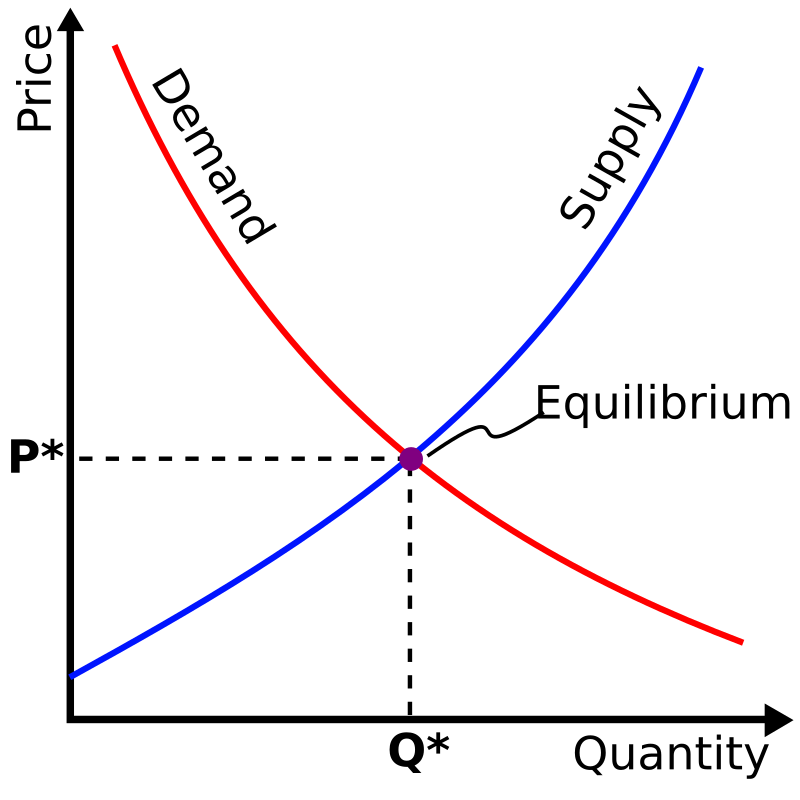
new equilibrium price of a commodity
International Fisher effect
financial economics
Behavioral Strategy
Grossman-Stiglitz Paradox
Economic paradox on market efficiency
cryptoeconomics
Cryptoeconomics is an evolving economic paradigm for a cross-disciplinary approach to the study of digital economies and decentralized finance (DeFi) applications. Cryptoeconomics integrates concepts and principles from traditional economics, cryptography, computer science, and game theory disciplines. Just as traditional economics provides a theoretical foundation for traditional financial (a.k.a., Centralized Finance or CeFi) services, cryptoeconomics provides a theoretical foundation for DeFi services bought and sold via fiat cryptocurrencies, and executed by smart contracts.