Category
page 1Fingers
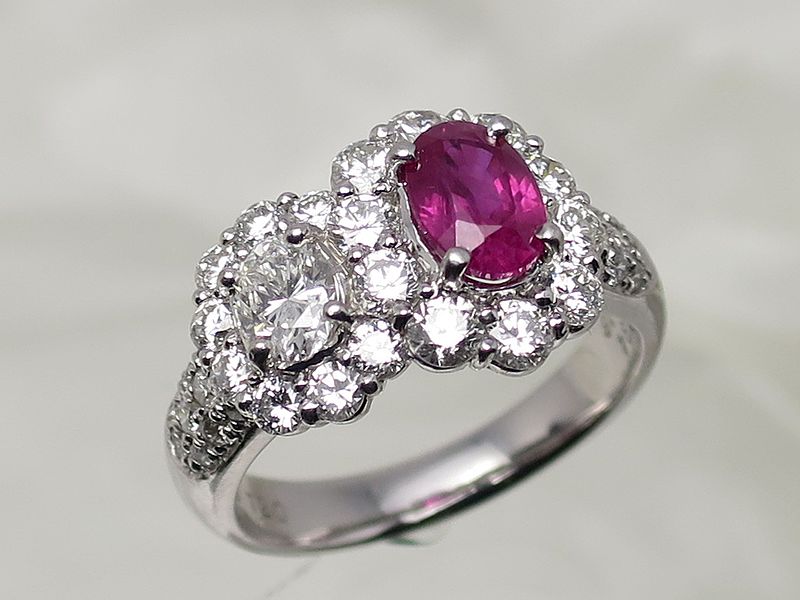
ring
circular object worn as a type of ornamental jewellery

thumb
The thumb is the first digit of the hand, next to the index finger. When a person is standing in the medical anatomical position (where the palm is facing to the front), the thumb is the outermost digit. The Medical Latin English noun for thumb is pollex (compare hallux for big toe), and the corresponding adjective for thumb is pollical.

finger
A finger is a prominent digit on the forelimbs of most tetrapod vertebrate animals, especially those with prehensile extremities (i.e. hands) such as humans and other primates. Most tetrapods have five digits (pentadactyly), and short digits (i.e. significantly shorter than the metacarpal/metatarsals) are typically referred to as toes, while those that are notably elongated are called fingers. In humans, the fingers are flexibly articulated and opposable, serving as an important organ of tactile sensation and fine movements, which are crucial to the dexterity of the hands and the ability to gr
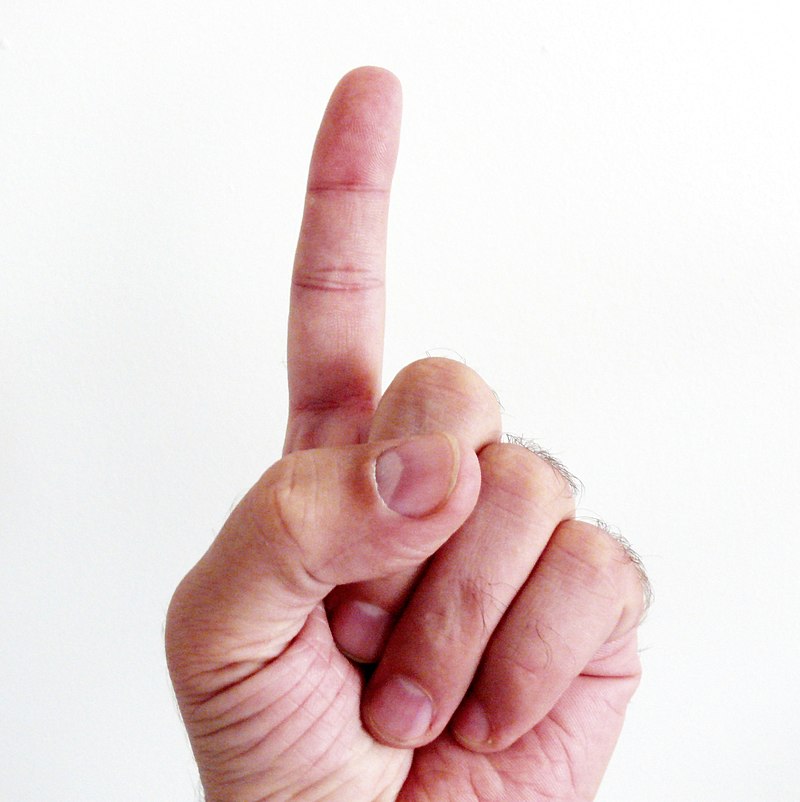
index finger
finger

little finger
smallest finger of the human hand

middle finger
third finger of the human hand

ring finger
finger

hitchhiking
[[File:Hitchhiking worldwide 2024.png|thumb|Hitchhiking waiting times worldwide with uncertainties of estimation (2024) - based on data from Hitchmap ]]
thumb|A man and woman hitchhiking near Vicksburg, Mississippi, in 1936, photograph by [[Walker Evans]]
thumb|upright|A man with both a physical gesture and a sign

fingerprint
thumb|A fingerprint

fingering
use of fingers to sexually stimulate

thimble
thumb|A thimble
thumb| (Thimblemaker) from by Jost Amman, 1568

polydactyly
the finger
obscene hand gesture
nail biting
oral compulsive habit
trigger finger disorder
disorder of the finger
finger snapping
the act of creating a snapping sound with one's fingers
thumbs up
hand gesture indicating approval
%20(1905)%20(14597875770).jpg)
dermatoglyphics
thumb|Guide to fingerprint identification
Dermatoglyphics (from Ancient Greek derma, "skin", and glyph, "carving") is the scientific study of fingerprints, lines, mounts and shapes of hands, as distinct from the superficially similar pseudoscience of palmistry.
knuckle
The knuckles are the joints of the fingers. The word is cognate to similar words in other Germanic languages, such as the Dutch "knokkel" (knuckle) or German "Knöchel" (ankle), i.e., Knöchlein, the diminutive of the German word for bone (Knochen). Anatomically, it is said that the knuckles consist of the metacarpophalangeal (MCP) and interphalangeal (IP) joints of the finger. The knuckles at the base of the fingers may be referred to as the 1st or major knuckles while the knuckles at the midfinger are known as the 2nd and 3rd, or minor, knuckles. However, the ordinal terms are used inconsisten
digit ratio
ratio of the lengths of different digits or fingers typically measured from the midpoint of bottom crease (where the finger joins the hand) to the tip of the finger
crossed fingers
hand gesture
Three-finger salute
Salute used in oath-taking
mallet finger
an extensor tendon injury at the farthest away finger joint

camptodactyly
Camptodactyly is a medical condition that causes one or more digits (fingers or toes) to be permanently bent. It involves fixed flexion deformity of the proximal interphalangeal joints.
thumb sucking
behavior found in humans, chimpanzees, captive ring-tailed lemurs, and other primates
Fingerhakeln
traditional sports in the alps
finger trap
gag toy
finger gun
hand gesture
middle finger of Galileo's right hand
middle finger of Galileo Galilei
clubbed thumb
genetic trait
finger cot
personal protective equipment
triphalangeal thumb
congenital disorder
steel bar
guitar instrument
knuckle mnemonic
mnemonic for the lengths of the months of the year in the Gregorian and Julian calendars
Hitchhiker's thumb
condition in which the thumbs can bend backwards 90°
swan neck deformity
medical condition