Category
page 2Fishkeeping
Danioninae
The danionins are a group of small, slender "minnow-type" freshwater fish nestled in the family Danionidae of the suborder Cyprinoidei. Species of this group are in the genera clades Danio and Devario (which also includes Chela, Laubuka, Microdevario, and Microrasbora genera), based on the latest phylo-genetic research by Fang et al in 2009. They are primarily native to the fresh waters of South and Southeast Asia, with fewer species in Africa. Many species are brightly coloured and are available as aquarium fish worldwide. Fishes of the Danio clade tend to have horizontal striping, rows of sp
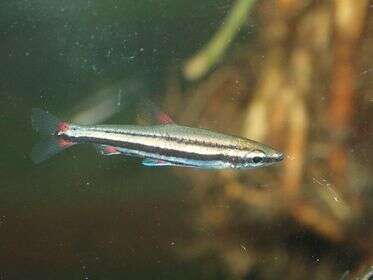
Nannostomus trifasciatus
species of fish
Takashi Amano
Japanese photographer (1954–2015)

striped Raphael catfish
species of catfish (Platydoras armatulus)

Dermogenys
Dermogenys is a genus of viviparous halfbeaks. They are widely distributed in fresh and brackish water in South and Southeast Asia, ranging from India to the Philippines and Greater Sundas. They are all viviparous, producing small clutches of up to 30 fry that closely resemble the adults, except they are much smaller, around in length. Adults are typically around in length, with females being slightly larger than males. Males tend to be more brightly coloured and are well known for being aggressive towards one another. The wrestling halfbeak, D. pusilla, is widely used in Asia as fighting anim

Trichopsis vittata
species of fish

Wrestling halfbeak
species of fish
cleaner fish
tribe of fishes
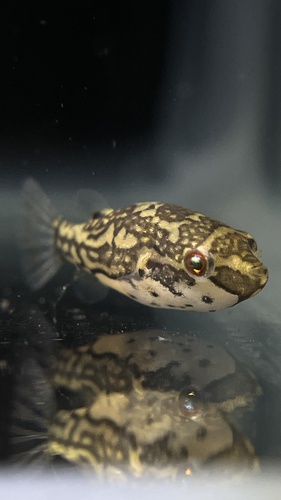
Carinotetraodon lorteti
species of fish

Carnegiella myersi
species of fish

Carinotetraodon irrubesco
species of fish
aquarium fish feed
fodder for pet fish

Hemirhamphodon
Hemirhamphodon is a genus of viviparous halfbeak fish. Most recognized species are endemic to lowland forest streams, rivers and swamps in Borneo (often in areas with peat), but H. phaiosoma and H. pogonognathus are also found elsewhere in Southeast Asia. The largest species reaches about in length. These fish are viviparous (with the exception of oviparious H. tengah) and are sometimes kept as aquarium fish, but otherwise have no commercial value.
Charles Haskins Townsend
American zoologist (1859–1944)
marine aquarium
Salt water aquarium

Blue-eyed plec
species of fish
aquarium filter
maintenance systems for aquaria

Neoheterandria elegans
species of fish
Nannostomus unifasciatus
species of fish
bubble nest
nest built by some fish- and frog species to contain their eggs

aquascaping
thumb|upright=1.4|alt=Aquarium containing a variety of plants and a piece of driftwood, with white gravel at front and a plant with red leaves at the upper left.|58 United States customary units#Fluid volume|gallon (220 [[litre) freshwater aquascape]]
Aquascaping is the craft of arranging aquatic plants, as well as rocks, stones, cavework, or driftwood, in an aesthetically pleasing manner within an aquarium—in effect, gardening under water. Aquascape designs include a number of distinct styles, including the garden-like Dutch style and the Japanese-inspired nature style. Typically, a

Nomorhamphus
Nomorhamphus is a southeast Asian genus of viviparous halfbeaks from streams, rivers and lakes in Sulawesi (Indonesia) and the Philippines. They are all viviparous, producing small clutches of around a dozen fry about long at birth. Females are generally larger than the males. In the largest species, such as Nomorhamphus liemi, the females typically reach about in length, whereas the males reach about in length. Males are also more brightly coloured than the females (often having red, black, or blue patches on their fins). Compared with many other halfbeaks, the lower mandible, or beak, is rel
fish measurement
measurement of various fish characteristics such as length and weight
Paretroplus dambabe
species of fish
George S. Myers
U.S. ichthyologist and herpetologist

Spinyhead blenny
species of fish

Sharp-snouted Piranha
species of fish
Sven Oscar Kullander
Swedish ichthyologist and senior curator at the Swedish Museum of Natural History in Stockholm

freshwater aquarium
water tank for holding aquatic animals

bog-wood
thumb|Bog-wood from the Sava River, Bosnia and Herzegovina
Bog-wood (also spelled bogwood or bog wood), also known as abonos and, especially amongst pipe smokers, as morta, is a material from trees that have been buried in peat bogs and preserved from decay by the acidic and anaerobic bog conditions, sometimes for hundreds or even thousands of years. The wood is usually stained brown by tannins dissolved in the acidic water. Bog-wood represents the early stages in the fossilisation of wood, with further stages ultimately forming jet, lignite and coal over a period of many millions of years. Bo

Carinotetraodon imitator
species of fish

Ctenobrycon spilurus
species of fish
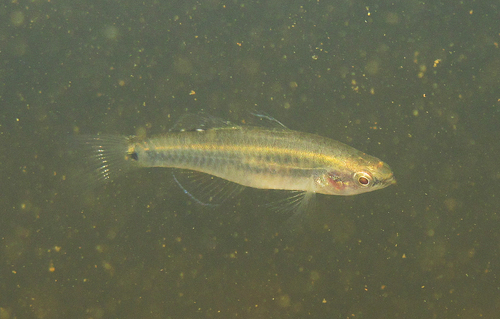
Hypseleotris cyprinoides
species of fish
Flowerhorn cichlid
Flowerhorn cichlids are ornamental aquarium fish noted for their vivid colors and the distinctively shaped heads for which they are named.
Protein skimmer
water treatment technology
Herbert R. Axelrod
American ichthyologist (1927–2017)
Pyrrhulina rachoviana
species of fish
Anna Thynne
British zoologist
Pastaza corydoras
species of catfish
live rock
rock from the ocean that is introduced into a saltwater aquarium

Melanotaenia affinis
species of fish
denitrifying bacteria
bacteria using nitrate and nitrite as a terminal electron acceptor
list of freshwater aquarium plant species
Wikimedia list article
L-number
frame|right|Baryancistrus L-18 is also described as L-85. The L-number system is a semi-scientific classification system of catfish based on photographs of shipments of tropical catfish of the family Loricariidae published by the German aquarium magazine DATZ (Die Aquarien- und Terrarienzeitschrift (The Aquarium and Terrarium Magazine)). The first L-number was published in 1988.
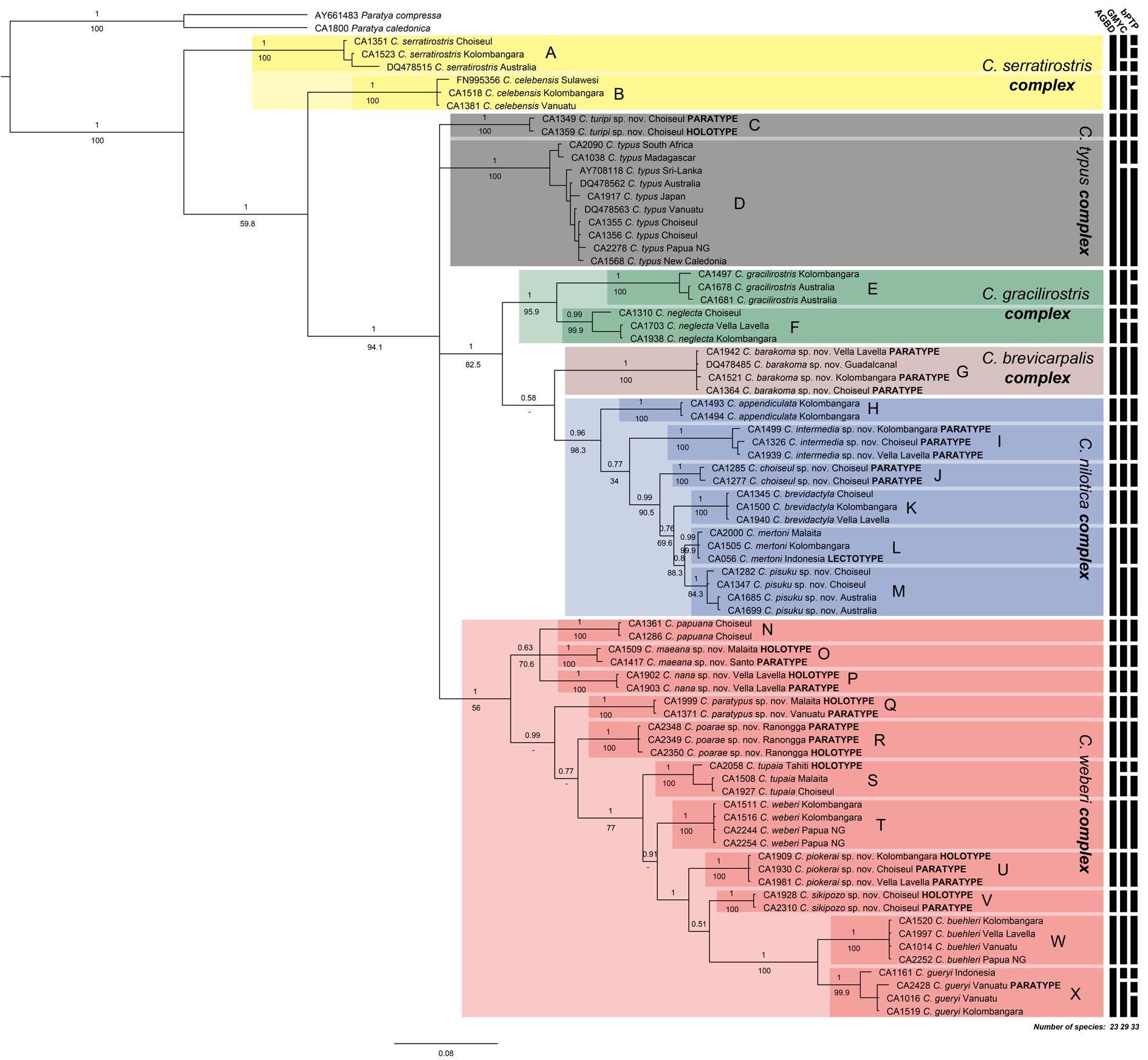
Caridina gracilirostris
species of crustacean
Tetra
company
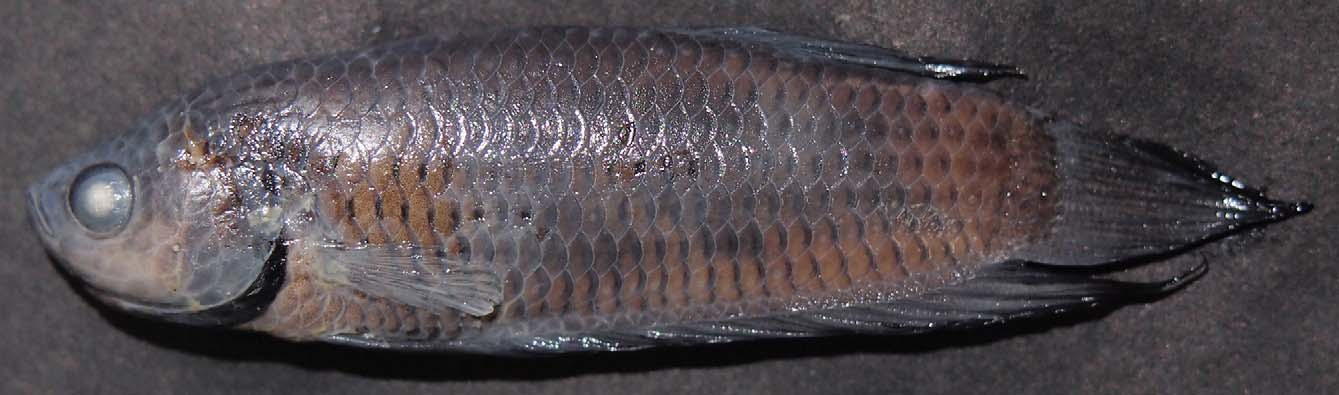
Betta mahachaiensis
species of fish
reef aquarium
marine aquarium that displays live corals and other marine animals
list of marine aquarium fish species
Wikimedia list article
ephippia
thumb|right|Resting egg pouch (ephippium) and the juvenile daphnid that just hatched from it
Pierre Carbonnier
French scientist (1829-1883)
aquarium heater
heating unit for aquaria (or terraria)
Algae scrubber
biological water filter that uses light to grow algae which removes undesirable chemicals from aquarium water
community aquarium
tanks for more than one species of fish
list of freshwater aquarium invertebrate species
Wikimedia list article
list of aquarium diseases
Wikimedia list article

Léonard Baldner
French naturalist (1612–1694)
William T. Innes
American photographer and zoologist (1874–1969)
aquarist
alt=Designing and maintaining of Aquarium Tank by the Students of College of Agriculture Yandev. Gboko Benue State|thumb|An aquarist in the process of designing a tank for educational purposes.
An aquarist is a person who manages aquariums, either professionally or as a hobby. They typically care for aquatic animals, including fish and marine invertebrates. Some may care for aquatic mammals. Aquarists often work at public aquariums. They may also work at nature reserves, zoos, and amusement parks. Some aquarists conduct field research outdoors. In business, aquarists may work at pet stores, as
livewell
thumb|A wooden livewell (container for live bait), towed by fishing boat. Exposition in Fisheries Museum in Hel (branch of National Maritime Museum in Gdańsk)
A livewell is a water tank found on many fishing boats that is used to keep live bait and caught fish alive. It works by pumping natural water from the surrounding waterbody into the tank, as well as an air pump for water aeration. It is a standard design feature in many modern sport fishing boats and yachts, especially those used in fishing tournaments, as competitions typically weigh participants' catch only at the end of the round and