Category
page 1Flavii

Constantine the Great
Roman emperor from 306 to 337 and first to convert to Christianity (272–337)

Vespasian
Vespasian (; ; 17 November 9 AD – 23 June 79) was Roman emperor from 69 to 79. The last emperor to reign in the Year of the Four Emperors, he founded the Flavian dynasty, which ruled the empire for 27 years. His fiscal reforms and consolidation of the empire brought political stability and an extensive building program.
.png)
Titus
Titus Flavius Vespasianus (; 30 December 39 – 13 September 81 AD) was Roman emperor from 79 to 81 AD. A member of the Flavian dynasty, Titus succeeded his father Vespasian upon his death, becoming the first Roman emperor ever to succeed his biological father.

Domitian
Domitian ( ; (24 October 51 – 18 September 96) was Roman emperor from 81 to 96. The son of Vespasian and the younger brother of Titus, his two predecessors on the throne, he was the last member of the Flavian dynasty. Described by the historian Brian W. Jones as "a ruthless but efficient autocrat", his authoritarian style of ruling put him at sharp odds with the Senate, whose powers he drastically curtailed.

Julian
last Pagan Roman emperor, reigned 361 to 363
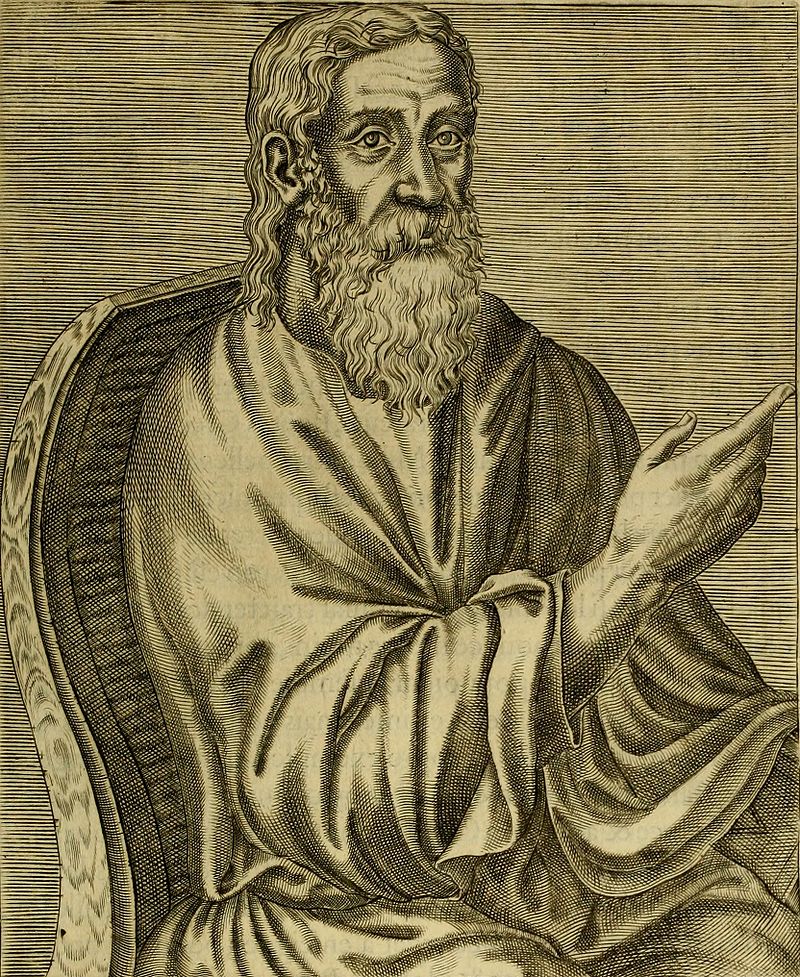
Clement of Alexandria
Christian theologian (c.150 – c.215)

Constantius Chlorus
Roman emperor (250-306)

Constantius II
Roman emperor (317-361)

Helena Augusta
saint, first wife of Roman emperor Constantius Chlorus, and mother of Emperor Constantine the Great (250-330)

Constantine II
Roman emperor (316-340)
Arrian
Arrian of Nicomedia (; Greek: Arrianós; ; )
%20MET%20DT5196.jpg)
Constans
Flavius Julius Constans ( 323 – 350), also called Constans I, was Roman emperor from 337 to 350. He held the imperial rank of caesar from 333, and was the youngest son of Constantine the Great.

Constantius III
Western Roman Emperor (370-421)

Constantine III
Western Roman Emperor from 407 to 411

Flavia Maxima Fausta
Roman empress and second wife of Constantine I
%2C_inv._2210%2C_Roman_-_Braccio_Nuovo%2C_Museo_Chiaramonti_-_Vatican_Museums_-_DSC00897.jpg)
Philostratus
Philostratus or Lucius Flavius Philostratus (; ; 170s – 240s AD), called "the Athenian", was a Greek sophist of the Roman imperial period. His father was a minor sophist of the same name. He flourished during the reign of Septimius Severus (193–211) and died during that of Philip the Arab (244–249), probably in Tyre.
.png)
Crispus
Flavius Julius Crispus (; 300 – 326) was the eldest son of the Roman emperor Constantine I, as well as his junior colleague (caesar) from March 317 until his execution by his father in 326. The grandson of the augustus Constantius I, Crispus was the elder half-brother of the future augustus Constantine II and became co-caesar with him and with his cousin Licinius II at Serdica, part of the settlement ending the Cibalensean War between Constantine and his father's rival Licinius I. Crispus ruled from Augusta Treverorum (Trier) in Roman Gaul between 318 and 323 and defeated the navy of Licinius

Flavia Maximiana Theodora
Roman empress, wife of Constantius Chlorus
Constantius Gallus
Junior Roman emperor from 351 to 354

Dalmatius
Flavius Julius Dalmatius (died ), sometimes spelled Delmatius, was caesar of the Roman Empire from 335 to 337, under Emperor Constantine the Great. He oversaw Thrace, Macedonia, and Achaea.
Hannibalianus
__NOTOC__
Flavia Julia Constantia
4th-century Roman empress and wife of Licinius
.JPG)
Constantina
Flavia Valeria Constantina (also sometimes called Constantia and Constantiana; ; b. after 307/before 317 – d. 354), later known as Saint Constance, was the eldest daughter of Roman emperor Constantine the Great and his second wife Fausta, daughter of Emperor Maximian. Constantina may have received the title of Augusta from her father, and is venerated as a saint, having developed a medieval legend wildly at variance with what is known of her actual character.
Flavius Dalmatius
brother of Constantine the Great
Hypatius
Roman consul 500 AD
Helena
daughter of Roman emperor Constantine the Great and Roman empress as the consort of Julian
Decentius
Magnus Decentius (died 18 August 353) was caesar of the Western Roman Empire from 350 to 353, under his brother Magnentius.
Domitilla the Elder
wife of the Roman Emperor Vespasian
Anastasia
daughter of Roman Emperor Constantius Chlorus and Flavia Maximiana Theodora
Flavia gens
Roman gens
Constantia
Roman empress as the wife of Gratian
Flavia Titiana
Roman empress, wife of emperor Pertinax
Gnaeus Flavius
Roman aedile in 304 BC
Lucius Flavius Silva
1st century AD Roman senator, commander and politician
Gaius Flavius Fimbria
praefectus equitum 87 BC
Gaius Flavius Fimbria
Roman consul 104 BCE

Armatus
Flavius Armatus (died 477), also known as Harmatius, was an Eastern Roman military commander, magister militum under Emperors Leo I, Basiliscus and Zeno, and consul. He was instrumental in the rebellion of Basiliscus against Zeno, and in his subsequent fall.
Eutolmius Tatianus
politician
Seleucus
3rd century Roman imperial usurper
Flavius Severianus
son of the Roman emperor Flavius Valerius Severus
Flavius Optatus
politician
Titus Flavius Claudius Sulpicianus
father-in-law of Roman emperor Pertinax
Lollianus Mavortius
Roman consul 355 AD

Titus Flavius Petro
paternal grandfather of the Roman Emperor Vespasian
Titus Flavius Postumius Titianus
late 3rd-century Roman senator and consul suffectus
Lucius Arrius Flavius Aper
praetorian prefect under Roman emperor Carus and father-in-law of emperor Numerian
Marcus Annius Flavius Libo
Roman consul 204 AD
Eusebius
Roman consul (359)
Hypatius
politician
Eusebius
Roman consul
Flavius Caper
2nd-century Roman grammarian
Titus Flavius Vespasianus
Wikimedia disambiguation page
Symmachus
Roman politician (6th c.)
Marcus Flavius Aper
Roman consul 130 AD
Titus Flavius Norbanus
1st century Roman equites, governor and praetorian prefect
Titus Flavius Longinus
2nd century Roman senator, consul and governor
Flavius Liberalis
1st century AD Roman equite, quaestor
Flavius Boethus
Roman philosopher and politician