Category
page 1Flowers

flower
Flowers, also known as blossoms and blooms, are the reproductive structures of flowering plants. Typically, they are structured in four circular levels around the end of a stalk. These include: sepals, which are modified leaves that support the flower; petals, often designed to attract pollinators; male stamens, where pollen is presented; and female gynoecia, where pollen is received and its movement is facilitated to the egg. When flowers are arranged in a group, they are known collectively as an inflorescence.

nectar
thumb|Nectar of camellia
thumb|Orange-yellow nectaries and greenish nectar in buckwheat flowers
thumb|An Australian painted lady feeding on a flower's nectar
thumb|Gymnadenia conopsea flowers with nectar-filled spur
Nectar is a viscous, sugar-rich liquid produced by plants in glands called nectaries, either within the flowers with which it attracts pollinating animals, or by extrafloral nectaries, which provide a nutrient source to animal mutualists, which in turn provide herbivore protection. Common nectar-consuming pollinators include mosquitoes, hoverflies, wasps, bees, butterflies and moth

inflorescence
thumb|Aloe hereroensis, showing inflorescence with branched pedunclethumb|Amorphophallus titanum has the world's largest unbranched inflorescence. Photo of the plant in bloom in 2000 at [[Fairchild Tropical Botanic Garden in Miami, Florida, US]]
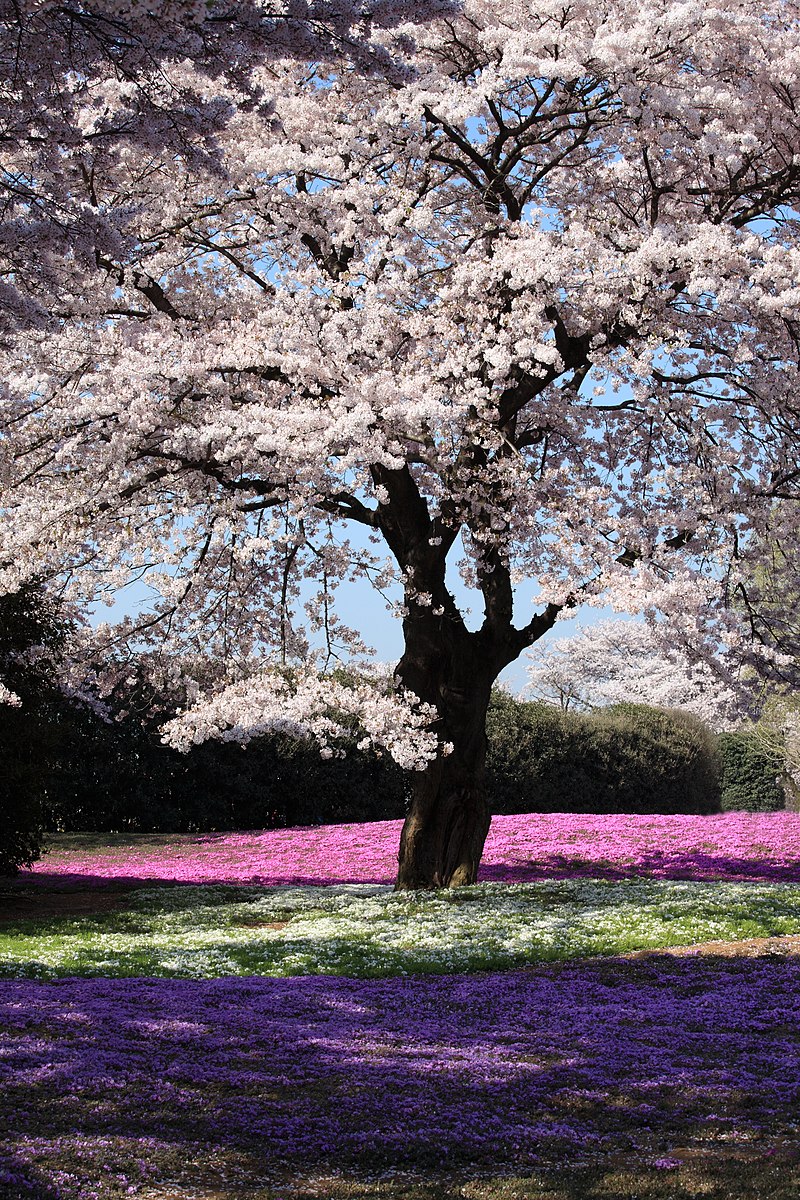
cherry blossom
blossom of the cherry tree

raceme
thumb|right|The inflorescence of a [[Phalaenopsis orchid is a typical raceme.]]
floral formula
notation representing flowers' structure
peduncle
the stalk of a plant bearing an inflorescence or solitary flower
ephemeral plant
plant with a short life cycle
nectar source
a flowering plant that produces nectar as part of its strategy

floristry
thumb|A Parisian Flower Market by Victor Gabriel Gilbert
thumb|A wedding Flower bouquet|bouquet of [[cymbidium arranged by a florist]]
pedicel
structure connecting flowers or fruit to the main stem of a plant
floral diagram
schematic diagram of a flower

wildflower
thumb|Five wildflower species occupy less than 1,000 cm2 in this photo taken on the eastern slope foothills of the Canadian Rocky Mountains in late July. Pink: Alberta wild rose; white: Western yarrow; blue: Bluebells showing both pink (immature) and blue (mature) stages; yellow: Arnica cordifolia (heart-leaved arnica); and red: Red paintbrush
thumb|Flora of Western Australia|Wildflowers of Western Australia
thumb|Wildflowers are blooming in April in a field in central Texas near Grapevine Lake|Lake Grapevine.
thumb|right|Wildflowers in Death Valley National Park

double-flowered
thumb|250px|A double-flowered cultivar of Impatiens walleriana.
"Double-flowered" describes varieties of flowers with extra petals, often containing flowers within flowers. The double-flowered trait is often noted alongside the scientific name with the abbreviation fl. pl. (flore pleno, a Latin ablative form meaning "with full flower"). The first abnormality to be documented in flowers, double flowers are popular varieties of many commercial flower types, including roses, camellias and carnations. In some double-flowered varieties all of the reproductive organs are converted to petals. As a re

pseudanthium
A pseudanthium (; : pseudanthia) is an inflorescence that resembles a flower. The word is sometimes used for other structures that are neither a true flower nor a true inflorescence. Examples of pseudanthia include flower heads, composite flowers, or capitula, which are special types of inflorescences in which anything from a small cluster to hundreds or sometimes thousands of flowers are grouped together to form a single flower-like structure. Pseudanthia take various forms. The real flowers (the florets) are generally small and often greatly reduced, but the pseudanthium itself can sometimes

blossom
thumb|Almond|Almond blossom
right|thumb|Cherry blossoms, Paris, full bloom
In botany, blossoms are the flowers of stone fruit trees (genus Prunus) and of some other plants with a similar appearance that flower profusely for a period of time in spring.

aestivation
Pollination syndrome
flower traits that attract pollinators

Pressed flower craft
remontancy
thumb|300px|The July remontance of this Rosa rugosa appears over the fruits of the first spring blooming.
Remontancy is the ability of a plant to flower more than once during the course of a growing season or year. It is a term applied most specifically to roses, and roses possessing this ability are called "repeat flowering" or remontant. The term originated in the nineteenth century from the French verb remonter or 'coming up again'. Roses which lack this ability are termed "summer flowering", "once flowering" or non-remontant. Few wild rose species possess remontancy; notable exceptions bei
superbloom
thumb|Superbloom in Riverside County, California in 2019
A superbloom is a rare desert botanical phenomenon, mostly in California and Arizona, where an unusual large proportion of wildflowers whose seeds have lain dormant in desert soil germinate and blossom at roughly the same time. The phenomenon is associated with an unusually wet rainy season. The term may have developed as a label in the 1990s.
connectivum
in botany, part of the stamen
floral morphology
study of flower structures
floral scent
scent created by aroma compounds emitted by floral tissue
nosegay
thumb|1848 illustration of a nosegay by Currier and Ives
thumb|Bouquet holder