Category
page 1Foreign policy doctrines
.jpg)
Realpolitik
Realpolitik ( ) is the approach of conducting diplomatic or political policies based primarily on considerations of given circumstances and factors, rather than strictly following ideological, moral, or ethical premises. In this respect, it shares aspects of its philosophical approach with those of realism and pragmatism.

Brezhnev Doctrine
Soviet foreign policy

disarmament
thumb|240px| United Nations Art Collection|Let Us Beat Swords into Plowshares in the [[United Nations garden (1957)]]
thumb|Demonstration of a jujutsu defense against a knife attack. [[Berlin, 1924.|240px]]

One China
policy of only recognizing one state of China

Ostpolitik
thumb|250px|Willy Brandt (left) and [[Willi Stoph in Erfurt 1970, the first encounter of a Federal Chancellor with his East German counterpart, an early step in the de-escalation of the Cold War]]
Neue Ostpolitik (German for "new eastern policy"), or Ostpolitik () for short, was the normalization of relations between the Federal Republic of Germany (FRG, or West Germany) and
Eastern Europe, particularly the German Democratic Republic (GDR, or East Germany) beginning in 1969. Influenced by Egon Bahr, who proposed "change through rapprochement" in a 1963 speech at the Evangelische Akademie Tutz
Hallstein Doctrine
one-Germany policy during the Cold War
Pierre Harmel
Belgian politician (1911-2009)
Sinatra Doctrine
Soviet foreign policy of allowing neighboring Warsaw Pact states to determine their own internal affairs
Weltpolitik
Weltpolitik (, "world politics") was the imperialist foreign policy adopted by the German Empire during the reign of Emperor Wilhelm II. The aim of the policy was to transform Germany into a global power. Though considered a logical consequence of the German unification by a broad spectrum of Wilhelmine society, it marked a decisive break with the defensive Realpolitik of the Bismarckian era.
Sunshine Policy
South Korea's foreign policy towards North Korea from 1998 to 2007
Ulbricht Doctrine
East German diplomatic doctrine, Cold War
Paasikivi–Kekkonen doctrine
foreign policy doctrine established by Finnish President Juho Kusti Paasikivi and continued by his successor Urho Kekkonen
Drago Doctrine
announced in 1902 by the Argentine Minister of Foreign Affairs, Luis María Drago
Gerasimov doctrine
Russian military strategic concept
defence diplomacy
peaceful use of defence resources in foreign policy
Calvo Doctrine
foreign policy doctrine which holds that jurisdiction in international investment disputes lies with the country in which the investment is located
Yoshida Doctrine
Economic strategy adopted in Japan after World War II
Common Peace
Greek political concept
Estrada Doctrine
Mexican foreign policy doctrine
China's peaceful rise
Chinese Communist Party foreign policy slogan
Zeitenwende speech
address to the Bundestag by Olaf Scholz on 27 February 2022
foreign policy doctrine
general statement of foreign policy and belief system through a doctrine
Fukuda Doctrine
Japanese foreign policy doctrine
Blue Homeland
Turkish sea doctrine
Five Fingers of Tibet
Chinese territorial claim on five regions (Ladakh, Nepal, Sikkim, Bhutan, Arunachal Pradesh) that border Tibet
Look East policy
Primakov doctrine
Russian geopolitical doctrine
Giedroyc Doctrine
political doctrine
Begin Doctrine
Israeli counter-proliferation doctrine

The Russian Threat
book
Mitterrand doctrine
French policy on extradition
Yinon Plan
1982 political article published in Israel
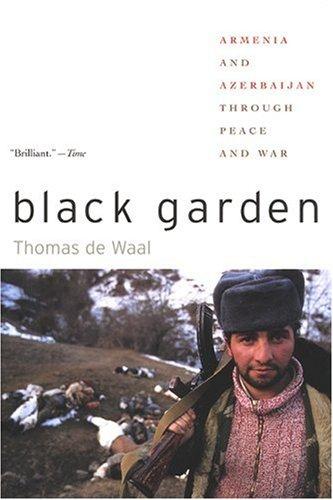
Black Garden
non-fiction work by Thomas de Waal