Category
page 1Former capitals of Egypt

Alexandria
Alexandria is a major city in Egypt. Lying at the western edge of the Nile River Delta, it extends about along the country's northern coast. It is Egypt's principal seaport, the second largest city after Cairo, and the largest city on the Mediterranean coast. Founded in 331 BC by Alexander the Great, Alexandria is one of the largest and most important cities of antiquity and a leading hub for science, culture, and scholarship.
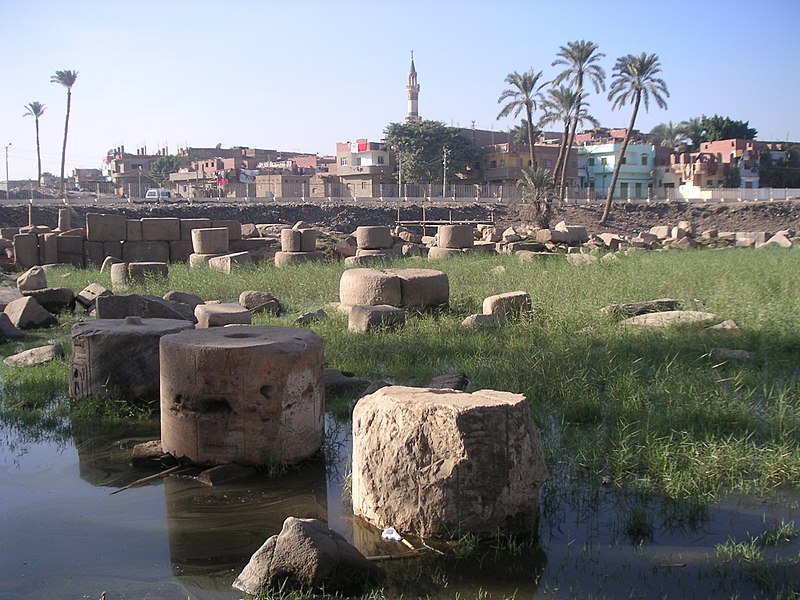
Memphis
ancient capital of Inebu-hedj, Egypt

Thebes
ancient Egyptian city

Amarna
Amarna (; ) is an extensive ancient Egyptian archaeological site containing the ruins of Akhetaten, the capital city during the late Eighteenth Dynasty. The city was established in 1346 BC, built at the direction of the Pharaoh Akhenaten, and abandoned shortly after his death in 1332 BC.

Sais
village in Gharbia Governorate, Egypt

Tanis
thumb|Map of ancient Lower Egypt showing Tanis
Tanis ( ; ; ) or San al-Hagar (; ; ; or or ; ) is the Greek name for ancient Egyptian ḏꜥn.t, an important archaeological site in the northeastern Nile Delta of Egypt, and the location of a city of the same name. Tanis was the capital of the Egyptian Kingdom in its 21st and 22nd Dynasties. It is located on the Tanitic branch of the Nile, which has long since silted up.

Napata
Napata (, ; ; and ) was a city of ancient Kush at the fourth cataract of the Nile founded by the Egyptian Amun cult for Egyptian pilgrims given by its, as suggested, Egyptian name. It is located approximately 1.5 kilometers from the east side of the river at the site of modern Karima, Sudan.
Bubastis
thumb|Map of ancient Lower Egypt showing Bubastis
Herakleopolis Magna
archaeological site in Egypt

Avaris
thumb|An official wearing the "mushroom-headed" hairstyle also seen in contemporary paintings of Western Asiatic foreigners, from Avaris, the capital of the Hyksos. Dated to 1802–1640 BC. Staatliche Sammlung für Ägyptische Kunst.

El-Fustat
Fustat (), also Fostat, was the first capital of Egypt under Muslim rule, though it has been integrated into Cairo. It was built adjacent to what is now known as Old Cairo by the Rashidun Muslim general 'Amr ibn al-'As immediately after the Muslim conquest of Egypt in AD 641, and featured the Mosque of Amr, the first mosque built in Egypt.

Thinis
Thinis (Greek: Θίνις Thinis, Θίς This ; Egyptian: Tjenu; ;
) was the capital city of pre-unification Upper Egypt. Thinis remains undiscovered but is well attested by ancient writers, including the classical historian Manetho, who cites it as the centre of the Thinite Confederacy, a tribal confederation whose leader, Menes (or Narmer), united Egypt and was its first pharaoh. Thinis began a steep decline in importance when the capital was relocated to Memphis, which was thought to be the first true and stable capital after the unification of Egypt by Menes. Thinis's location on the border of th
Pi-Ramesses
Pi-Ramesses (; Ancient Egyptian: , meaning "House of Ramesses") was the new capital built by the Nineteenth Dynasty Pharaoh Ramesses II (1279–1213 BC) at Qantir, near the old site of Avaris. The city had served as a summer palace under Seti I (c. 1290–1279 BC), and may have been founded by Ramesses I (c. 1292–1290 BC) while he served under Horemheb.
.svg)
Buto
Buto (, , Butu), Bouto, Butus (, Boutos) or Butosus was a city that the Ancient Egyptians called Per-Wadjet. It was located 95 km east of Alexandria in the Nile Delta of Egypt. What in classical times the Greeks called Buto, stood about midway between the Taly (Bolbitine) and Thermuthiac (Sebennytic) branches of the Nile, a few kilometers north of the east-west Butic River and on the southern shore of the Butic Lake (, Boutikē limnē).
Samannud
Samannud ( ) is a city (markaz) located in Gharbia Governorate, Egypt. Known in classical antiquity as Sebennytos (), Samannud is a historic city that has been inhabited since the Ancient Egyptian period. As of 2019, the population of the markaz of Samannud was estimated to be 410,388, with 83,417 people living in urban areas and 326,971 in rural areas.

Mendes
Mendes (, gen.: ), the Greek name of the ancient Egyptian city of Djedet, also known in ancient Egypt as Per-Banebdjedet ("The Domain of the Ram Lord of Djedet") and Anpet, is known today as Tell El-Ruba ().
Leontopolis
Leontopolis was an ancient Egyptian city located in the Nile Delta, Lower Egypt. It served as a provincial capital and Metropolitan Archbishopric. The archaeological site and settlement are known today as Kafr Al Muqdam.

Itjtawy
Itjtawy or It-Towy ("Seizer of the Two Lands"), also known by its full name Amenemhat-itjtawy ("Amenemhat seizes the Two Lands"), was an ancient Egyptian royal city established by pharaoh Amenemhat I.
Capital of Egypt
Wikimedia list article

Al-Qatta'i
Al-Qaṭāʾi () was the short-lived Tulunid capital of Egypt, founded by Ahmad ibn Tulun in the year 868 CE. Al-Qata'i was located immediately to the northeast of the previous capital, al-Askar, which in turn was adjacent to the settlement of Fustat. All three settlements were later incorporated into the city of Cairo, founded by the Fatimids in 969 CE. The city was razed in the early 10th century CE, and the only surviving structure is the Mosque of Ibn Tulun.

Al-Askar
Al-‘Askar () was the capital of Egypt from 750–868, when Egypt was a province of the Abbasid Caliphate.