Category
page 1Formerly proprietary software

MS-DOS
MS-DOS ( ; acronym for Microsoft Disk Operating System, also known as Microsoft DOS) is an operating system for x86-based personal computers mostly developed by Microsoft. Collectively, MS-DOS, its alternate branding as IBM PC DOS, and a few operating systems attempting to be compatible with MS-DOS, are sometimes referred to as "DOS" (which is also the generic acronym for disk operating system). MS-DOS was the main operating system for IBM PC compatibles during the 1980s, from which point it was gradually superseded by operating systems offering a graphical user interface (GUI), in variou

Blender
free and open-source 3D computer graphics software

OpenOffice.org
OpenOffice.org is an open-source office productivity software suite. It originated from the proprietary StarOffice, developed by Star Division, which was acquired by Sun Microsystems in 1999. Sun open-sourced the software in July 2000 as a free alternative to Microsoft Office, and released OpenOffice.org version 1.0 on 1 May 2002.

LibreOffice
LibreOffice () is a free and open-source office productivity software suite developed by The Document Foundation (TDF). It was created in 2010 as a fork of OpenOffice.org, itself a successor to StarOffice. The suite includes applications for word processing (Writer), spreadsheets (Calc), presentations (Impress), vector graphics (Draw), database management (Base), and formula editing (Math). It supports the OpenDocument format and is compatible with other major formats, including those used by Microsoft Office.

Eclipse
software development environment

Qt
object-oriented framework for GUI creation

ICQ
ICQ was a cross-platform instant messaging (IM) and VoIP client founded in June 1996 by Yair Goldfinger, Sefi Vigiser, Amnon Amir, Arik Vardi, and Arik's father, Yossi Vardi. The name ICQ derives from the English phrase "I Seek You". Originally developed by the Israeli company Mirabilis in 1996, the client was bought by AOL in 1998, and then by Mail.Ru Group (now VK) in 2010.

CP/M
CP/M, originally standing for Control Program/Monitor and later Control Program for Microcomputers, is a mass-market operating system created in 1974 for Intel 8080/85-based microcomputers by Gary Kildall of Digital Research, Inc. CP/M is a disk operating system and its purpose is to organize files on a magnetic storage medium, and to load and run programs stored on a disk. Initially confined to single-tasking on 8-bit processors and no more than 64 kilobytes of memory, later versions of CP/M added multi-user variations and were migrated to 16-bit processors.
Apache OpenOffice
free and open-source office suite

Apache NetBeans
NetBeans is an integrated development environment (IDE) for Java. NetBeans allows applications to be developed from a set of modular software components called modules. NetBeans runs on Windows, macOS, Linux and Solaris. In addition to Java development, it has extensions for other languages like PHP, C, C++, HTML5, and JavaScript. Applications based on NetBeans, including the NetBeans IDE, can be extended by third party developers.
.jpg)
PowerShell
PowerShell is a shell program developed by Microsoft for task automation and configuration management. As is typical for a shell, it provides a command-line interpreter for interactive use and a script interpreter for automation via a language defined for it. Originally only for Windows, known as Windows PowerShell, it was made open-source and cross-platform on August 18, 2016, with the introduction of PowerShell Core. The former is built on the .NET Framework and the latter on .NET (previously .NET Core).

Erlang
programming language
Samba
free software re-implementation of the SMB networking protocol

OpenSolaris
OpenSolaris () is a discontinued open-source computer operating system for SPARC and x86 based systems, created by Sun Microsystems and based on Solaris. Its development began in the mid 2000s and ended in 2010.
Atom
free and open-source text and source code editor
Common Desktop Environment
desktop environment for Unix and OpenVMS operating systems

Firebird
relational database management system

Luanti
Luanti (formerly Minetest) is a community-driven, free and open-source voxel game engine, available on various platforms. Originally, Luanti was a voxel game created in October 2010 by Perttu Ahola to explore the mechanics of Minecraft. Over time, Luanti evolved from the original Minetest game into a general game engine as developers integrated new features.
Windows Calculator
software application

PyCharm
PyCharm is an integrated development environment (IDE) used for programming in Python. It provides code analysis, a graphical debugger, an integrated unit tester, integration with version control systems, and supports web development with Django. PyCharm is developed by the Czech company JetBrains and built on their IntelliJ platform.

Zork
Zork is a text adventure game first released in 1977 by developers Tim Anderson, Marc Blank, Bruce Daniels, and Dave Lebling for the PDP-10 mainframe computer. The original developers and others, as the company Infocom, expanded and split the game into three titlesZorkI: The Great Underground Empire, ZorkII: The Wizard of Frobozz, and ZorkIII: The Dungeon Masterwhich were released commercially for a range of personal computers beginning in 1980. In Zork, the player explores the abandoned Great Underground Empire in search of treasure. The player moves between the game's hundreds of locations a
Apache Flex
software development kit (SDK) for the development and deployment of rich Internet applications

XFS
XFS is a high-performance 64-bit journaling file system created by Silicon Graphics, Inc (SGI) in 1993. It was the default file system in SGI's IRIX operating system starting with its version 5.3. XFS was ported to the Linux kernel in 2001; as of June 2014, XFS is supported by most Linux distributions; Red Hat Enterprise Linux uses it as its default file system.
Windows Presentation Foundation
graphical subsystem
Apple Lossless
audio coding format
Windows Communication Foundation
runtime and set of APIs in the .NET Framework for building connected, service-oriented applications
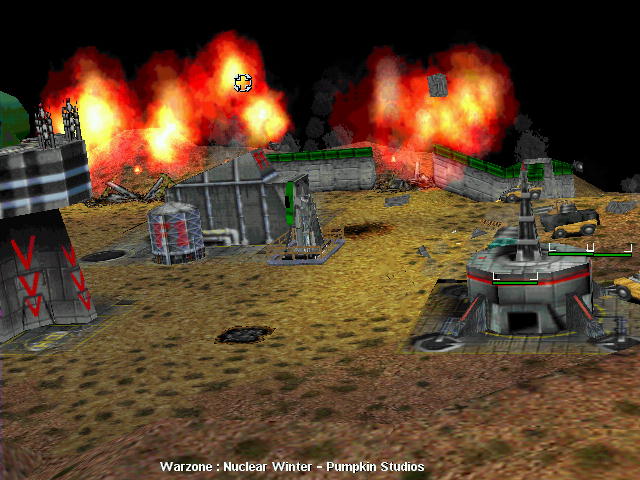
Warzone 2100
1999 Windows strategy video game by Pumpkin Studios published by Eidos, revived by Warzone 2100 Project

VP8
VP8 is an open and royalty-free video compression format released by On2 Technologies in 2008.
Graphics Environment Manager
operating environment created by Digital Research, Inc.
Windows Forms
graphical user interface software library

GW-BASIC
GW-BASIC is a dialect of the BASIC programming language developed by Microsoft from IBM BASICA. Functionally identical to BASICA, its BASIC interpreter is a fully self-contained executable and does not need the Cassette BASIC ROM found in the original. It was bundled with MS-DOS operating systems on IBM PC–compatibles by Microsoft.

REBOL
Rebol ( ; historically REBOL) is a cross-platform data exchange language and a multi-paradigm dynamic programming language designed by Carl Sassenrath for network communications and distributed computing. It introduces the concept of dialecting: small, optimized, domain-specific languages for code and data, which is also the most notable property of the language according to its designer Carl Sassenrath:
id Tech 1
game engine developed by id Software
Lint
Unix tool which performs static analysis of C source code and flags suspicious and non-portable constructs
Soldat
2001 free side-view multiplayer action game
Motif
GUI specification and toolkit for the X Window System
Open Sound System
Audio interface for Unix-like operating systems
File Manager
file manager bundled with Microsoft Windows in the 1990s, now open source and ported to modern Windows

Tesseract
free optical character recognition engine
Bochs
Bochs (pronounced "box") is a portable IA-32 and x86-64 IBM PC compatible emulator and debugger mostly written in C++ and distributed as free software under the GNU Lesser General Public License. It supports emulation of the processor(s) (including protected mode), memory, disks, display, Ethernet, BIOS and common hardware peripherals of PCs.
HijackThis
HijackThis (also HiJackThis or HJT) is a free and open-source tool to detect malware and adware on Microsoft Windows. It was originally created by Merijn Bellekom, and later sold to Trend Micro. The program is notable for quickly scanning a user's computer to display the most common locations of malware, rather than relying on a database of known spyware. HijackThis is used primarily for diagnosis of malware, not to remove or detect spyware—as uninformed use of its removal facilities can cause significant software damage to a computer. Browser hijacking can cause malware to be installed on a c
Blitz BASIC
programming language family
id Tech 4
game engine developed by id Software
RawTherapee
RawTherapee is a free and open source application for processing photographs in raw image formats such as those created by many digital cameras. It comprises a subset of image editing operations specifically aimed at non-destructive post-production of raw photos and is primarily focused on improving a photographer's workflow by facilitating the handling of large numbers of images. It is notable for the advanced control it gives the user over the demosaicing and developing process. It is cross-platform, with versions for Microsoft Windows, macOS and Linux.
Euphoria
programming language
id Tech 3
game engine developed by id Software
id Tech 2
game engine developed by id Software
Wire
instant messaging client
Cartes du Ciel
free desktop planetarium

Inform
Inform is a programming language and design system for interactive fiction originally created in 1993 by Graham Nelson. Inform can generate programs designed for the Z-code or Glulx virtual machines. Versions 1 through 5 were released between 1993 and 1996. Around 1996, Nelson rewrote Inform from first principles to create version 6 (or Inform 6). Over the following decade, version 6 became reasonably stable and a popular language for writing interactive fiction. In 2006, Nelson released Inform 7 (briefly known as Natural Inform), a completely new language based on principles of natural langua
Windows Live Writer
software application

Synfig
Synfig Studio (also known as Synfig) is a free and open-source vector-based 2D animation software. It is created by Robert Quattlebaum with additional contributions by Adrian Bentley.
BitKeeper
BitKeeper is a discontinued software tool for distributed revision control of computer source code. Originally developed as proprietary software by BitMover Inc., a privately held company based in Los Gatos, California, it was released as open-source software under the Apache-2.0 license on 9 May 2016. BitKeeper is no longer being developed.
FAR Manager
file and archive manager for Microsoft Windows

TextMate
TextMate is a free and open-source general-purpose GUI text editor for macOS created by Allan Odgaard. TextMate features declarative customizations, tabs for open documents, recordable macros, folding sections, snippets, shell integration, and an extensible bundle system.
Adventure Game Studio
game creation kit and engine

TextSecure
TextSecure was an encrypted messaging application for Android that was developed from 2010 to 2015. It was a predecessor to Signal and the first application to use the Signal Protocol, which has since been implemented into WhatsApp and other applications. TextSecure used end-to-end encryption to secure the transmission of text messages, group messages, attachments and media messages to other TextSecure users.

Star Control II
1992 video game
Internet Low Bitrate Codec
audio coding format
Impulse Tracker
audio tracker for DOS