Category
page 1Fortifications by type
.jpg)
citadel
thumb|In this seventeenth-century plan of the fortified city of Casale Monferrato the citadel is the large star-shaped structure on the left.
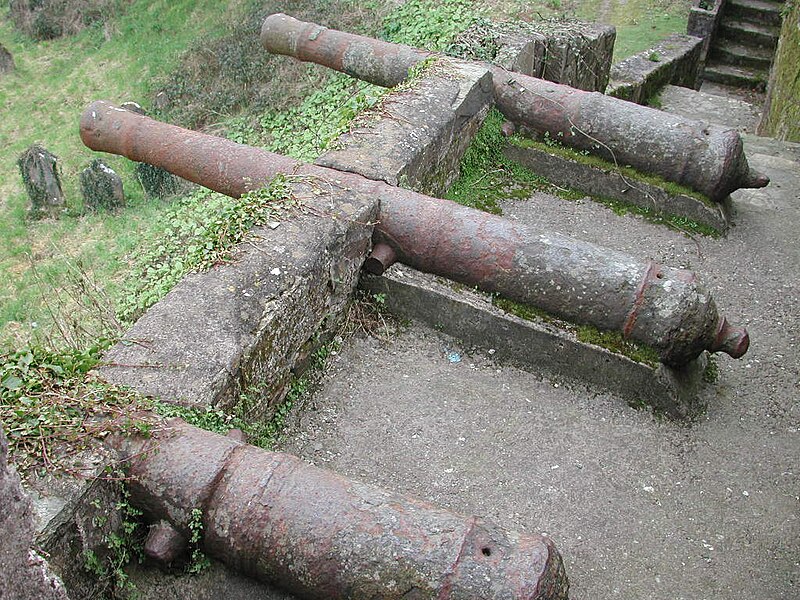
battery
artillery unit size designation

barricade
thumb|Police barricades in Buenos Aires, Argentina (2020)
Barricade () is any object or structure that creates a barrier or obstacle to control, block passage or force the flow of traffic in the desired direction. Adopted as a military term, a barricade denotes any improvised field fortification, such as on city streets during urban warfare. These may also include crowd control devices—like temporary traffic barricades, pedestrian barricades, and anti-vehicle barriers—all of which have also been used in the course of urban protests, counterinsurgency operations, and military operations on urba
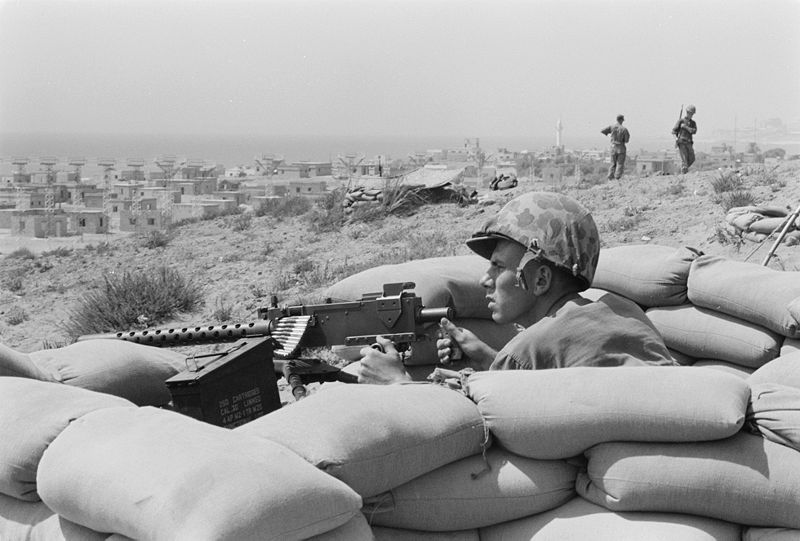
military trench
type of earthwork constructed in a military context
star fort
type of fortification based on bastions with a star shape
.jpg)
ksar
thumb|Ksar Aït Benhaddou, [[Morocco, a UNESCO World Heritage Site since 1987]]
Ksar or qṣar (), in plural ksour or qsour (), is a type of fortified village in North Africa, usually found in the regions predominantly or traditionally inhabited by Berbers (Amazigh). The equivalent Berber term used is '''' (singular) or (plural).

blockhouse
thumb|Completed in 1750, Fort Edward (Nova Scotia)|Fort Edward, Nova Scotia in Canada is the oldest remaining military blockhouse in [[North America.]]
thumb|upright|Reconstructed European wooden [[keep at Saint-Sylvain-d'Anjou, France, has a strong resemblance to a North American western frontier log blockhouse]]

crannog
thumb|A reconstructed crannog near Kenmore, Perth and Kinross, on [[Loch Tay, Scotland]]
flak tower
fortified air defense towers used by Nazi Germany

abatis
thumb|right|Abatisses are used in war to keep the approaching enemy under fire for as long as possible.
An abatis, abattis, or abbattis is a field fortification consisting of an obstacle formed of the branches of trees laid in a row, with the sharpened tops directed outwards, towards the enemy. The trees are usually interlaced or tied with wire. Abatis are used alone or in combination with wire entanglements and other obstacles.

kraal
thumb|260px|An illustration of a kraal near Bulawayo in the 19th century.
thumb|260px|Building an African Kraal (July 1853, X, p.78)
thumb|260px|Zulu people|Zulu kraal near [[Umlazi, Natal]]
Kraal (also spelled craal or kraul) is an Afrikaans and Dutch word, also used in South African English, for an enclosure for cattle or other livestock, located within a Southern African settlement or village surrounded by a fence of thorn-bush branches, a palisade, mud wall, or other fencing, roughly circular in form. It is similar to a boma in eastern or central Africa.

sandbag
thumb|300px|Residents and volunteers work to fill sandbags during the Great Flood of 1993|Mississippi and Missouri river floods of 1993.
thumb|300px|Members of the Georgia National Guard filling sandbags in preparation for floods.
wagon fort
military defense formation
pillbox
concrete dug-in guard posts, normally equipped with loopholes through which to fire weapons
ostrog
wooden fortress, historic Russia
breastwork
fortification
border barrier
wall or barrier at national boundaries
sconce
small protective fortification, such as an earthwork
dun
generic term for an ancient or medieval fort
%2C%20Co%20Roscommon%2C%20Ireland.jpg)
ringfort
thumb|The ringfort at Rathrar in County Roscommon, Ireland
thumb|The in County Donegal, Ireland, is one of the more impressive stone-walled ringforts.
artillery magazine
building or facility to store and load weapon material for missiles or rockets
Border outpost
outpost maintained by a sovereign state on its border, usually one of a series placed at regular intervals, to watch over and safeguard its border with a neighboring state
Tower and stockade
Settlement method used by Zionist settlers in Mandatory Palestine
hardened aircraft shelter
reinforced hangar to house and protect military aircraft from enemy attack
circular rampart
embankment built in the shape of a circle

gord
Slavic fortified settlement

quadrangular castle
type of castle
Amba
characteristic landform in Ethiopia, known for being steep-sided, flat-topped mountain, often the site of villages, wells and their surrounding farmland
Himalayan Towers
defensive stone tower houses found in Tibet
promontory fort
fortification, usually dating from the Iron Age
gulyay-gorod
thumb|Gulyay-gorod reconstruction.
thumb|Pulling shields into position.
separation barrier
type of wall separating peoples, administrative units or cultures
Boma
fortified base
fire support base
temporary military encampment to provide artillery fire support to infantry operating in areas beyond the normal range of fire support from their own base camps; FSBs follow a number of plans
ricetto
thumb|Ricetto at Candelo, [[Province of Biella, Piedmont, Italy]]
strongpoint
thumb|A German concrete pillbox or blockhouse after capture by the Coldstream Guards on the outskirts of Houlthulst Forest, Battle of Poelcappelle, 10 October 1917
polygonal fort
type of fortification
Bulverket
The Bulverket is the remnants of a large wooden fortification or bulwark at Lake Tingstäde on the island of Gotland, Sweden. When built, it consisted of a platform with houses surrounded by a double palisade with the entire construction around in diameter.
Viereckschanze
thumb|Drawing of the Viereckschanze Buchendorf in Germany
A Viereckschanze (from German "four-corner-rampart"; plural -en) is a rectangular ditched enclosure that was constructed during the Iron Age in parts of Celtic Western Europe. They are widespread in Germany, parts of northern France and also in some regions of the Iberian Peninsula, most notably in Portugal.
sangar
military fortification
gunpowder magazine
building for the storage of gunpowder
tata
West African fortification
bastille
fort type