Category
page 1Fossil taxa described in 1853
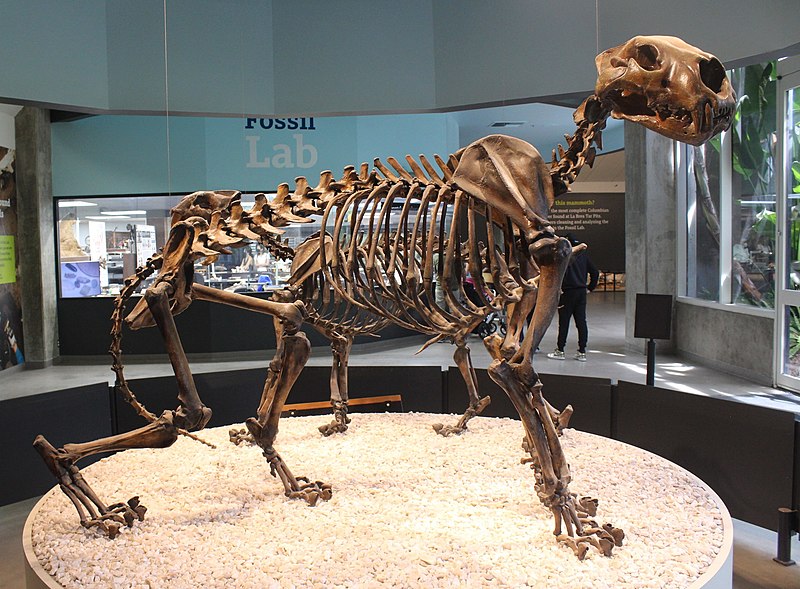
American lion
extinct species of big cats (Pantherinae)
Prolagus
Prolagus is an extinct genus of lagomorph. Over 20 species have been named, and the genus was abundant and widespread in Europe during the Neogene. However, by the end of the Middle Pleistocene, it was confined to a single species, the Sardinian pika (P. sardus), on Corsica, Sardinia, and their surrounding islands, where it survived into historical times. In North Africa and Western Asia, the genus is known from the Miocene and Pliocene. The scientific name may mean "before hares" or "primitive hares" (pro- meaning "before" and lagos meaning "hare"). Its taxonomy is disputed, with it either be

Pristichampsus
Pristichampsus (from , 'saw' and , 'crocodile') is a non-diagnostic and potentially dubious extinct genus of crocodylian from France and possibly also Kazakhstan that is part of the monotypic Pristichampsidae family. As the type species, Pristichampsus rollinatii, was based on insufficient material when described in 1831 and 1853, the taxonomic status of the genus is in doubt, and other species have been referred to other genera, primarily Boverisuchus.

Dendrerpeton
Dendrerpeton (from , 'tree' and , 'creeping thing') is a genus of an extinct group of temnospondyl amphibians. Its fossils have been found primarily in the Joggins Formation of Eastern Canada and in Ireland. It lived during the Carboniferous and is said to be around 309–316 million years of age, corresponding to more specifically the Westphalian age. Of terrestrial temnospondyl amphibians evolution, it represents the first stage. Although multiple species have been proposed, the species unanimously recognized is D. acadianum. This species name comes from "Acadia" which is a historical name for

Daphoenus
Daphoenus is an extinct genus of amphicyonids, a group colloquially known as "bear-dogs". It includes not just some of the best preserved material out of any amphicyonid, but also the earliest members of the family, first appearing in the middle Eocene and surviving into the Early Oligocene. The members of the genus are rather small compared to some of its later relatives, such as Amphicyon or Ysengrinia, ranging in size from comparable to a house cat to a small wolf. It was widely distributed across North America, with most of its remains being discovered in the White River Group of the Great
Amphictis
Amphictis is an extinct genus of ailurids that existed from the Late Oligocene to the Middle Miocene with fossils found in Eurasia and North America with a total of nine described species. The interrelationships of the different species as well as their relationship to the other ailurids is not fully understood. Usually Amphictis is classified in the basal monotypic subfamily Amphictinae, but there is no certainty as the genus could potentially be a paraphyletic with the Oligocene species A. borbonica being a potential sister taxon to the ancestor of the subfamily Ailurinae (today consisting j
Leptomeryx
Leptomeryx is an extinct genus of artiodactyl that lived in North America during the middle Eocene through early Miocene. One of the earliest ruminants, it belongs to the extinct family Leptomerycidae, which is related to today's chevrotains. Most fossils were found in the badlands of the Midwestern United States in sedimentary rocks of the White River Group, in the Brule and Chadron formations. Additional remains have been reported from southern Canada and Mexico. The genus was scientifically described in 1853 by Joseph Leidy and includes several species.
Pleurosternon
Pleurosternon is an extinct genus of freshwater pleurosternid turtle from the latest Jurassic to earliest Cretaceous of Europe. Its type species, P. bullockii, was described by the paleontologist Richard Owen (noted for coining the word Dinosauria) in 1853. Since then, and throughout the late 19th century, many fossil turtles were incorrectly assigned to this genus, though only two are currently considered valid.