Category
page 1French art

Impressionism
Impressionism was a 19th-century art movement characterized by visible brush strokes, open composition, emphasis on accurate depiction of light in its changing qualities (often accentuating the effects of the passage of time), ordinary subject matter, unusual visual angles, and inclusion of movement as a crucial element of human perception and experience. Impressionism originated with a group of Paris-based artists whose independent exhibitions brought them to prominence during the 1870s and 1880s.

Fauvism
thumb|250px|alt=Henri Matisse painting Woman with a Hat, from 1905. in the San Francisco Museum of Modern Art|Henri Matisse. Woman with a Hat, 1905. [[San Francisco Museum of Modern Art]]

Montparnasse
thumb|Montparnasse cemetery
Montparnasse () is an area in the south of Paris, France, on the left bank of the river Seine, centred at the crossroads of the Boulevard du Montparnasse and the Rue de Rennes, between the Rue de Rennes and boulevard Raspail. It is split between the 6th, 14th, and 15th arrondissements of the city. Montparnasse has been part of Paris

Japonisme
thumb|Young Ladies Looking at Japanese Objects by the painter James Tissot in 1869 is a representation of the popular curiosity about all Japanese items that started with the opening of the country in the [[Meiji Restoration of the 1860s.]]
Japonisme is a French term that refers to the popularity and influence of Japanese art and design among a number of Western European artists in the nineteenth century following the forced reopening of foreign trade with Japan in 1858. Japonisme was first described by French art critic and collector Philippe Burty in 1872.
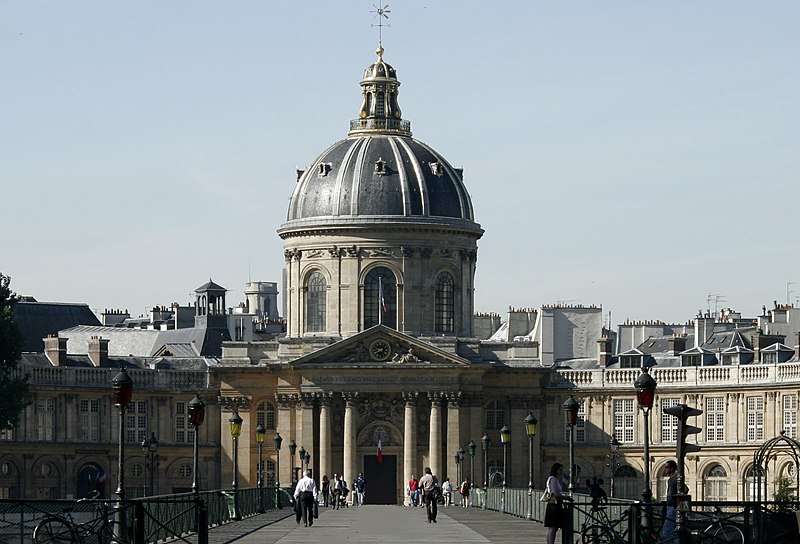
Académie des beaux-arts
French learned society based in Paris

Les Nabis
artist collective
Carolingian art
art of the Frankish empire, ca. 780–900
French Renaissance
cultural movement from the 15th to 17th century
School of Fontainebleau
art movement by artists active at Fontainebleau 1530s-1610
French Academy in Rome
art school in Rome, Italy
bijou
piece of jewellery incorporated into clothing, or worn by itself on the body (typically on a necklace)
Louis XVI style
neoclassical style within architecture and design
Louis XIV style
style of Louis XIV period; baroque style with classical elements
Louis Quinze
architectural and decorative style
Aubusson tapestry
intangible cultural heritage of tapestry making in Aubusson and the Creuse region of France
Hôtel de Soubise
private mansion in the 3rd arrondissement of Paris
French art
art related to France
Limoges enamel
artistic material made in Limoges, France
Société des Artistes Français
association under the French law of 1901

Machines of the Isle of Nantes
Art project in Nantes, France
Louvre Colonnade
east façade of the Palais du Louvre
Troubadour style
French historical painting of the early 19th century with idealised depictions of the Middle Ages and the Renaissance
cultural depictions of Joan of Arc
Wikimedia list article

Les Abattoirs
museum in Toulouse, France
Hillwood Estate, Museum & Gardens
decorative arts museum in Washington, D.C., USA
Etaples art colony
late 19th-Early 20th Century Artists retreat in Étaples, France
The Troelfth Cake
satirical drawing of the Partition of Poland
Louis-Philippe style
architectural style
Proto-Cubism
thumb|300px|Pablo Picasso, 1909, ''[[Brick Factory at Tortosa (Briqueterie à Tortosa, L'Usine, Factory at Horta de Ebro)'', oil on canvas. 50.7 x 60.2 cm, (Source entry State Museum of New Western Art, Moscow) The State Hermitage Museum, Saint Petersburg]]
Proto-Cubism (also referred to as Protocubism, Early Cubism, and Pre-Cubism or Précubisme) is an intermediary transition phase in the history of art chronologically extending from 1906 to 1910. Evidence suggests that the production of proto-Cubist paintings resulted from a wide-ranging series of experiments, circumstances, influences and con
Stanhope
optical instrument
French Restoration style
19th century art style
London International Surrealist Exhibition
1936 exhibition
Joseph
French artist's model
Maurice Princet
French mathematician (1875–1973)