Category
page 1French Revolution

French Revolution
revolution in France from 1789 to 1799

Koblenz
Koblenz ( , , ; Moselle Franconian: Kowelenz) is a city in the German state of Rhineland-Palatinate, on the banks of the rivers Rhine (Middle Rhine) and Moselle, a multinational tributary.

Bastille
The Bastille (, ) was a medieval fortress in Paris, known as the Bastille Saint-Antoine. It played an important role in the internal conflicts of France and for most of its history was used as a state prison by the kings of France. It was stormed by a crowd on 14 July 1789, in the French Revolution, becoming an important symbol for the French Republican movement. It was later demolished and replaced by the Place de la Bastille.

French First Republic
republic governing France, 1792–1804
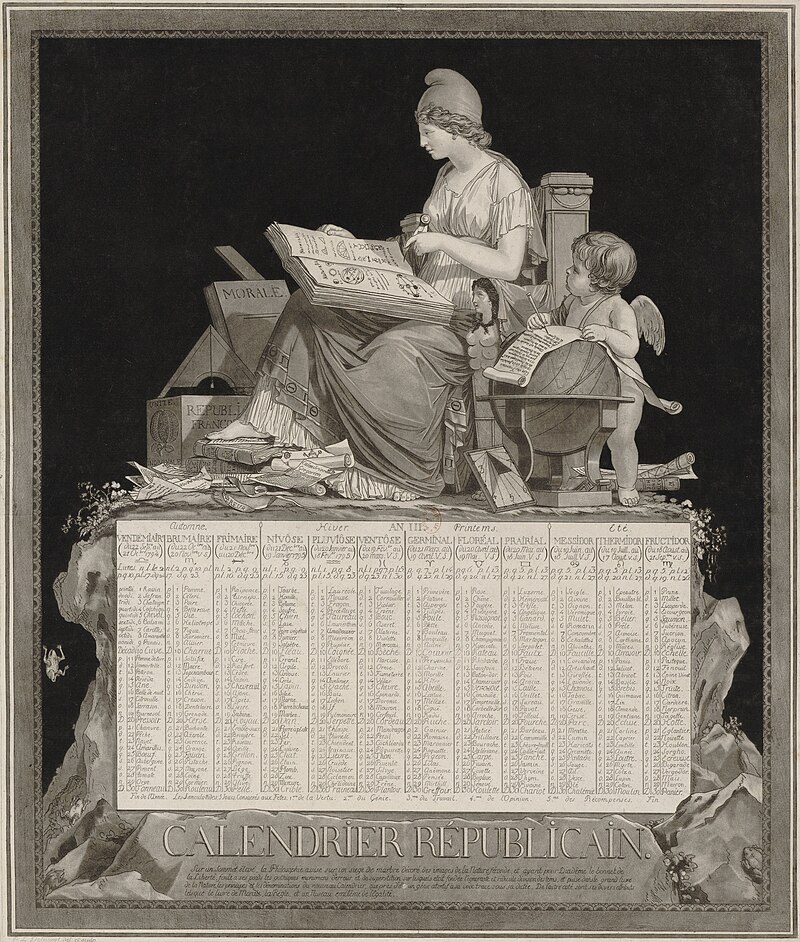
French Republican calendar
calendar

Tuileries Palace
royal and imperial palace in Paris which stood on the right bank of the River Seine

tricolor
REDIRECT Triband (flag)#Tricolour

National Convention
single-chamber assembly in France from 21 September 1792 to 26 October 1795

sans-culottes
The '''''' (; ) were the common people of the lower classes in late 18th-century France, a great many of whom became radical and militant partisans of the French Revolution in response to their poor quality of life under the . The word , which is opposed to "aristocrat", seems to have been used for the first time on 28 February 1791 by Jean-Bernard Gauthier de Murnan in a derogatory sense, speaking about a " army". The word came into vogue during the demonstration of 20 June 1792.

Conciergerie
The Conciergerie () () is a former courthouse and prison in Paris, France located on the west of the Île de la Cité below the Palais de Justice. It was originally part of the former royal palace, the Palais de la Cité, which also included the Sainte-Chapelle. Two large medieval halls remain from the royal palace. During the French Revolution, 2,781 prisoners, including Marie Antoinette, were imprisoned, tried and sentenced at the Conciergerie then sent to different sites to be executed by the guillotine. It’s now a national monument and museum.
French constitutional monarchy
Constitutional monarchy of France (1791–1792)
enemy of the people
designation for political or class opponents of a state; term used in Antique Rome, Revolutionary France, Nazi Germany, Stalin-era Soviet Union, Communist China and The United States
National Guard of France (1789-1872)
1789–1872 military reserve and police branch of France's military. Reactivated in 2016
timeline of the French Revolution
timeline
.png)
Parlements
350px|thumb|Territories assigned to the parlements and sovereign councils of the Kingdom of France in 1789
jacobinism
political ideology
French Revolutionary Army
Army of Revolutionary France
causes of the French Revolution
causes of the conflict
Insurrection of 31 May — 2 June
Insurrection during the French Revolution
Grand Châtelet
fortress and prison, headquarters of the Prévôt de Paris
Lit de justice
French royal legislative procedure
Napoleonic era
era in the history of Europe and France
Museum of the French Revolution
art museum, design/textile museum, historic site in Dept. of Isère, Auvergne-Rhône-Alpes
Prison de l'Abbaye
jail in Paris
women in the French Revolution
how women shared in the French Revolution and what long-term impact it had on French women
Revolutionary terror
Wikimedia disambiguation page

freedom tree
tree planted after the French revolution as symbol of freedom
Salle du Manège
seat of deliberations during most of the French Revolution
influence of the French Revolution
impact of the French ideas of nationalism on its neighbouring countries
Liberty pole
tall wooden pole surmounted by a Phrygian cap
À la lanterne
slogan used during French Revolution
natural borders of France
political and geographical theory for French borders
Armoire de fer
king's safe at the Tuileries
Temple of Reason
form of French atheistic religious building
Pavillon de Flore
pavilion of the Louvre Palace
Cimetière Sainte-Marguerite
cemetery located in Paris, in France
Charles-Jean Baptiste Bonnin
French sociologist
Society of the Friends of Truth
organization
square du Temple
urban park in Paris, France

Honoré-Nicolas-Marie Duveyrier
French politician and jurist (1753-1839)
couvent des Récollets (Versailles)
convent located in Yvelines, in France
Pension Belhomme
prison and private clinic during the French Revolution