Category
page 1Fungi and humans

lichenology
thumb|Lichen
Cryptococcus neoformans
species of fungus

cryptococcosis
Cryptococcosis is a potentially fatal fungal infection of mainly the lungs, presenting as a pneumonia, and in the brain, where it appears as a meningitis. Coughing, difficulty breathing, chest pain and fever are seen when the lungs are infected. When the brain is infected, symptoms include headache, fever, neck pain, nausea and vomiting, light sensitivity and confusion or changes in behavior. It can also affect other parts of the body including skin, where it may appear as several fluid-filled nodules with dead tissue.
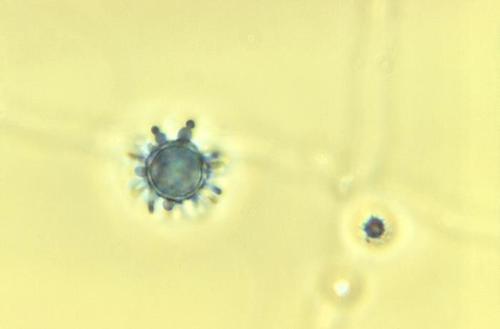
Histoplasma capsulatum
species of fungus
pathogenic fungus
fungus that causes disease in humans or other organisms
Cryptococcus gattii
species of fungus

mycoremediation
thumb|Pleurotus ostreatus (Oyster mushroom)|300x300px
Mycoremediation (from ancient Greek (), meaning "fungus", and the suffix , in Latin meaning 'restoring balance') is a form of bioremediation in which fungi-based remediation methods are used to decontaminate the environment. Fungi have been proven to be a cheap, effective and environmentally sound way for removing a wide array of contaminants from damaged environments or wastewater. These contaminants include heavy metals, organic pollutants, textile dyes, leather tanning chemicals and wastewater, petroleum fuels, polycyclic aromatic hydroc
trichosporonosis
Trichosporonosis is a disease associated with fungi in the genus Trichosporon. It most commonly presents as an infection of hair roots in the skin, causing roughening and loss of hair; this superficial form is also called white piedra. In immunocompromised people, trichosporonosis may progress to an invasive and systemic form which may be life-threatening. In immunocompetent adults, the risk of white piedra progressing to invasive disease is exceptionally low.
Mold health issues
Harmful effects of molds
growth of mold in structures
fungal growth that develops on wet materials