Category
page 1Fusobacteriota
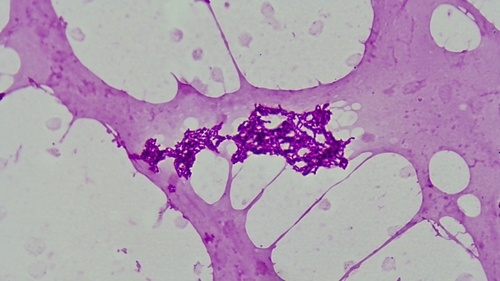
Fusobacterium
Fusobacterium is a genus of obligate anaerobic, Gram-negative, non-sporeforming bacteria belonging to Gracilicutes. Individual cells are slender, rod-shaped bacilli with pointed ends. Fusobacterium was discovered in 1900 by Courmont and Cade and is common in the flora of humans.
Fusobacterium necrophorum
species of bacterium
Fusobacterium nucleatum
species of bacterium
Fusobacteriaceae
The Fusobacteriaceae are a family of the bacterial order Fusobacteriales.
Fusobacteriota
Fusobacteriota are obligately anaerobic non-sporeforming Gram-negative bacilli. Since the first reports in the late nineteenth century, various names have been applied to these organisms, sometimes with the same name being applied to different species. More recently, not only have there been changes to the nomenclature, but also attempts to differentiate between species which are believed to be either pathogenic or commensal or both. Because of their asaccharolytic nature, and a general paucity of positive results in routine biochemical tests, laboratory identification of the Fusobacteriota ha

Streptobacillus
Streptobacillus is a genus of fastidious microaerophilic Gram-negative bacteria, which grow in culture as rods in chains.
Streptobacillus moniliformis
species of bacterium
Leptotrichiaceae
Leptotrichiaceae is a family of bacteria in the order Fusobacteriales. The family includes several genera, such as Leptotrichia, Streptobacillus, Sneathia, Caviibacter, Oceanivirga, Sebaldella, Pseudoleptotrichia, and Pseudostreptobacillus. Bacteria in this family are gram-negative, typically anaerobic, and inhabit diverse environments, including the mucous membranes of humans and animals, as well as ocean sediments. While some species are part of the normal microbial flora, others can act as opportunistic pathogens, causing infections in immunocompromised individuals.
Sneathia
Sneathia is a Gram-negative, rod-shaped, non-spore-forming and non-motile genus of bacteria from the family of Leptotrichiaceae. Species have been identified as pathogens associated with bacterial vaginosis.