Category
page 1Gammaproteobacteria
Gammaproteobacteria
Gammaproteobacteria is a class of bacteria in the phylum Pseudomonadota (synonym Proteobacteria). It contains about 250 genera, which makes it the most genus-rich taxon of the Prokaryotes. Several medically, ecologically, and scientifically important groups of bacteria belong to this class. All members of this class are Gram-negative. It is the most phylogenetically and physiologically diverse class of the Pseudomonadota.

Pseudomonadales
The Pseudomonadales are an order of Pseudomonadota. A few members are pathogens, such as species of Pseudomonas, Moraxella, and Acinetobacter, which may cause disease in humans, animals and plants.

Xylella fastidiosa
species of Gammaproteobacteria
Chromatiales
The Chromatiales are an order of Gammaproteobacteria within Pseudomonadota. Like other Proteobacteria, the Chromatiales are Gram-negative and can be spherical, vibrioid, spiral or rod-shaped.
Enterobacterales
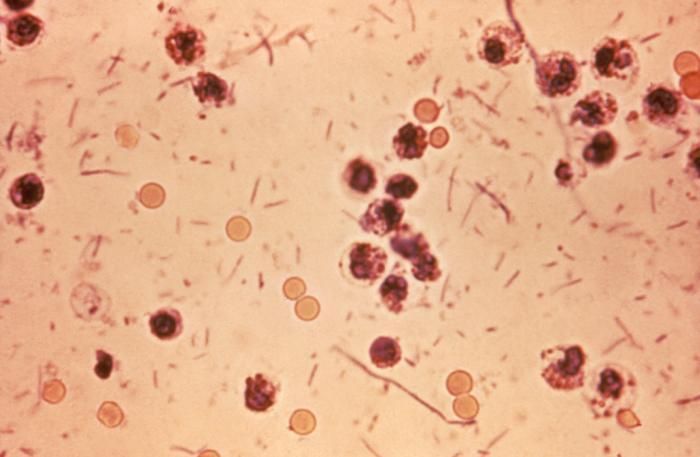
Enterobacterales is an order of Gram-negative, non-spore forming, facultatively anaerobic, rod-shaped bacteria with the class Gammaproteobacteria. The type genus of this order is Enterobacter.
Legionellales
The Legionellales are an order of Pseudomonadota ("Proteobacteria"). Like all Pseudomonadota, they are Gram-negative. They comprise two families, typified by Legionella and Coxiella, both of which include notable pathogens. For example, Q fever is caused by Coxiella burnetii and Legionella pneumophila causes Legionnaires' disease and Pontiac fever.

Citrus canker
species of bacterium
Carsonella ruddii
species of bacterium
Thiotrichales
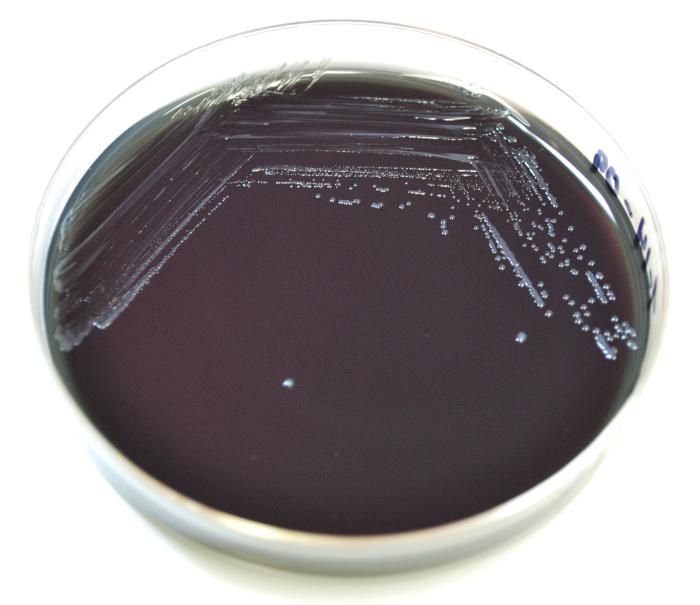
Thiotrichales is an order of sulfur-oxidizing bacteria within the class Gammaproteobacteria known for their large size and ability to live in sulfur rich environments.
Methylococcaceae
The Methylococcaceae are a family of bacteria that obtain their carbon and energy from methane, called methanotrophs.
Alteromonadales
The Alteromonadales are an order of Pseudomonadota. Although they have been treated as a single family, the Alteromonadaceae, they were divided into eight by Ivanova et al. in 2004. The cells are straight or curved rods. They are motile by the use of a single flagellum. Most of the species are marine.
Stenotrophomonas maltophilia
species of bacterium
Aeromonadales
The Aeromonadales are an order of Pseudomonadota, with 10 genera in two families. The species are anaerobic. The cells are rod-shaped. Some species of this order are motile by a single polar flagellum; others are not motile.
Stenotrophomonas
Stenotrophomonas is a genus of Gram-negative bacteria, comprising at least twenty-six species. The main reservoirs of Stenotrophomonas are soil and plants. Stenotrophomonas species range from common soil organisms (S. nitritireducens) to opportunistic human pathogens (S. maltophilia); the taxonomy of the genus is still somewhat unclear.
Cardiobacteriaceae
The Cardiobacteriaceae are a family of Pseudomonadota, given their own order. They are Gram-negative and rod-shaped, with diameters around 0.5 to 1.7 μm and lengths from 1–6 μm.
Methylomonas
Methylomonas is a genus of bacteria that obtain their carbon and energy from methane, a metabolic process called methanotrophy.
Cardiobacterium
Cardiobacterium is a genus of bacteria in the family Cardiobacteriaceae. These Gram-negative bacillus (rod-shaped) bacteria are commonly grouped with other bacteria into the HACEK group.
Methylococcus capsulatus
species of bacterium
Lysobacteraceae
thumb | right | alt=Xanthomonas hortorum pv. hederae leaf spot on English ivy English ivy (Hedera helix L.). | Xanthomonas hortorum pv. hederae leaf spot on English ivy English ivy (Hedera helix L.).
Xanthomonadaceae is a family of Pseudomonadota within the order Xanthomonadales. It was previously known as Lysobacteraceae.
Cellvibrionales
The Cellvibrionales are an order of Gammaproteobacteria.
Budviciaceae
The Budviciaceae are a family of Gram-negative bacteria. This family is a member of the order Enterobacterales in the class Gammaproteobacteria of the phylum Pseudomonadota. The type genus of this family is Budvicia.
Lysobacter
The genus Lysobacter belongs to the family Lysobacteraceae within the Gammaproteobacteria and includes at least 46 named species, including: Lysobacter enzymogenes, L. antibioticus, L. gummosus, L. brunescens, L. defluvii, L. niabensis, L. niastensis, L. daejeonensis, L. yangpyeongensis, L. koreensis, L. concretionis, L. spongiicola, and L. capsici. Lysobacter spp. were originally grouped with myxobacteria because they shared the distinctive trait of gliding motility, but they uniquely display a number of traits that distinguish them from other taxonomically and ecologically related microbes i