Category
page 1Gauls

Gauls
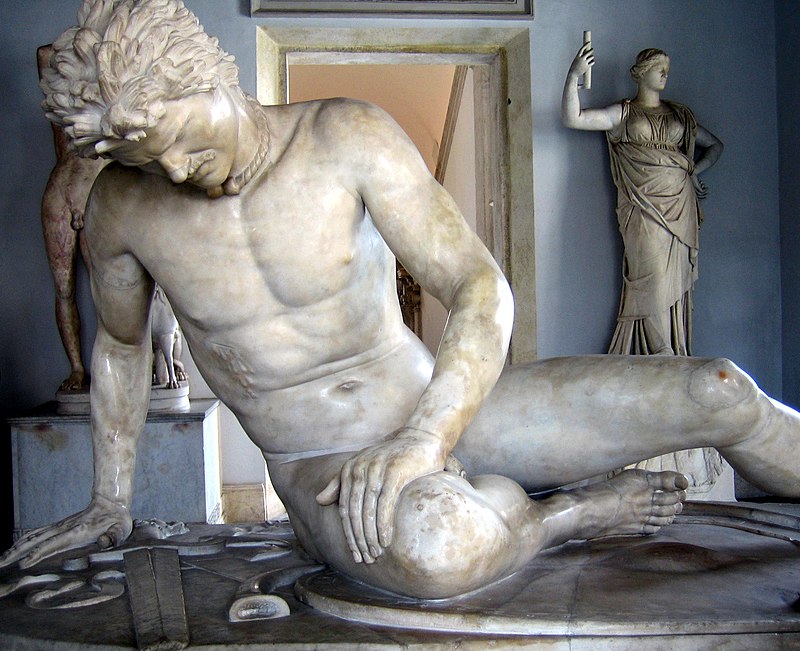
thumb|upright=1.2|The Dying Gaul, [[Capitoline Museums, Rome]]

Galatia
Galatia (; , Galatía, ) was an ancient area in the highlands of central Anatolia, roughly corresponding to the provinces of Ankara and Eskişehir in modern Turkey. Galatia was named after the Gauls from Thrace (cf. Tylis), who settled here and became a small transient foreign tribe in the 3rd century BC, following the Gallic invasion of the Balkans in 279 BC.

Helvetii
thumb|300px|Map of the Roman province Maxima Sequanorum (c. 300 AD), which comprised the territories of a part of the Helvetii, [[Sequani and several smaller tribes. The relative locations of the Helvetian pagi Tigurini and Verbigeni, though indicated on the map, remain unknown.]]

Arverni
thumb|Arverni coin depicting a warrior, 5th-1st century BC.

Boii
thumb|350px|Map showing the approximate location of the Boii in Bohemia and in [[Italy. The contemporary La Tène culture is indicated in green tones, the preceding Hallstatt culture in yellow.]]
Galatians
Celtic people of Galatia in Asia Minor

Aedui
The Aedui or Haedui (Gaulish: *Aiduoi, 'the Ardent'; ) were a Gallic tribe dwelling in what is now the region of Burgundy during the Iron Age and the Roman period.
Parisii
Gallic tribe

Scordisci
thumb|right|alt=The map of Scordisci and their capital Singidunum|The map of the tribal state Scordisci and its neighbours
Veneti
Gallic tribe

Allobroges
The Allobroges (Gaulish: *Allobrogis, 'foreigner, exiled'; ) were a Gallic people dwelling in a large territory between the Rhône river and the Alps during the Iron Age and the Roman period.

Eburones
thumb|A 19th century statue of Ambiorix, prince of the Eburones (1st century BC), in [[Tongeren, Belgium]]

Nervians
thumb|300px|A map of Belgic Gaul in the first century BC, showing the relative position of the Nervii

Senones
thumb|A map of Gaul in the 1st century BC, showing the relative positions of the Celtic tribes.
The Senones or Senonii (Gaulish: 'the ancient ones') were an ancient Gallic tribe dwelling in the Seine basin, around present-day Sens, during the Iron Age and the Roman period.
Sequani
thumb|310px|A portion of the map, Gallia, from Butler's 1907 atlas showing the divisions of the diocese of Gaul in the late [[Roman Empire. According to the key, the map depicts 17 Provinciae Galliae, "Provinces of Gaul," of which the 17th, [Provincia] Maxima Sequanorum, "Greater Sequania," identified with an XVII shown in the Jura Mountains, contains the Sequani and Helvetii.]]
Atrebates
The Atrebates (Gaulish: *Atrebatis, 'dwellers, land-owners, possessors of the soil') were a Belgic tribe of the Iron Age and the Roman period, originally dwelling in the Artois region.

Treveri
frame|right|Modern reconstruction of Treveran dwellings at Altburg, Germany.
The Treveri (Gaulish: *Trēueroi) were a Celtic–Germanic tribe of the Belgae group who inhabited the lower valley of the Moselle in modern day Germany from around 150 BCE, if not earlier, until their displacement by the Franks. Their domain lay within the southern fringes of the Silva Arduenna (Ardennes Forest), a part of the vast Silva Carbonaria, in what are now Luxembourg, southeastern Belgium and western Germany; its centre was the city of Augusta Treverorum (Trier), to which the Treveri give their name. Although r

Insubres
thumb|300px|The peoples of Cisalpine Gaul, 391-192 BC.
The Insubres or Insubri were an ancient Celtic population settled in Insubria, in what is now the Italian region of Lombardy. They were the founders of Mediolanum (Milan). Though completely Gaulish at the time of Roman conquest, they were the result of the fusion of pre-existing Ligurian and Celtic population (Golasecca culture) with Gaulish tribes.
Bituriges
Celtic tribe of Gaul

Menapii
thumb|right|300px|Reconstruction of a Menapian dwelling at Destelbergen.The Menapii were a Belgic tribe dwelling near the North Sea, around present-day Cassel, during the Iron Age and the Roman period.

Volcae
The Volcae () were a Gallic tribal confederation constituted before the raid of combined Gauls that invaded Macedonia c. 270 BC and fought the assembled Greeks at the Battle of Thermopylae in 279 BC. Tribes known by the name Volcae were found simultaneously in southern Gaul, Moravia, the Ebro valley of the Iberian Peninsula, and Galatia in Anatolia. The Volcae appear to have been part of the late La Tène material culture, and a Celtic identity has been attributed to the Volcae, based on mentions in Greek and Latin sources as well as onomastic evidence. Driven by highly mobile groups operating
Carni
The Carni (Greek: Καρνίοι) were a tribe of the Eastern Alps in classical antiquity of Celtic language and culture, settling in the mountains separating Noricum and Venetia. They probably gave their name to Carso, Carnia, Carinthia, and Carniola.
Taurini
thumb|282x282px|Peoples of Cisalpine Gaul 391-192 BC.

Carnutes
The Carnutes or Carnuti (Gaulish: 'the horned ones'), were a Gallic tribe dwelling in an extensive territory between the Sequana (Seine) and the Liger (Loire) rivers during the Iron Age and the Roman period.
Lemovices
The Lemovices (Gaulish: *Lēmouīcēs, 'those who vanquish by the elm') were a Gallic tribe dwelling in the modern Limousin region during the Iron Age and the Roman period.
Remi
The Remi (Gaulish: Rēmi, 'the first, the princes') were a Belgic tribe dwelling in the Aisne, Vesle and Suippe river valleys during the Iron Age and the Roman period. Their territory roughly corresponded the modern Marne and Ardennes and parts of the Aisne and Meuse departments.

Nemetes
300px|thumb|A map of eastern Gaul showing the Nemetes at the right along the Rhine.
The Nemetes or Nemeti were a tribe settled along the Upper Rhine by Ariovistus in the 1st century BC.
Lingones
thumb|350px|A map of Gaul showing the relative position of the Lingones tribe, near centre right.

Iapydes
thumb|250px|Iapodes territory in ca 5th century BC
The Iapodes (or Iapydes, Japodes; ; ) were an ancient Illyrian people who dwelt north of and inland from the Liburnians, off the Adriatic coast and eastwards of the Istrian peninsula. They occupied the interior of the country between the Colapis (Kupa) and Oeneus (Una) rivers, and the Velebit mountain range (Mons Baebius) which separated them from the coastal Liburnians. Their territory covered the central inlands of modern Croatia and Una River Valley in today's Bosnia and Herzegovina. Archaeological documentation confirms their presence in t

Morini
The Morini (Gaulish: 'sea folk, sailors') were a Belgic coastal tribe dwelling in the modern Pas de Calais region, around present-day Boulogne-sur-Mer, during the Iron Age and the Roman period.

Bellovaci
thumb|A map of Gaul in the 1st century BC, showing the relative position of the Bellovaci tribe.

Pictones
thumb|281x281px|Pictonian stater (1st c. BC).
The Pictones were a Gallic tribe dwelling south of the Loire river, in the modern departments of Vendée, Deux-Sèvres and Vienne, during the Iron Age and Roman period.
Salassi
The Salassi or Salasses were a Gallic or Ligurian tribe dwelling in the upper valley of the Dora Baltea river, near present-day Aosta, Aosta Valley, during the Iron Age and the Roman period.
Aluerci Cenomani
branch of the Aulerci people in Gallia Celtica

Ambiani
thumb|Ambiani hemi stater. Stylized head.
The Ambiani (Gaulish: Ambiāni, 'those around') were a Belgic coastal tribe dwelling in the modern Picardy region during the Iron Age and Roman periods.
Santones
gallic tribe

Cotini
The Cotini, sometimes spelled Gotini (because it is found in some manuscript copies of Tacitus), were a Celtic-speaking tribe living during Roman times in the mountains approximately near the modern borders of the Czech Republic, Poland, and Slovakia.

Suessiones
thumb|Suessionean stater, ca. 200 BC
The Suessiones were a Belgic tribe, dwelling in the modern Aisne and Oise regions during the La Tène and Roman periods.

Namnetes
thumb|upright=1.5|Coins of the Namnetes
The Namnetes were a Gallic tribe dwelling near the modern city of Nantes during the Iron Age and the Roman period.

Turones
thumb|Turones coinage, 5th–1st century BCE|287x287px
The Turoni or Turones were a Gallic tribe of dwelling in the later Touraine region during the Iron Age and the Roman period.

Vindelici
The Vindelici (Gaulish: ) were a Gallic people dwelling around present-day Augsburg (Bavaria) during the Iron Age and the Roman period.

Osismii
thumb|upright=1.5|Coins of the Osismii.
The Osismii or Ostimii were a Gallic tribe living in the western part of the Armorican Peninsula (modern Brittany) during the Iron Age and the Roman period.

Salyes
The Salyes or Salluvii (Greek: ) were an ancient Celto-Ligurian people dwelling between the Durance river and the Greek colony of Massalia during the Iron Age. Although earlier writers called them 'Ligurian', Strabo used the denomination 'Celto-ligurian' in the early 1st century AD. A Celtic influence is noticeable in their religion, which centred on the cult of the tête coupée ('severed head'), as well as in the names of their towns and leaders. During the 2nd century BC, the Salyes were most likely at the head of a political and military confederation that united both Gallic and Ligurian tri

Riedones
thumb|Redonan stater (ca. 80-50 BC).|276x276px
The Redones or Riedones (Gaulish: Rēdones, later Riedones, 'chariot- or horse-drivers') were a Gallic tribe dwelling in the eastern part of the Brittany peninsula during the Iron Age and subsequent Roman conquest of Gaul. Their capital was at Condate, the site of modern day Rennes.
Tigurini
thumb|The Tigurini were a pagus of the [[Helvetii.]]
thumb|«Die Helvetier zwingen die Römer unter dem Joch hindurch» ("The Helvetians force the Romans to pass under the yoke"). Romantic painting by Charles Gleyre (19th century) celebrating the Tigurini victory over the Romans at [[Agen (107 BCE) under Divico's command.]]
.jpg)
Andecavi
thumb|280x280px|Andecavi stater.
The Andecavi (also Andicavi, Andegavi, or Andigavi) were a Gallic tribe dwelling in Aremorica during the Roman period.
Aulerci
The Aulerci were a group of Gallic peoples inhabiting regions of Gaul during the Iron Age and the Roman period.

Curiosolitae
thumb|Coins of the Curiosolitae, 5th-1st century BC.|alt=|289x289px
The Coriosolites or Curiosolitae were a Gallic people dwelling on the northern coast of present-day Brittany during the Iron Age and the Roman period.

Taurisci
thumb|Map showing the barbarian peoples of Pannonia prior to the Roman conquest. The Taurisci are on the left
The Taurisci were a federation of Celtic tribes who dwelt in today's Carinthia and northern Slovenia (Carniola) before the coming of the Romans (c. 200 BC). According to Pliny the Elder, they are the same as the people known as the Norici.
.svg)
Diablintes
The Diablintes or Aulerci Diablites (also Diablintres or Diablindes) were a Gallic tribe dwelling in the north of the modern Mayenne department during the Iron Age and the Roman period. They were part of the Aulerci.

Ruteni
thumb|279x279px|Rutenan drachma (2nd–1st c. BC).
The Ruteni were a Gallic tribe dwelling in the southern part of the Massif Central, around present-day Rodez, during the Iron Age and the Roman period.

Unelli
thumb|Gold quarter-stater of the Unelli depicting a charioteer driving a horse

Tolistobogii
thumb|250px|3rd century AD Sol Invictus disk from [[Pessinus, then capital city of the Tolistobogii.]]
Tolistobogii (in other sources Tolistobogioi, Tolistobōgioi, Tolistoboioi, Tolistobioi, Toligistobogioi or Tolistoagioi) is the name used by the Roman historian, Livy, for one of the three ancient Gallic tribes of Galatia in central Asia Minor, together with the Trocmi and Tectosages. The tribe entered Anatolia in 279 BC as a contingent of Celtic raiders from the Danube region, and settled in those regions of Phrygia which would later become part of the Roman province of Galatia. The Galatian

Mandubii
The Mandubii (Gaulish: *Mandubioi) were a small Gallic tribe dwelling in and around their chief town Alesia, in modern Côte-d'Or, during the Iron Age and the Roman period.

Caletes
The Caletes or Caleti (Gaulish: Caletoi "the hard [stubborn, tough] ones"; or Calētī) were a Celtic tribe dwelling in Pays de Caux, in present-day Normandy, during the Iron Age and the Roman period.
Nantuates
The Nantuates or Nantuatae (Gaulish: Nantuatis, 'those of the valley') were a Gallic tribe dwelling around present-day Massongex, in the modern Canton of Valais (Switzerland) and adjacent areas of France, during the Iron Age and the Roman period.
Seduni
The Seduni were a Gallic tribe dwelling in the upper Rhône valley, around present-day Sion, during the Iron Age and the Roman period.

Petrocorii
The Petrocorii were a Gallic tribe dwelling in the present-day Périgord region, between the Dordogne and Vézère rivers, during the Iron Age and the Roman period.
Caturiges
The Caturiges (Gaulish: Caturīges, 'kings of combat') were a Gallic tribe dwelling in the upper Durance valley, around present-day towns of Chorges and Embrun, during the Iron Age and the Roman period.
Latobici
The Latobici or Latovici (Gaulish: Latobicoi) were a Celtic tribe dwelling in Pannonia Superior, around present-day Drnovo (Slovenia), during the Roman period.