Category
page 1Geographical centres
Cuiabá
Cuiabá () is the capital city and the largest city of the Brazilian state of Mato Grosso. It is located near the geographical centre of South America and also forms the metropolitan area of Mato Grosso, along with the neighbouring town of Várzea Grande. The city's name is an indigenous Bororo word meaning 'arrow-fishing', The city was founded in 1719, during the gold rush, and it has been the state capital since 1818. The city is a trading centre for an extensive cattle-raising and agricultural area. The capital is among the fastest-growing cities in Brazil, followed by the growth of agribusin

Nelson
city on the South Island, New Zealand

Făgăraș
Făgăraș (; , ) is a city in central Romania, located in Brașov County. It lies on the river Olt and has a population of 26,284 as of 2021. It is situated in the historical region of Transylvania, and is the main city of a subregion, Țara Făgărașului.

Rugby
city in Pierce County, North Dakota, United States
Lake Vivi
lake in Russia
axis mundi
world center in some religions or philosophies; connection between Heaven and Earth
Tatsuno
town in Kamiina district, Nagano prefecture, Japan
Niederdorla
Niederdorla (, , in contrast to "Upper Dorla") is a village and a former municipality in the Unstrut-Hainich-Kreis district of Thuringia, Germany. One of the possible geographical centres of Germany is within its area. The nearest city is Erfurt, which also is the capital city of Thuringia. Since 31 December 2012, it has been part of the municipality of Vogtei.
geographical midpoint of Europe
hypothetically proposed place in Europe
Yanggu County
administrative division of South Korea
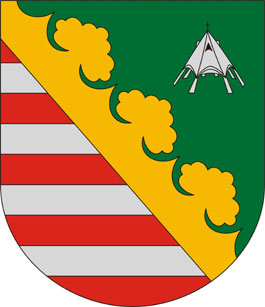
Pusztavacs
Pusztavacs is a village in Dabas district, Pest county, Hungary, about 54 km south-east of the capital Budapest. Its population consists of 1,530 inhabitants. Pusztavacs was first mentioned in records in 1274. It is notable for featuring the geographical centre of the country. To mark that centre, an 11-meter high octagonal pyramid was built in 1978 by the plans of the architect József Kerényi. The tower was burnt down in 2001 and later rebuilt in 2004.
geographical center
centroid of a region of the earth's surface
Drača
Drača () is a village in the municipality of Stanovo, Serbia. According to the preliminary results of the 2011 census, the village has a population of 911 people. In the domain of the village, about 7 kilometres from the centre of the city of Kragujevac, the geographical centre of Serbia is located.
Paenasti
Paenasti () is a village in Põhja-Sakala Parish, Viljandi County, in central Estonia. As of the 2011 census, the settlement's population was 31.
Central Iran
region in Iran
Nil-Saint-Vincent-Saint-Martin
thumb|The church of Saint Vincent
Nil-Saint-Vincent-Saint-Martin () is a Belgian village and district of the municipality of Walhain, Wallonia in the province of Walloon Brabant.
geographic centre of Slovenia
Spatial reference point denoting the central position of the country
geographical center of Asia
any of several points asserted by various parties as a central part of Asia
geographic center of Belarus
center point of the Republic of Belarus
Central Germany
Geographical area in Germany
Omphalos of Delphi
ancient marble monument found at the archaeological site of Delphi, Greece

Cwmystwyth
Cwmystwyth (also Cwm Ystwyth, ; ) is a village in Ceredigion, Wales near Devil's Bridge, and Pont-rhyd-y-groes.
Ruoščiai
thumb|left|Stones marking the geographical center of Lithuania
Ruoščiai is a small village in Kėdainiai district municipality, Lithuania. Located about 3 km from the town of Dotnuva, it had 37 residents at the 2011 census. The settlement is known as the geographical center of Lithuania, which was calculated in 1995.
geographical centre of Switzerland