Category
page 1Geomyths
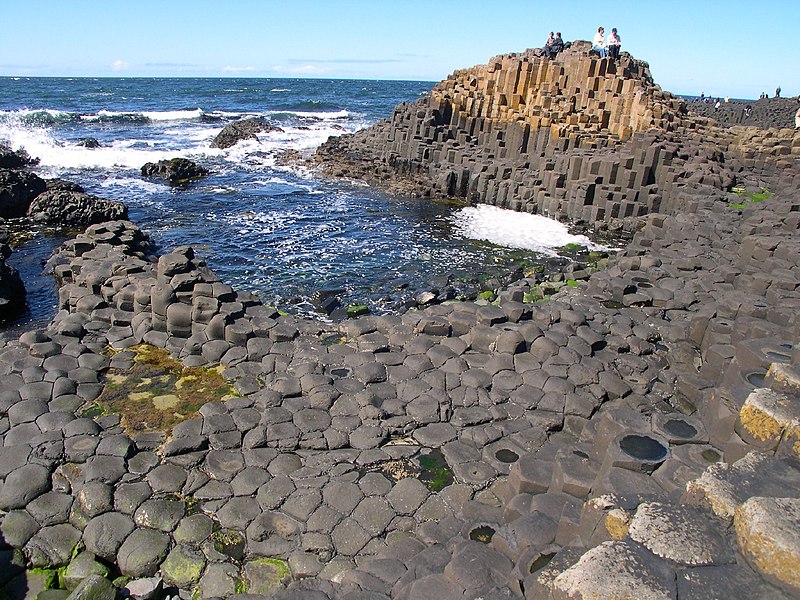
Giant's Causeway
rock formation on the Antrim coast of Northern Ireland

Devils Tower
mountain near Moorcroft, Wyoming, United States
Chocolate Hills
geological formation in Bohol, Philippines
fontaine de Vaucluse
important spring (exsurgence) in France, source of the Sorgue river

Reynisdrangar
thumb|Reynisdrangar captured from Reynisfjall
thumbnail|Landscape with the sea stacks in the background.
thumb|Basalt columns on the beach at Reynisfjara.
Reynisdrangar () are the basalt sea stacks situated under the mountain Reynisfjall near the village of Vík í Mýrdal in southern Iceland. It is framed by a black sand beach that was ranked in 1991 as one of the ten most beautiful non-tropical beaches in the world. In 2021 Reynisfjara was rated the sixth best beach in the world.

Borgarvirki
thumb|right|300px|Borgarvirki
thumb|right|300px|View from the top of Borgarvirki
Borgarvirki lies between Vesturhóp and Víðidalur in the north of Iceland, and at 177m above sea level it dominates the surrounding region. Made out of basalt strata, it has been used as a fortress. Borgarvirki is a natural phenomenon, altered by humans in earlier centuries. In 1949, Borgarvirki was renovated by workers who installed a granite lintel at the main entrance.
geomythology
Geomythology (also called “legends of the earth," "landscape mythology," “myths of observation,” “natural knowledge") is the study of oral and written traditions created
by pre-scientific cultures to account for, often in poetic or mythological imagery, geological events and phenomena such as earthquakes, volcanoes, floods, tsunamis, land formation, fossils, and natural features of the landscape. Dorothy Vitaliano, a geologist at Indiana University, coined the term in 1968.
Ciampate del Diavolo
locality near the extinct Roccamonfina volcano in northern Campania, Italy