Category
page 1Geophagini

Apistogramma
Apistogramma is a large genus of freshwater fish in the family Cichlidae native to South America, but also commonly kept in aquariums. They are dwarf cichlids that mostly feed on tiny animals and have breeding behaviors that vary depending on the exact species.
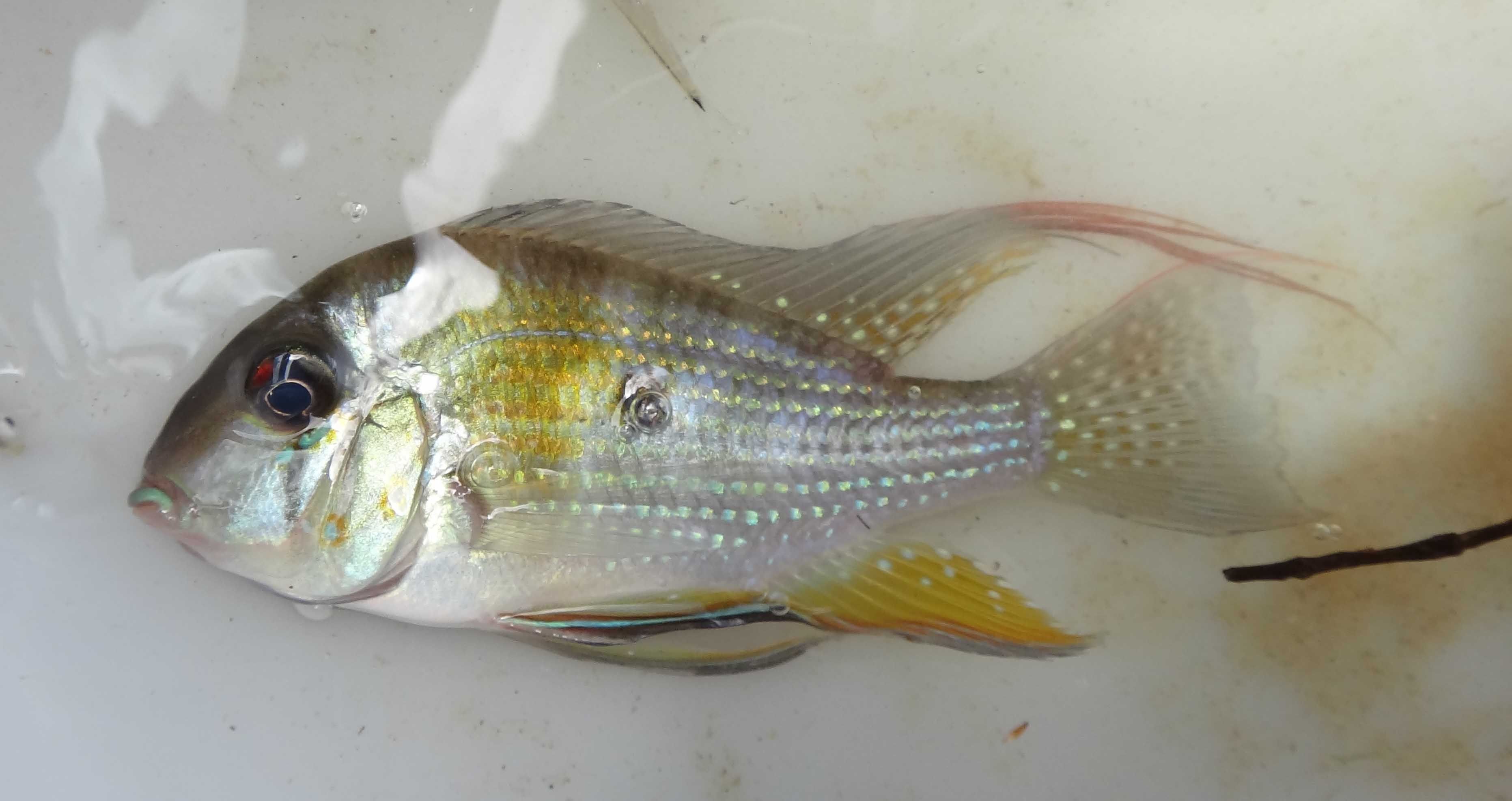
Acarichthys heckelii
species of fish
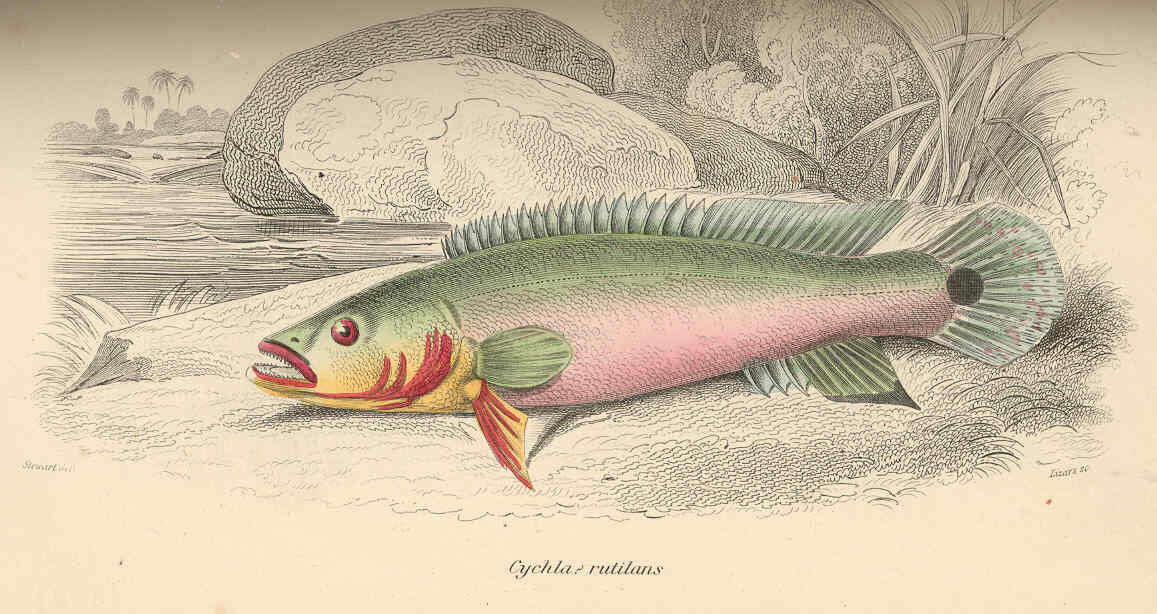
Crenicichla
Crenicichla is a genus of cichlids native to South America, which are one of the genera commonly known as pike cichlids. They are found in most tropical and subtropical freshwater habitats between the Andes and the Atlantic.
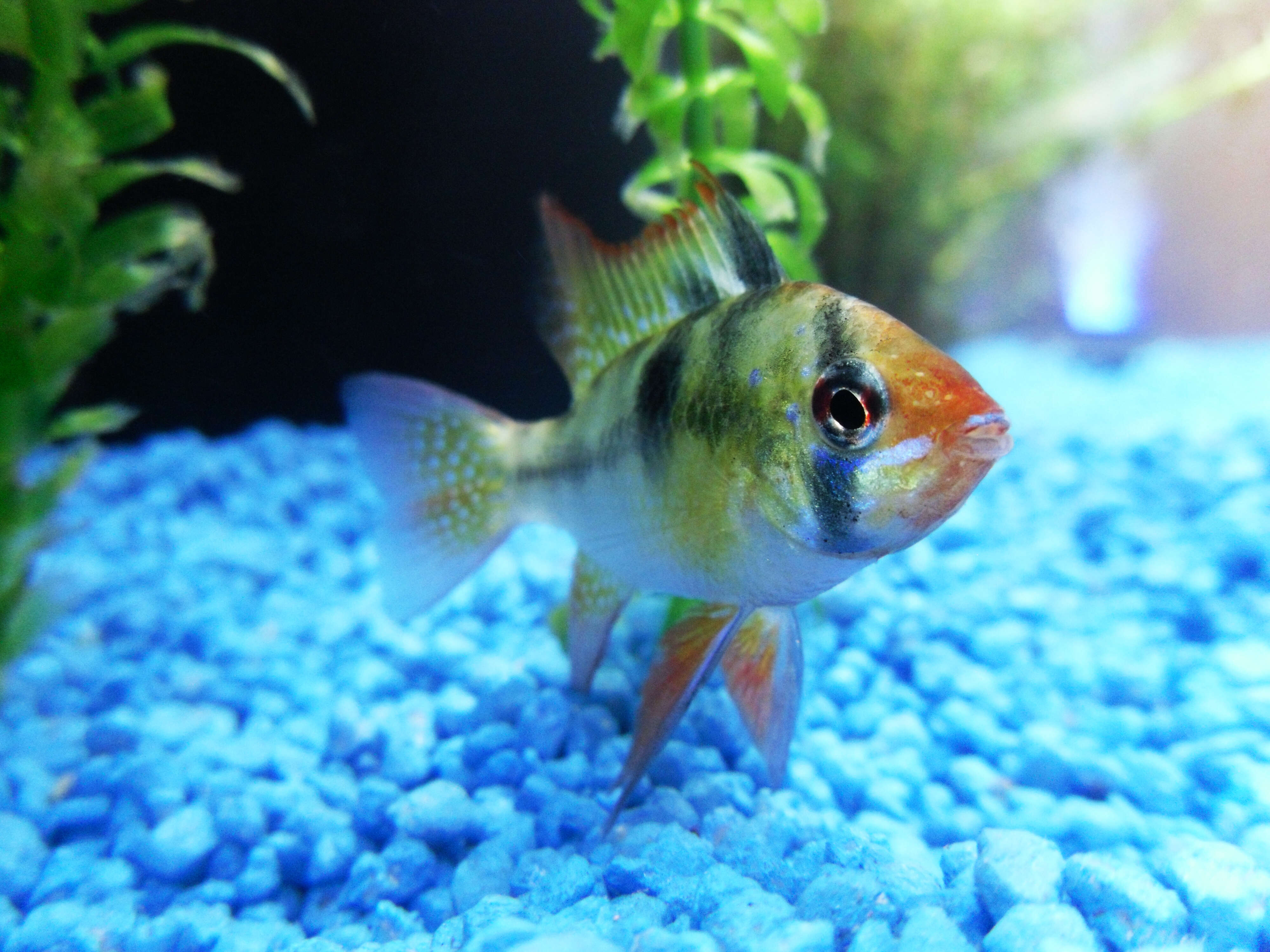
Microgeophagus
Mikrogeophagus is a genus of cichlids native to the Llanos wetlands (Orinoco basin) and Guaporé–Mamoré river system (southern Amazon basin) in tropical South America. They are dwarf cichlids that reach up to in standard length.
Dicrossus
Dicrossus is a genus of small cichlid fishes native to rivers in the Amazon and Orinoco basins in South America. These cichlids have several dark spots on the sides of their bodies (although very faint in some). Depending on the species, they typically only reach in length.
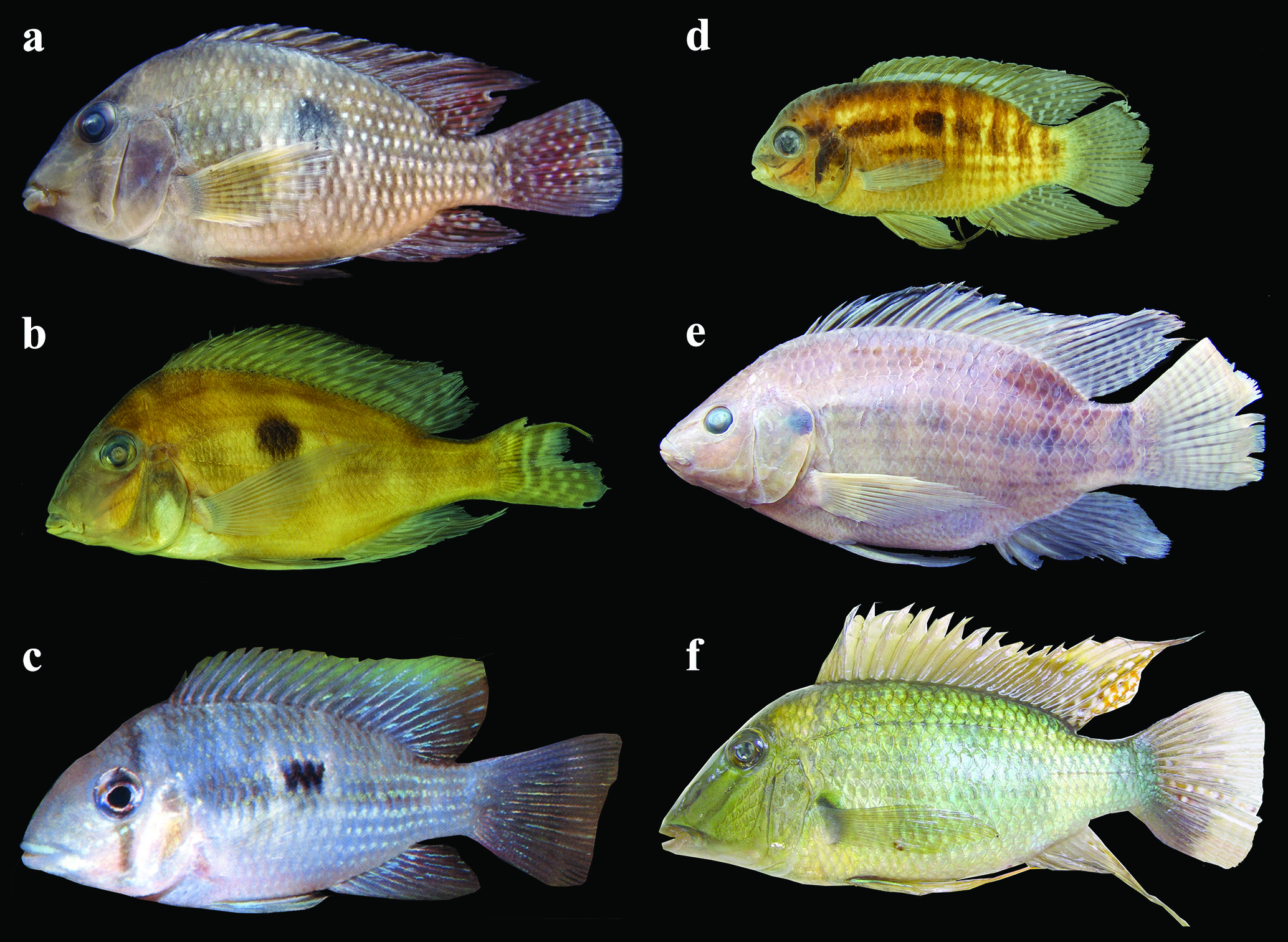
Satanoperca
Satanoperca is a small genus of cichlids from South America, where they are known from the Orinoco, Essequibo, Nickerie, Amazon and Paraná–Paraguay river basins. They are mainly found in areas with slow-moving waters, but some species have also been recorded from rapids.
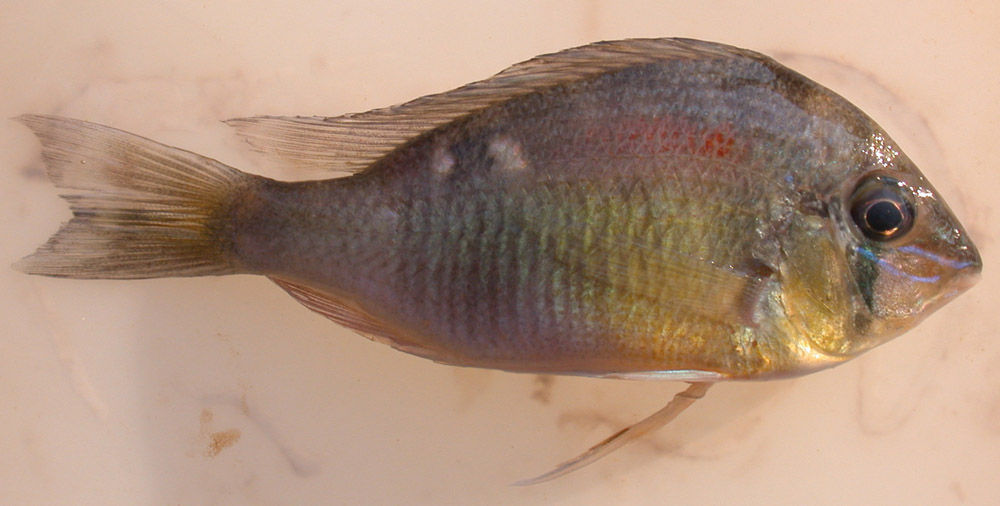
Biotodoma
Biotodoma is a small genus of cichlids native to rivers in the Amazon, Orinoco and Essequibo basins in South America.
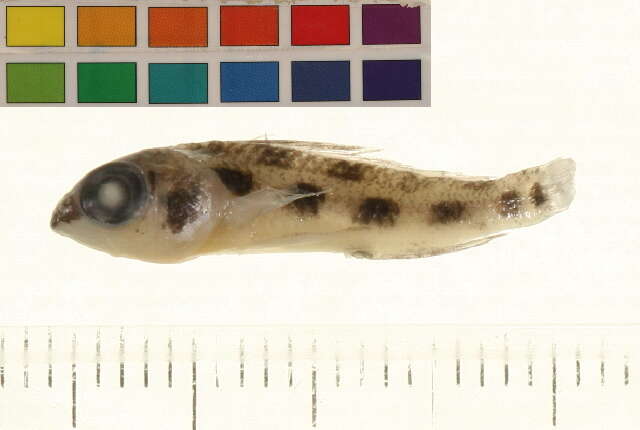
Dicrossus filamentosus
species of fish
Q3524
Teleocichla is a genus of fish in the family Cichlidae found in the Tapajós, Xingu, Tocantins and Jari River basins, which are part of the Amazon River Basin in Brazil. All species are rheophilic, and highly elongated in shape. They generally are smaller than in length, making them some of the smallest cichlids of the Americas. Only T. preta can grow larger, reaching about . Since restricted to areas with fast currents (such as cataracts and rapids), they are particularly vulnerable to the building of dams, and the Belo Monte Dam may cause the extinction of T. centisquama. Other species recogn

Gymnogeophagus
Gymnogeophagus is a genus of cichlid fishes from South America, where they are known from various river basins (notably Rio de la Plata and Lagoa dos Patos–Mirim) in southern Brazil, Paraguay, Uruguay and northern Argentina. They are part of a group popularly known as eartheaters.
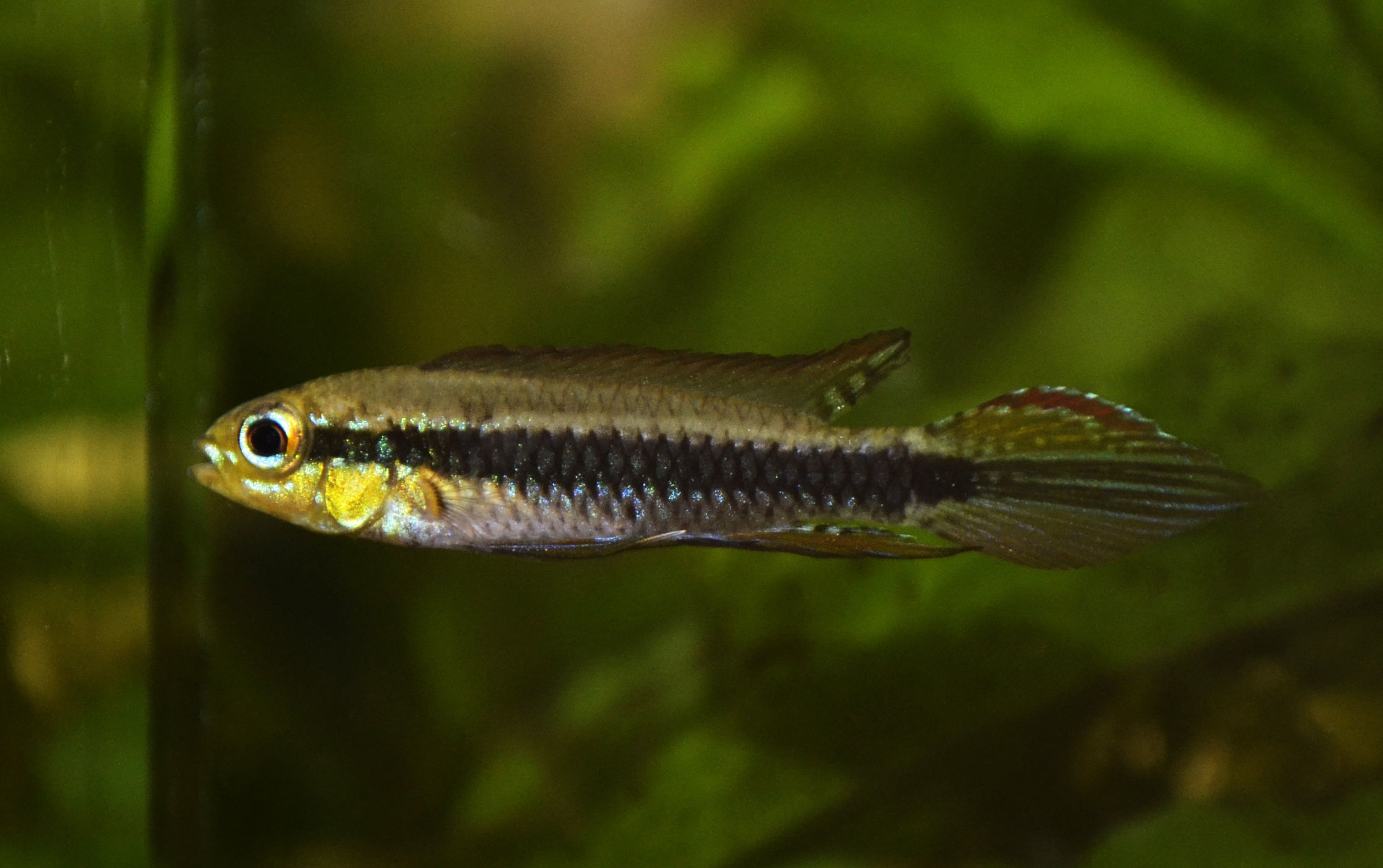
Taeniacara candidi
species of fish

Guianacara
Guianacara is a small genus of cichlid fish endemic to freshwater habitats in the Guiana Shield in South America. They mostly live in moderately flowing clear- or blackwater rivers and streams, but also occur in lagoons that are seasonally flooded. They are typically found over bottoms consisting of sandy patches intermixed with large rocks.
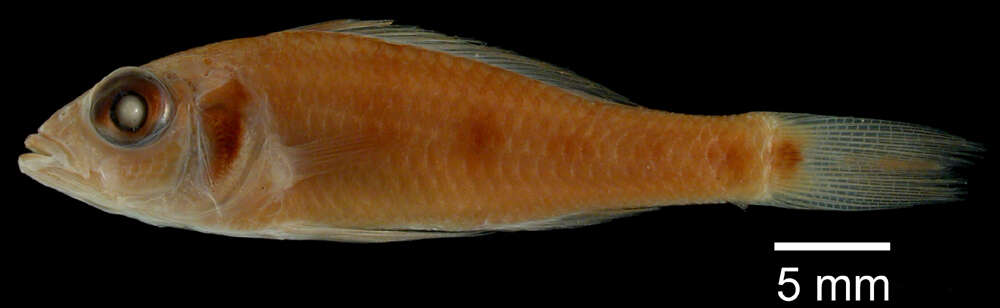
Biotoecus
Biotoecus is a fish genus of cichlids from northern South America where one species (B. dicentrarchus) is found in the Orinoco Basin and the other (B. opercularis) occurs in the northern part of the Amazon Basin. These small cichlids do not surpass in length.
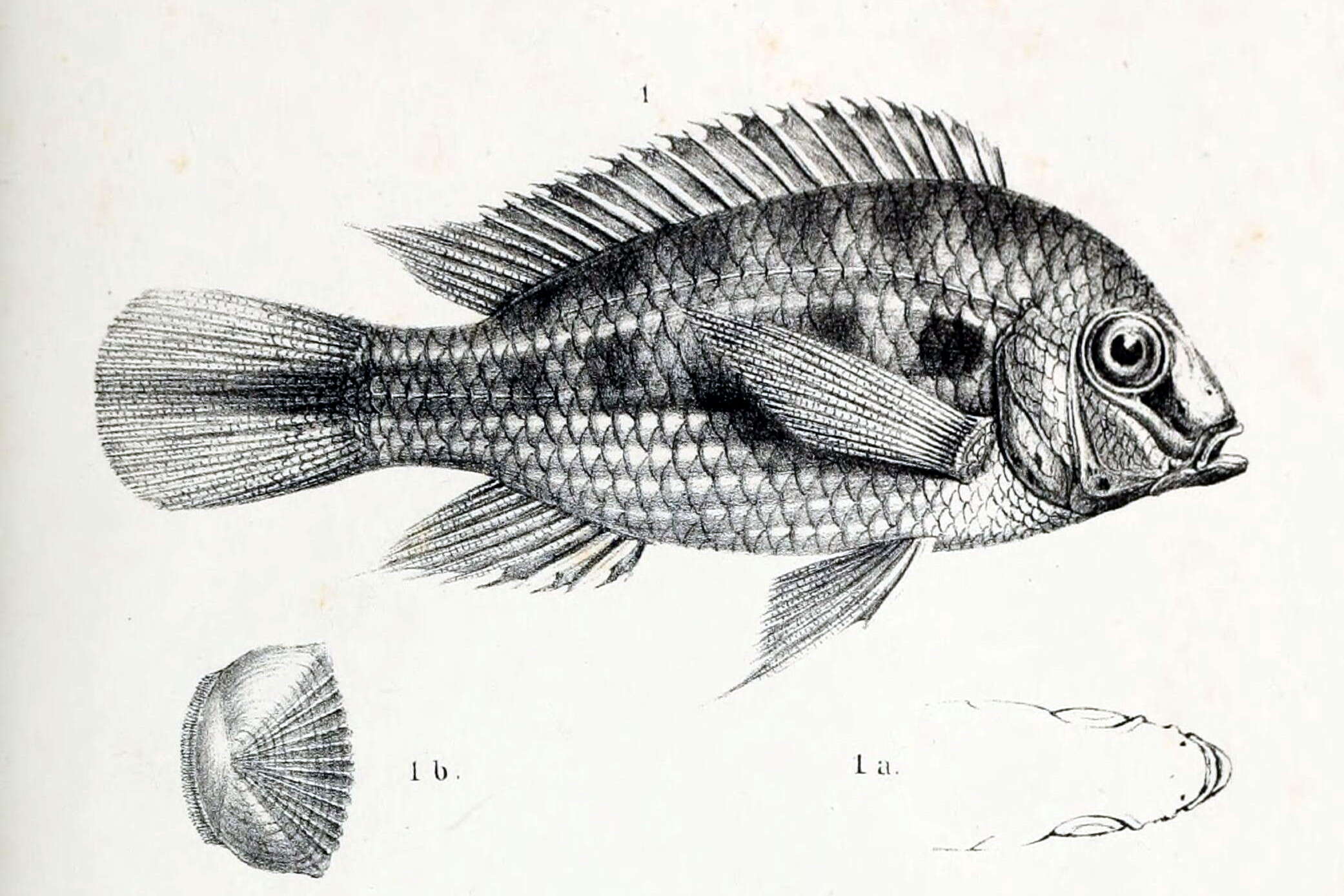
Crenicara
Crenicara is a small genus of cichlid fishes native to creeks and rivers in the Amazon and Essequibo basins in South America. These cichlids have several dark spots on the sides of their bodies, and do not surpass in length.
Satanoperca jurupari
species of fish

Teleocichla cinderella
species of fish from the family Cichlidae
Mazarunia mazarunii
species of fish
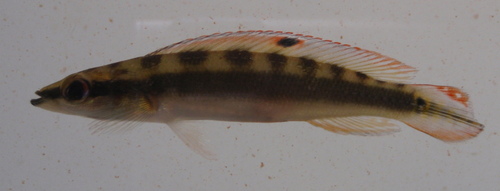
Crenicichla wallacii
species of fish
Mazarunia
Mazarunia is a genus of cichlids from the Mazaruni River, a tributary of the Essequibo River in Guyana. They are dwarf cichlids that do not surpass in length.
Crenicara punctulatum
species of fish
Crenicichla virgatula
species of fish
Crenicichla urosema
species of fish
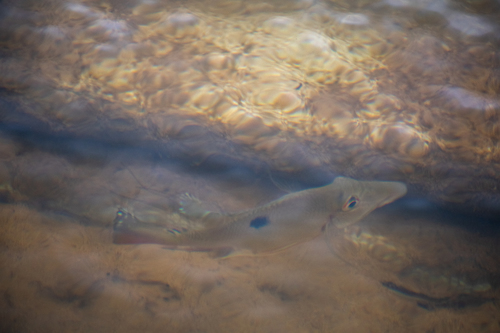
Satanoperca lilith
Species of cichlid fish
Geophagini
Geophagini is a tribe of cichlids from the subfamily Cichlinae, the American cichlids. It is the sister taxon to the clade which includes the Cichlasomatini and Heroini. Fishes in the Geophagini are distributed from Panama south to Argentina, it is the most speciose of the seven tribes within the Cichlinae and it is subdivided into three sub-tribes, Acarichthyina, Crenicaratina, and Geophagina which together contain over 200 species. Geophagines show morphological and behavioural specialisations to enable them to sift the substrates within their mouths so that they can separate benthic inverte
Apistogrammoides
Apistogrammoides pucallpaensis is a South American dwarf cichlid that reaches up to in standard length. This fish is found in the western Amazon basin, including the systems of the lower Ucayali, lower Japurá and upper Amazon River, in Peru, Colombia and Brazil. It typically lives among leaf litter or floating plants in water with little or no current. It is the only known member of the genus Apistogrammoides, but it is closely related to Apistogramma.