Category
page 1Germanic mythology

troll
thumb|upright=1.3|''Look at them, troll mother said. Look at my sons! You won't find more beautiful trolls on this side of the moon.'' (1915) by John Bauer (illustrator)|John Bauer
A troll is a being in Nordic folklore, including Norse mythology. In Old Norse sources, beings described as trolls dwell in isolated areas of rocks, mountains, or caves, live together in small family units, and are rarely helpful to human beings.
%20-%20cropped%20(cropped).png)
Jörmungandr
thumb|Jörmungandr in the sea during Ragnarök, drawn by the Norwegian illustrator [[Louis Moe in 1898.]]
In Norse mythology, Jörmungandr (, see Etymology), also known as the Midgard Serpent or World Serpent (, "worm of Midgard"), is an unfathomably large and monstrous sea serpent or worm who dwells in the world sea, encircling the Earth (Midgard) and biting his own tail, an example of an ouroboros. As a result of him surrounding Midgard, the beast is referred to as the World Serpent. Jörmungandr releasing his tail is one of the signs of the beginning of Ragnarök.
Germanic mythology
body of mythology associated with historical Germanic paganism
%2C%20G.%20Bussiere%2C%201897.jpg)
Brynhild
thumb|"Brunnhild" (1897) by Gaston Bussière
Merseburg charms
medieval spells written in Old High German

Tuisto
right|thumb|300px|Map showing the approximate locations of the major Germanic tribes in and around the geographical region of Germania as mentioned in Tacitus' work, the Germania

Manus
Mannus, according to the Roman writer Tacitus, was a figure in the creation myths of the Germanic tribes. Tacitus is the only source of these myths.
thumb|Engraving of the three sons of Mannus (Carl Larsson, 1893): Ingui plays with a model ship (the [[Ingaevones lived by the sea); Irmin wears a helmet and sword (the Irminones were famed as warriors); Istaev/Iscio digs in the earth and has a toy horse (the Istvaeones were horsemen and farmers).]]
Tacitus wrote that Mannus was the son of Tuisto and the progenitor of the three Germanic tribes Ingaevones, Herminones and Istvaeones. In discussing t

Alberich
thumb|Alberich seduces the king's mother (a scene from Ortnit, 1480 woodcut)
thumb|Alberich (with whip) drives on the Nibelung dwarfs, who collect gold and other treasures. ([[Arthur Rackham, 1910)]]
thumb|Sigurd|Siegfried wrestles with Alberich ([[Julius Schnorr von Carolsfeld, 1843)]]
In German heroic legend, Alberich () is a dwarf. He features most prominently in the poems Nibelungenlied and Ortnit. He also features in the Old Norse collection of German legends called the Thidreksaga under the name Alfrikr. His name consists of the elements alb ("elf") and ric "power" or "ruler". It is equi

Muspilli
Muspilli is an Old High German alliterative verse poem known in incomplete form (103 lines) from a ninth-century Bavarian manuscript. Its subject is the fate of the soul immediately after death and at the Last Judgment. Many aspects of the interpretation of the poem, including its title, remain controversial among scholars.

Thursby
Thursby is a village in the Cumberland district of Cumbria, England. It is near to the city of Carlisle. Thursby was historically part of the county of Cumberland.

Rhinemaidens
thumb|upright=1.2|The three Rhinemaidens at play in the waters of the Rhine. Illustration from Stories of the Wagner Opera by [[H. A. Guerber, 1905.]]
The Rhinemaidens are the three nixies sisters (Rheintöchter or "Rhine daughters") who appear in Richard Wagner's opera cycle Der Ring des Nibelungen. Their individual names are Woglinde, Wellgunde and Flosshilde, although they are generally treated as a single entity and they act together accordingly. Of the 34 characters in the Ring cycle, they are the only ones who did not originate in the Old Norse Eddas. Wagner created his Rhinemaidens

Púca
thumb|Depiction of the Pwca in Wirt Sikes's book British Goblins: Welsh Folk-lore, Fairy Mythology, Legends and Traditions, 1880

Deor
"Deor" (or "The Lament of Deor") is an Old English poem found on folio 100r–100v of the late-10th-century collection the Exeter Book. The poem consists of a reflection on misfortune by a poet whom the poem is usually thought to name Deor. The poem has no title in the Exeter Book itself; the title has been bestowed by modern editors.
Gaut
Gaut (, from a Proto-Germanic *Gautaz) is an early Germanic name which represents a mythical ancestor or national god in the origin myth of the Geats.

Thursley
Thursley is a village and civil parish in southwest Surrey, west of the A3 between Milford and Hindhead. An associated hamlet is Bowlhead Green. To the east is Brook. In the south of the parish rises the Greensand Ridge, in this section reaching its escarpment near Punch Bowl Farm and the Devil's Punch Bowl, Hindhead.
Cold Higham
village and civil parish in Northamptonshire, England, UK

Kirkharle
Kirkharle (otherwise Kirk Harle) is a village and former civil parish, now in the parish of Kirkwhelpington, in the county of Northumberland in Northern England located about west of the town of Morpeth, just to the west of the crossroads of the A696 and B6342 roads. It is famous as the birthplace of Lancelot 'Capability' Brown in the early eighteenth century, Britain's most celebrated landscape gardener. In 1951 the parish had a population of 69.
== Governance ==
On 1 April 1958 the parish was abolished and merged with Kirkwhelpington.
continental Germanic mythology
subtype of Germanic paganism in Central Europe during the 6th to 8th centuries
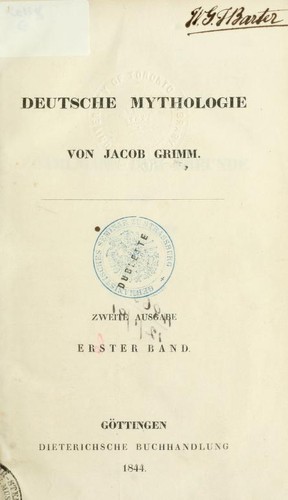
Deutsche Mythologie
book by Jacob Grimm
Thundersley
Thundersley is a town in the Castle Point borough of southeast Essex, England. It sits on a clay ridge shared with Basildon and Hadleigh, east of Charing Cross, London. The ecclesiastical parish of Thundersley St Peter takes in Daws Heath to the east.
vættir
REDIRECT Wight
King Laurin
South Tyrolean saga
fossegrim
thumb|Fossegrim playing a harp in a waterfall under the statue to the violinist Ole Bull in [[Bergen]]
thumb| ("The Stream Man") by Swedish painter Ernst Josephson, 1884
Fossegrim, also known simply as the grim (Norwegian) or Strömkarlen (Swedish), is a water spirit or troll in Scandinavian folklore. He is often depicted as a handsome, nude man playing the fiddle in and . Fossegrim has been associated with a mill spirit (kvernknurr) and is related to the water spirit (nokken) and is sometimes also called näcken in Sweden.
Lorsch Bee Blessing
literary work
Witege
thumb|Wittich (in red) dishonourably battles two against one with Heime to defeat Alphart.
Witege, Witige or Wittich (; Gotho-) or Vidrik "Vidga" Verlandsson ( + Viðga or Videke + Verlandsson, Vallandsson, or Villandsson) is a character in several Germanic heroic legends, poems about Dietrich von Bern, and later Scandinavian ballads.
Alruna
Alruna (Old Norse Ǫlrún, Old High German Ailrun, Modern German Alruna, Alraune) is a Germanic female personal name, from Proto Germanic *aliruna (or possibly *agilruna), which is formed from runa "secret, rune" and a debated prefix that may be ali-, agil-, or alu-.
loathly lady
motif in folklore and stock character; woman who appears to be hideous, often cursed
Germanic dragon
creature in Germanic mythology and folklore