Category
page 1Ghazal

ghazal
thumb|An illustrated headpiece from a mid-18th century collection of ghazals and Rubaʿi|rubāʻīyāt
Khurshidbanu Natavan
Azerbaijani poet
Diwan-e Shams-e Tabrizi
Large collection of poems by Rumi
Insha Allah Khan
Indian author
radif
In the poetic traditions of the Islamic East, particularly in Persian, Turkic, and Urdu ghazals, the radīf (from the Arabic linguistic root , meaning 'the one riding behind') refers to a specific word or short phrase that must consistently end each line of the opening couplet and the second line of all subsequent couplets.

matla'
In Arabic, Persian, Turkic, and Urdu poetry, the matla (from Arabic , lit. 'rising place'; ; ; ; ; ) is the first bayt, or couplet, of a classical poem such as a qasida or a ghazal. In this sense, it is the opposite of the maqta'.

Agha Shahid Ali
Indian poet (1949–2001)
bahr
meter in Arabic, Persian, Turkic and Urdu poetry
maqta'
The maqta (from Arabic: , literally 'the place of cutting' or 'ending'; ; ; ; ; ) is a classical prosodic term referring to the concluding verse or section of a poem.
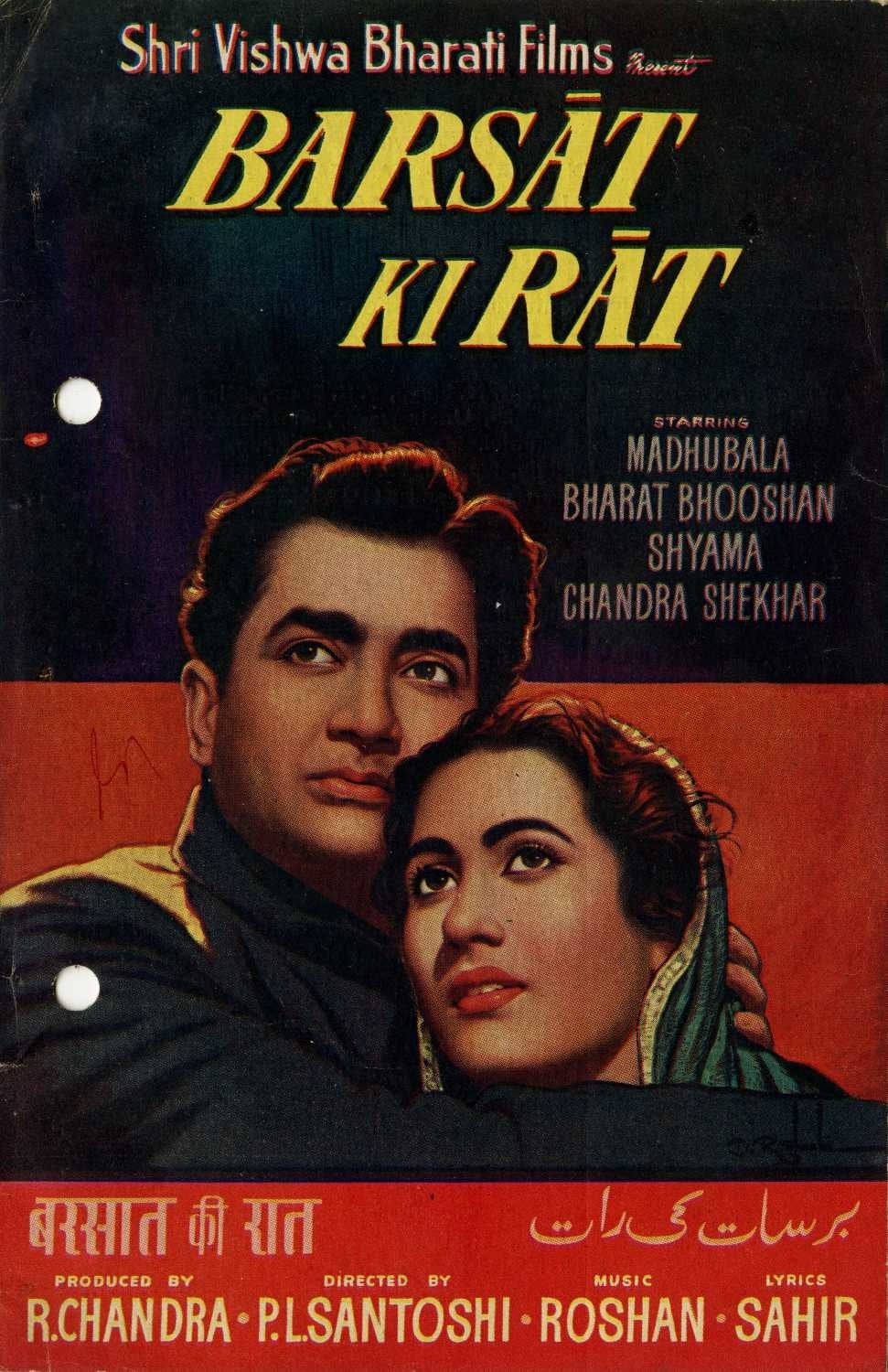
Barsaat Ki Raat
1960 film
Anand Mohan Zutshi Gulzar Dehlvi
Indian poet
Nusrati
upright=1.25|thumb|Nusrati writing the Gulshan-i ʿishq, from a manuscript of 1743
Muḥammad Nuṣrat (died 1674), called Nuṣratī ('victorious'), was a Deccani Urdu poet.
qafiya
Qāfiya (from Arabic: , ; ; ; ; ) is the classical Islamic prosodic term for rhyme.