Category
page 1Glomeromycota
Glomeromycota
Glomeromycota (often referred to as glomeromycetes, as they include only one class, Glomeromycetes) are one of eight currently recognized divisions within the kingdom Fungi,
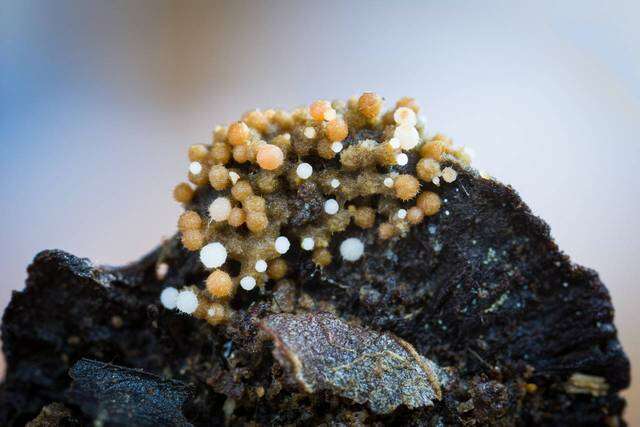
Glomeromycetes
REDIRECT Glomeromycota
Archaeosporales
Archaeosporales is an order of fungi best known as arbuscular mycorrhiza to vascular land plants (Tracheophyta). But also form free living endocyte symbioses with cyanobacteria. The free living forms may have a Precambrian fossil record back 2.2 Ga, well before evolution of Tracheophyta. However, the earliest fossils of Opisthokonta otherwise date back to the early Tonian, thus making this possibility questionable.

Geosiphon pyriforme
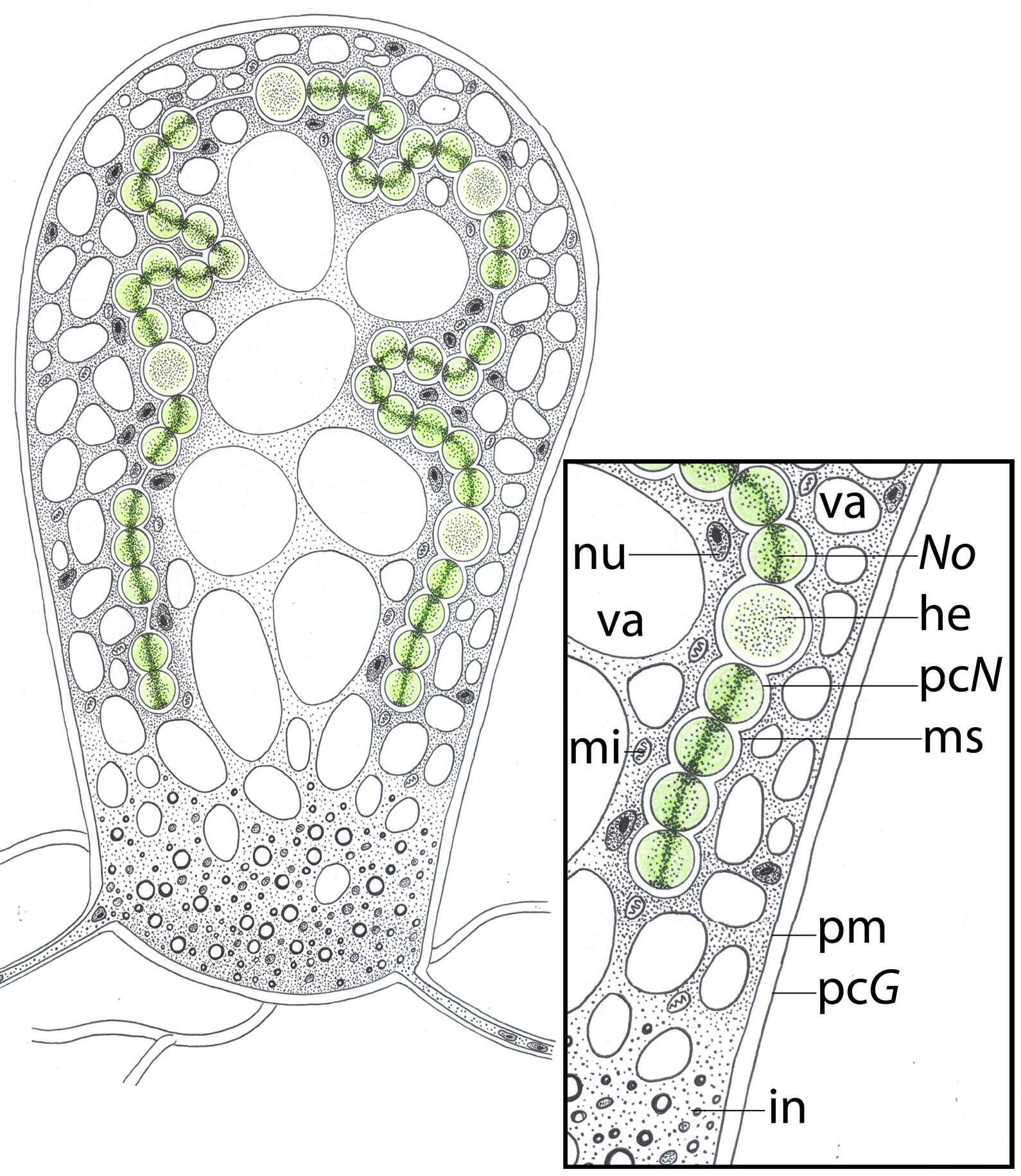
Geosiphon is a genus of fungus in the family Geosiphonaceae. The genus is monotypic, containing the single species Geosiphon pyriformis, first described by Kützing in 1849 as Botrydium pyriforme. In 1915, Von Wettstein characterized Geosiphon pyriforme as a multinucleate alga containing endosymbiotic cyanobacteria, although he also noted the presence of chitin, a component of fungal cell walls. In 1933, Knapp was the first to suggest the fungal origin of the species and described it as a lichen with endosymbiotic cyanobacteria. It is the only member of the Glomeromycota known to not form a sym
Paraglomerales
The Paraglomerales are a group of exclusively hypogeous (underground) arbuscular mycorrhizal fungi that rarely produce vesicles and reproduce through unpigmented spores. It includes the species Paraglomus brasilianum, Paraglomus laccatum, and Paraglomus occultum.