Category
page 1Gothic novels adapted into films

Frankenstein
Frankenstein; or, The Modern Prometheus is an 1818 Gothic novel written by English author Mary Shelley. Frankenstein tells the story of Victor Frankenstein, a young scientist who creates a sapient creature from different body parts in an unorthodox scientific experiment. Shelley started writing the story when she was 18 and staying in Bath, and the first edition was published anonymously in London on 1 January 1818, when she was 20. Her name first appeared in the second edition, which was published in Paris in 1821.

Wuthering Heights
Wuthering Heights is the only novel by the English author Emily Brontë, initially published in 1847 under her pen name "Ellis Bell". It concerns two extensive upland estates and their landowning families on the West Yorkshire moors, the Earnshaws and the Lintons; and their turbulent relationships with the Earnshaws' foster son, Heathcliff. Driven by themes of love, possession, revenge, and reconciliation, the novel is influenced by Romanticism and Gothic fiction. It is considered a classic of English literature.
.jpg)
Dracula
Dracula is an 1897 Gothic horror novel by Irish author Bram Stoker. The narrative is related through letters, diary entries, and newspaper articles. It has no single protagonist and opens with English solicitor Jonathan Harker taking a business trip to stay at the castle of a Transylvanian nobleman, Count Dracula. Revealing his true nature as a vampire, Dracula moves to England and plagues the seaside town of Whitby. Harker joins a group led by Abraham Van Helsing who hunt and kill the Count.

Jane Eyre
1847 novel by Charlotte Brontë

To Kill a Mockingbird
novel by Harper Lee

Great Expectations
1861 novel by Charles Dickens
The Phantom of the Opera
1910 novel by Gaston Leroux

The Shining
1977 novel by Stephen King

Coraline
Coraline () is a 2002 British fantasy horror children's novella by author Neil Gaiman. Gaiman started writing Coraline in 1990, and it was published in 2002 by Bloomsbury and HarperCollins. It was awarded the 2003 Hugo Award for Best Novella, the 2003 Nebula Award for Best Novella, and the 2002 Bram Stoker Award for Best Work for Young Readers. The Guardian ranked Coraline #82 in its list of 100 Best Books of the 21st Century. It was adapted as a 2009 stop-motion animated film, directed by Henry Selick under the same name.

Rebecca
novel by Daphne du Maurier

Carmilla
Carmilla is an 1872 Gothic novella by Irish author Joseph Sheridan Le Fanu. A foundational work of English-language vampire literature, it predated Bram Stoker's Dracula (1897) by 25 years. First published as a serial in The Dark Blue from 1871–72, the novella subsequently appeared in Le Fanu’s short story collection In a Glass Darkly in 1872. Set in 19th century Styria, it is the story of a young woman who is pursued by the vampire Carmilla. Since its initial publication, Carmilla has often been regarded as one of the most influential vampire stories of all time, and popularized the lesbian v
She: A History of Adventure
novel by H. Rider Haggard

The Turn of the Screw
1898 novella by Henry James

The Monk
1796 novel by Matthew Lewis
Vampire Hunter D
novel series by Hideyuki Kikuchi
Flowers in the Attic
novel by V. C. Andrews

Let the Right One In
2004 Swedish novel by John Ajvide Lindqvist

The House of the Seven Gables
novel by Nathaniel Hawthorne

Tobacco Road
1932 novel by Erskine Caldwell

The Lair of the White Worm
1911 novel by Bram Stoker

The Black Spider
novella by the Swiss writer Jeremias Gotthelf written in 1842
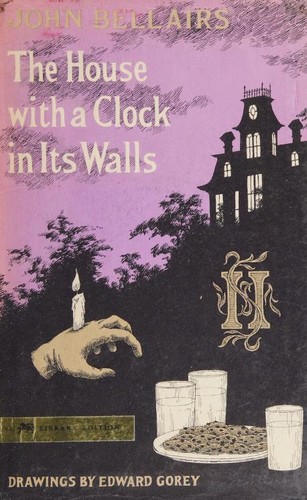
The House with a Clock in Its Walls
1973 juvenile mystery fiction novel by John Bellairs

The Thirteenth Tale
2006 novel by Diane Setterfield

The Devil All the Time
novel written by Donald Ray Pollock

Handling the Undead
novel by John Ajvide Lindqvist