Category
page 1Grapsoidea

Eriocheir sinensis
species of crustacean
Gecarcinidae
Gecarcinidae, or land crabs, are a family of true crabs that are adapted for terrestrial existence. Similar to all other crabs, land crabs possess a series of gills. In addition, the area of the carapace covering the gills is inflated and equipped with extra blood vessels. These organs extract oxygen from the air, analogous to the vertebrate lungs. These are called branchiostegal lungs. Adult land crabs are terrestrial, but visit the sea periodically, where they breed and their larvae develop. Land crabs are tropical omnivores which sometimes cause considerable damage to crops. Most land crabs

Pachygrapsus marmoratus
species of crustacean

Christmas Island red crab
species of crustacean
Grapsoidea
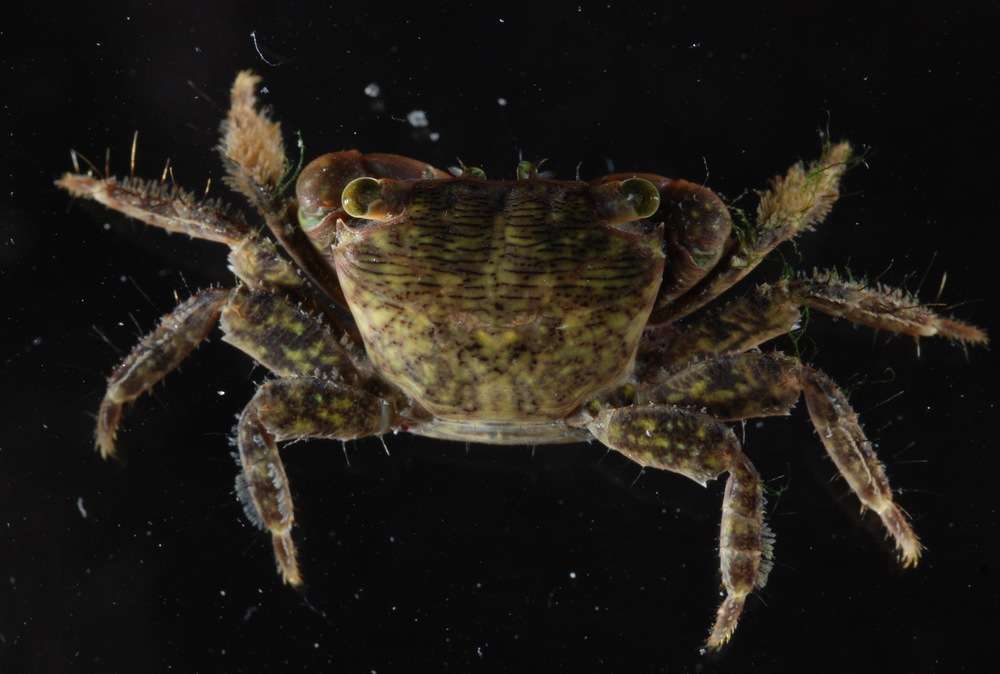
The Grapsoidea are a superfamily of crabs; they are well known and contain many taxa which are terrestrial (land-living), semiterrestrial (taking to the sea only for reproduction), or limnic (living in fresh water). Another well-known member with a more conventional lifestyle is the Chinese mitten crab, Eriocheir sinensis.

Sesarmidae
The Sesarmidae are a family of crabs, previously included in the Grapsidae by many authors. Several species, namely in Geosesarma, Metopaulias, and Sesarma, are true terrestrial crabs. They do not need to return to the sea even for breeding.

Varunidae
The Varunidae are a family of thoracotrematan crabs. The delimitation of this family, part of the taxonomically confusing Grapsoidea, is undergoing revision. For a long time, they were placed at the rank of subfamily in the Grapsidae, but they appear to be closest to Macropthalmus and the Mictyridae, which are usually placed in the Ocypodoidea. It may thus be better to merge the latter superfamily with the Grapsoidea, retaining the latter name as it is older.
Plagusiidae
The Plagusiidae are a family of crabs, formerly treated as a subfamily of the family Grapsidae, but have since been considered sufficiently distinct to be a family in their own right. The family Plagusiidae used to include a subfamily Plagusiinae, comprising the genera Percnon and Plagusia, which constitute a widespread group of litophilic, intertidal and subtidal crabs that are notorious for their speed and their agility.

Gecarcinus
Gecarcinus is the type genus of the land crab family Gecarcinidae. They are found in warmer coastal regions of the Americas, including islands in the Caribbean. Four species from oceanic islands were formerly included in Gecarcinus as the subgenus Johngarthia, but are now treated as a separate genus, Johngarthia. While all members of this genus are largely terrestrial, they have to return to the ocean to breed (the larvae are released into the sea). They are often colourful, with reddish, orange, purple, yellowish, whitish, or blackish being the dominating hues. This has resulted in some speci

Hemigrapsus nudus
species of crustacean

Hartnollius quadratus
species of crustaceans

Eriocheir
Eriocheir is a genus of crabs, including the Chinese mitten crab, E. sinensis. Formerly in the family Grapsidae, it is now placed in the Varunidae.
left|thumb|Comparison between Japanese mitten crab|Japanese (left) and Chinese (right) mitten crabs

Cardisoma guanhumi
species of crustacean

Cardisoma carnifex
species of crustacean
Percnon gibbesi
species of crustacean

Hemigrapsus sanguineus
crab species

Pachygrapsus crassipes
small crab found on rocky and hard-mud shores
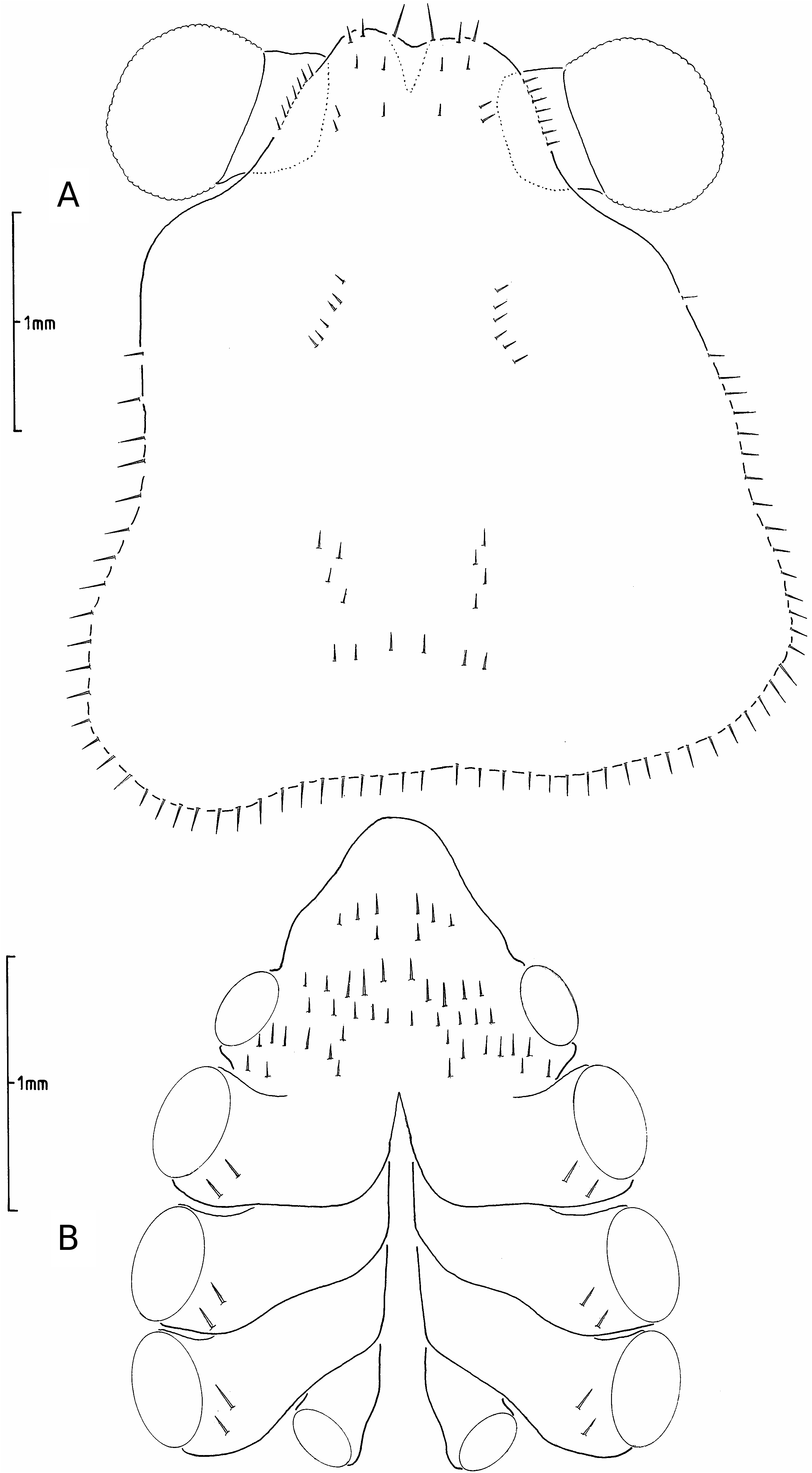
Gecarcinus ruricola
species of crustacean

Gecarcoidea
Gecarcoidea is a genus of terrestrial crabs within the family Gecarcinidae.
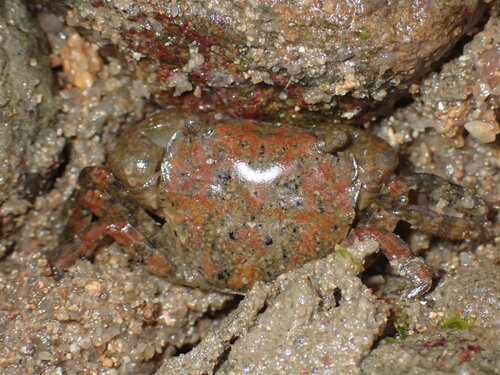
Hemigrapsus penicillatus
species of crustacean

Percnon
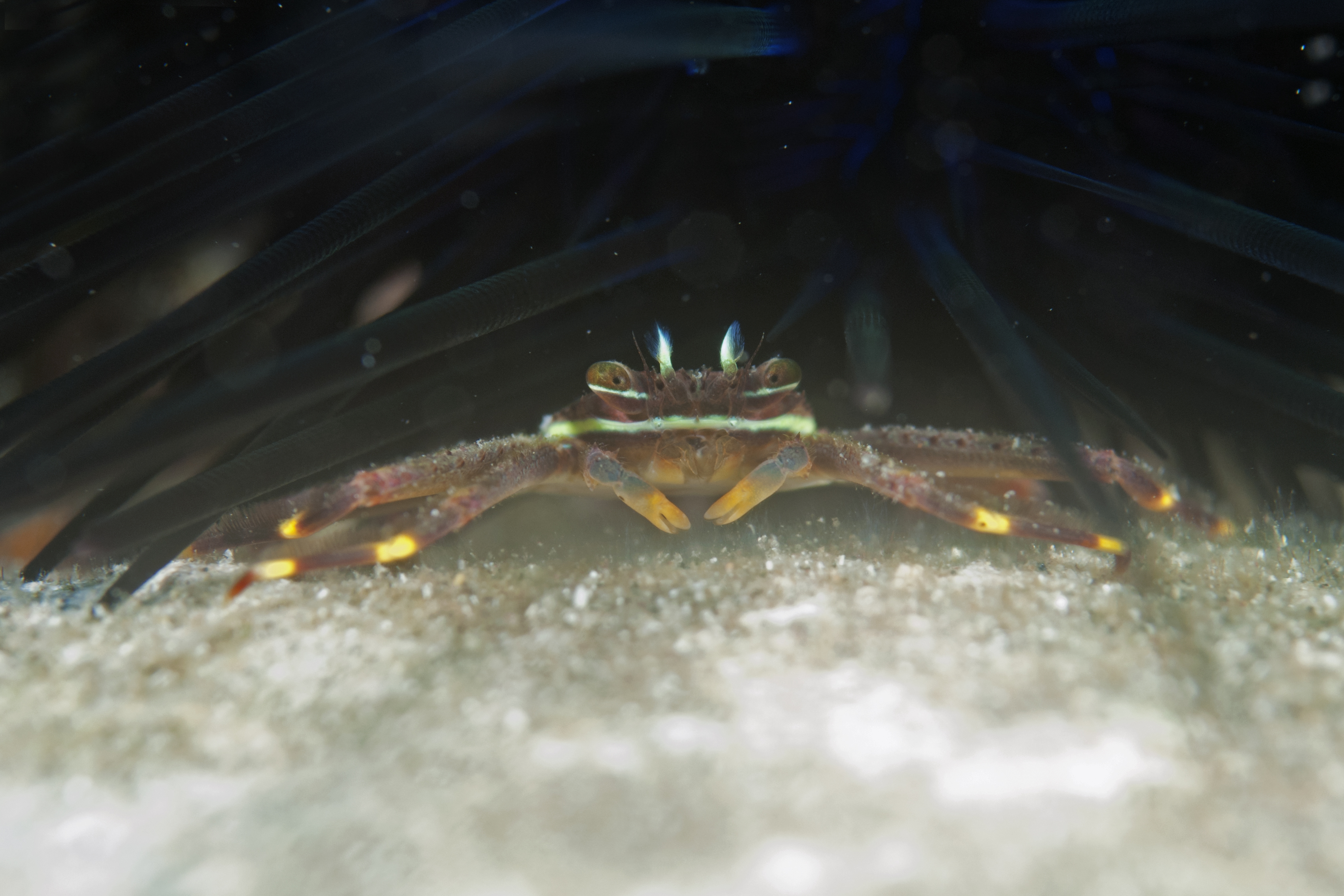
Percnon is a genus of crabs in the family Percnidae. It has also been included in the family Plagusiidae as subfamily Percninae.

Varuna litterata
species of Malacostraca

Plagusia
thumb|Plagusia dentipes painted by [[Kawahara Keiga in the period 1823 - 1829.]]

Hemigrapsus
Hemigrapsus is a genus of varunid crabs comprising thirteen species native almost exclusively in the Pacific Ocean, but two have been introduced to the North Atlantic region.
Hartnollius lateralis
species of crustacean

Cardisoma armatum
species of terrestrial crab

Hemigrapsus oregonensis
species of crustacean
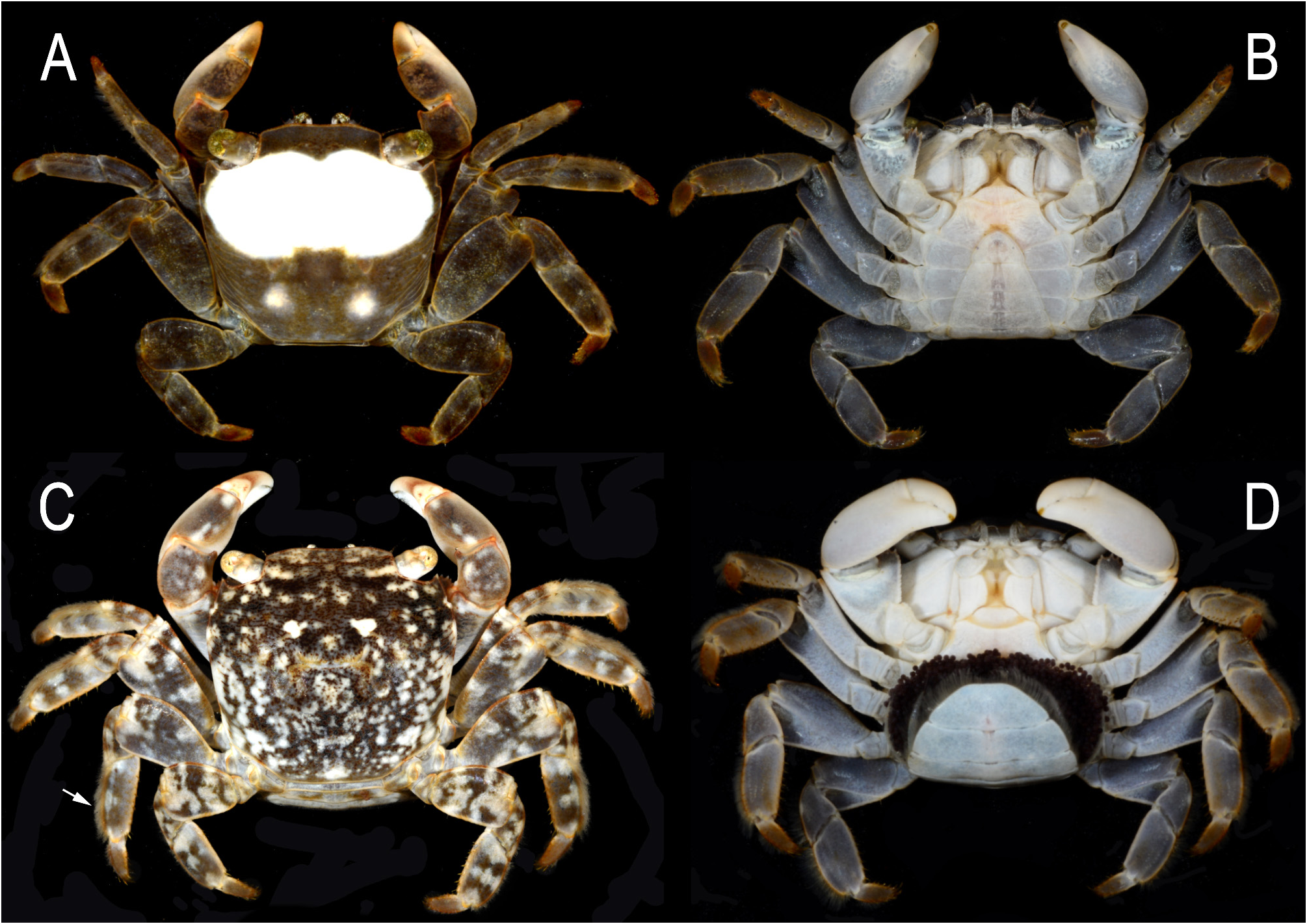
Planes minutus
species of crustacean

Eriocheir japonica
species of crustacean
Percnon planissimum
species of crustacean

Hemigrapsus takanoi
species of crustacean
Cardisoma
Cardisoma is a genus of large land crabs. Three species formerly placed in this genus are now placed in Discoplax. The four species that remain in Cardisoma are found in warm coastal regions where they live in burrows. Young individuals are often very colourful with a purple-blue carapace and orange-red legs (leading to a level of popularity in the pet trade), but as they grow older the colours tend to fade, and females may be duller than males. Although less extreme than in fiddler crabs, one claw is usually considerably larger than the other. They are omnivores, but primarily feed on plant m
Plagusia squamosa
species of crustacean
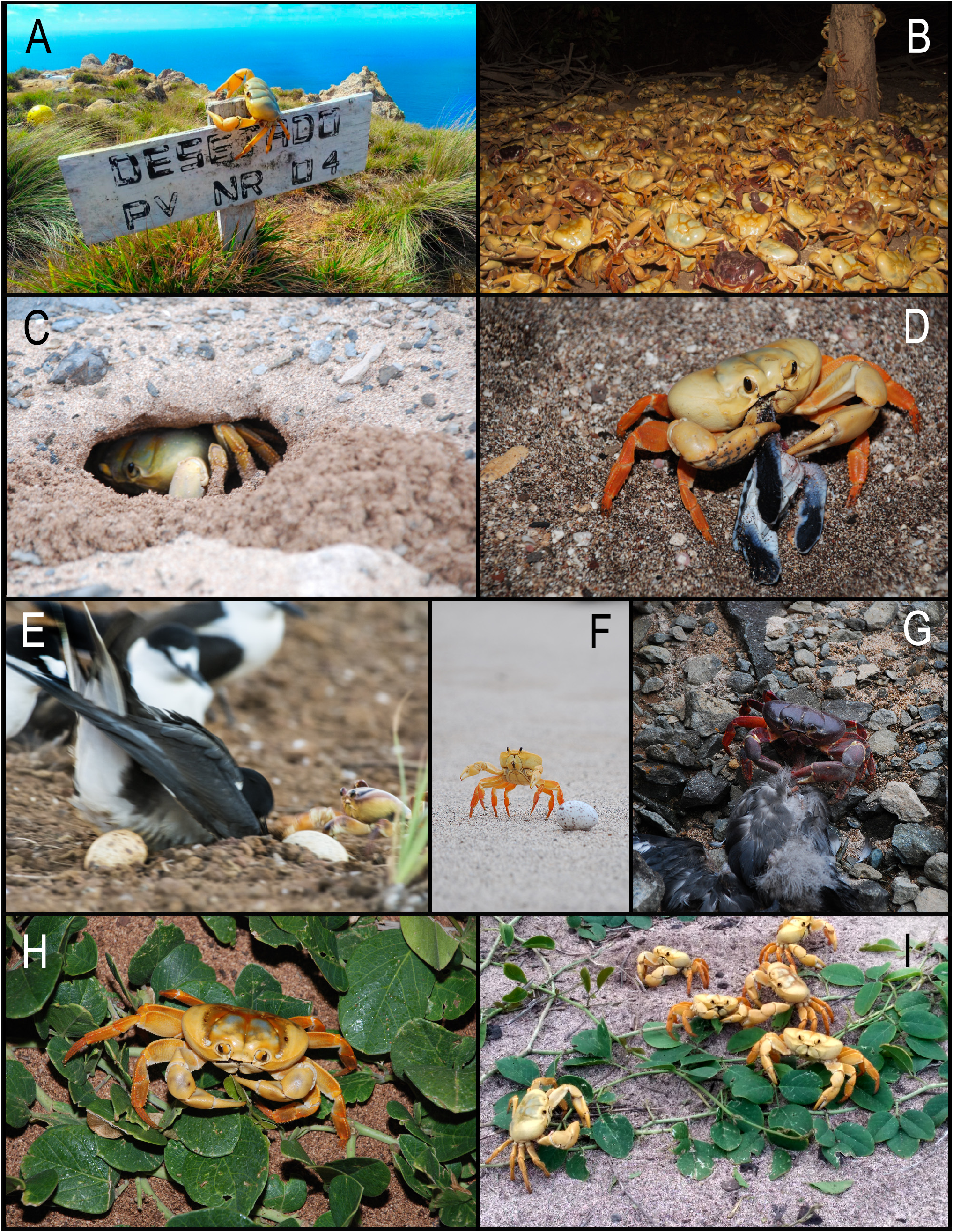
Johngarthia lagostoma
species of crustacean
Johngarthia
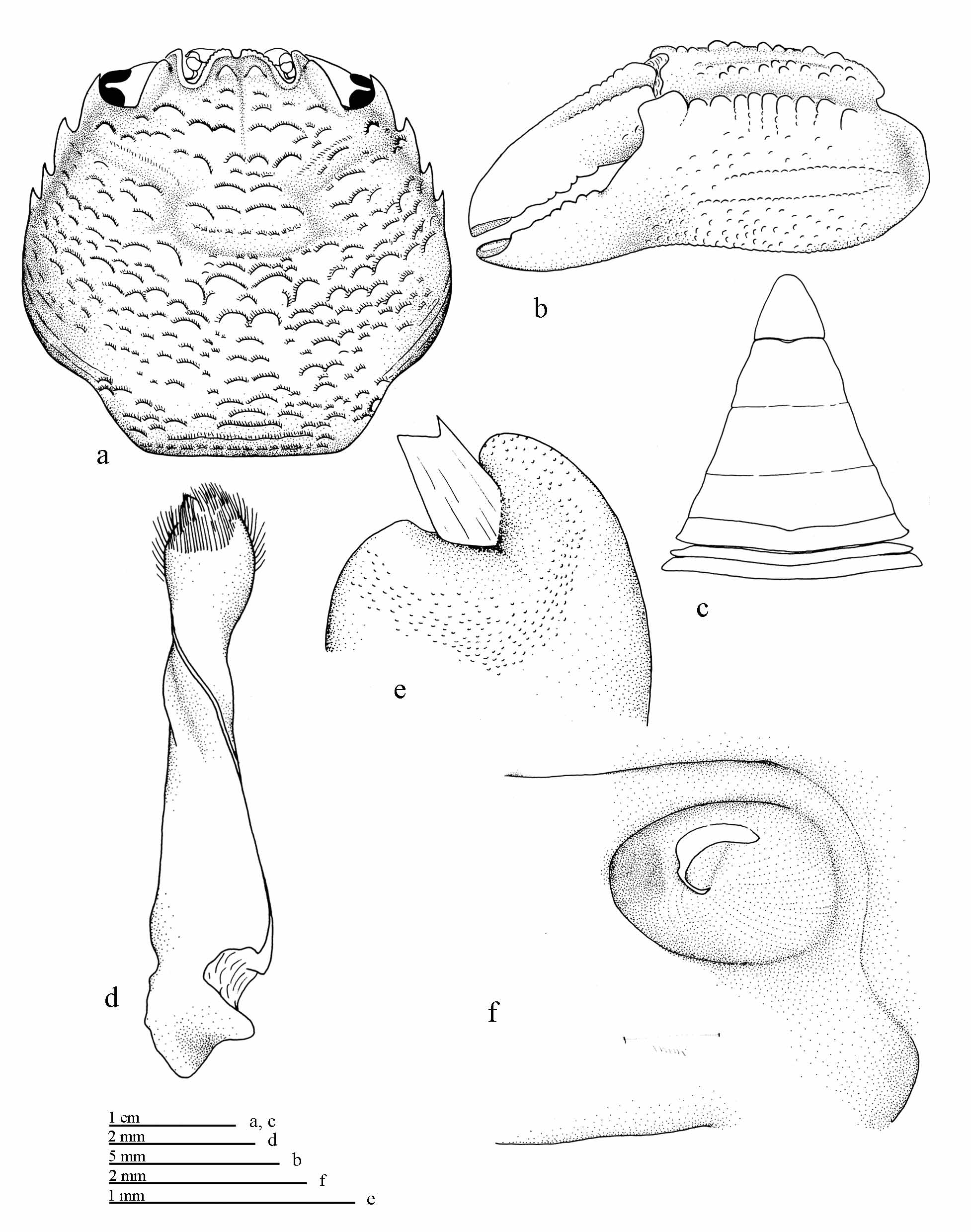
Johngarthia is a genus of crabs in the land crab family Gecarcinidae, formerly included in the genus Gecarcinus, and containing six species. The genus bears the name of John S. Garth, a 20th century naturalist who specialized in crabs and other arthropods.
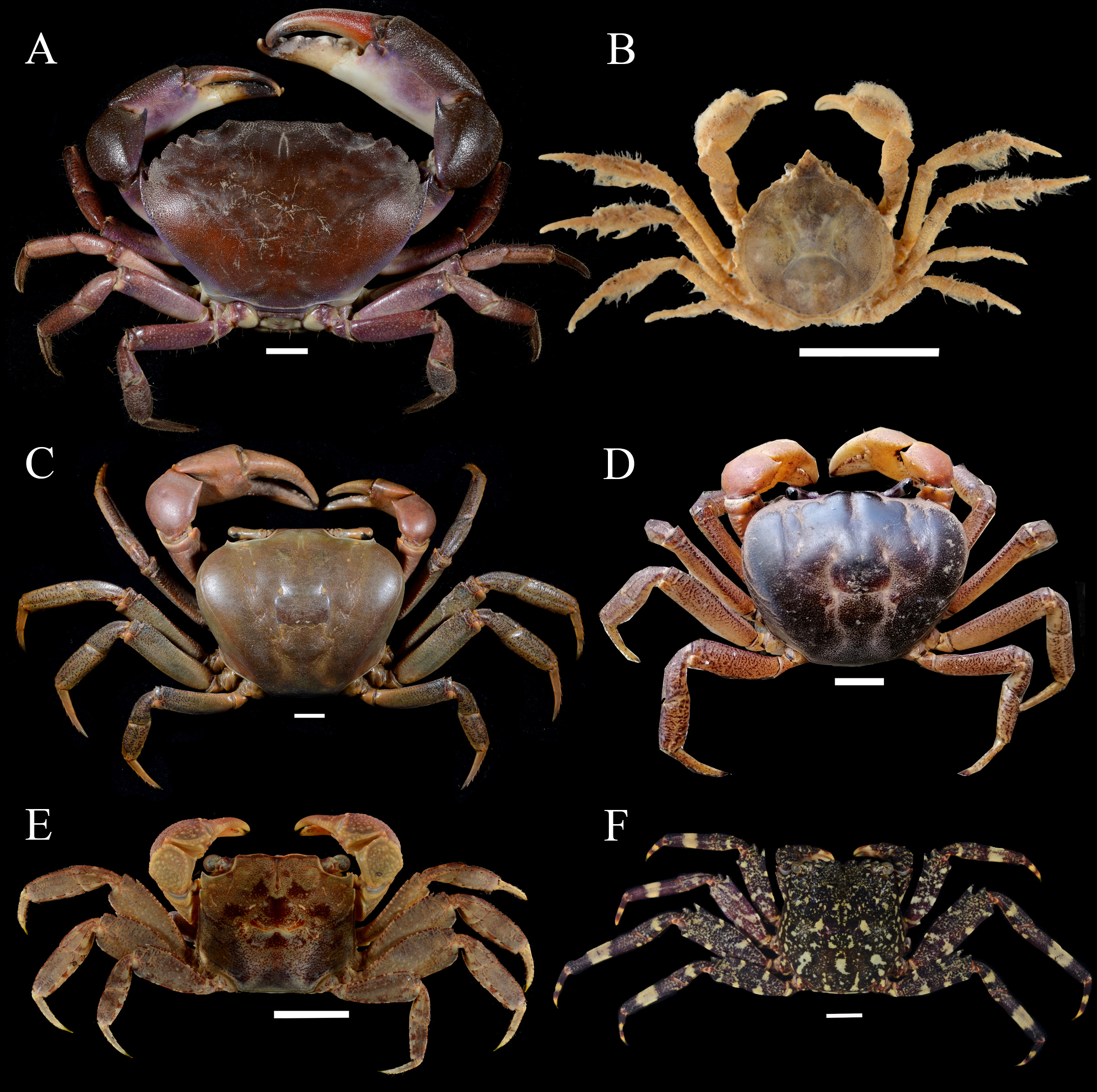
Tuerkayana hirtipes
species of crustacean

Gecarcoidea lalandii
species of crustacean
Discoplax
Discoplax is a genus of terrestrial crabs. It is very closely related to the genera Cardisoma and Tuerkayana.
Geosesarma dennerle
species of crustacean

Helice tridens
species of Malacostraca
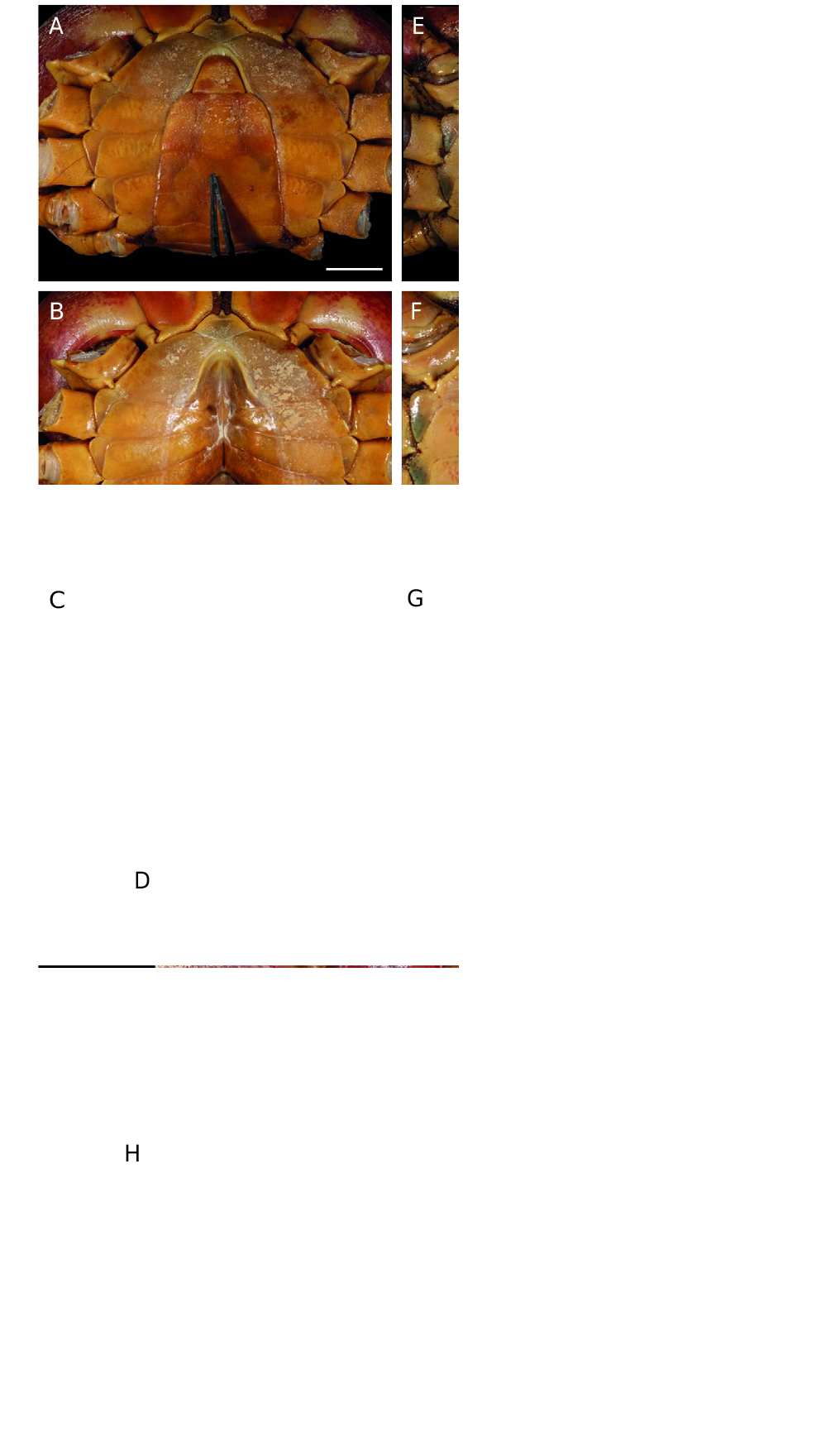
Epigrapsus
Epigrapsus is genus of terrestrial crabs. The two species are omnivores.
Epigrapsus notatus (Heller, 1865)
Epigrapsus politus Heller, 1862
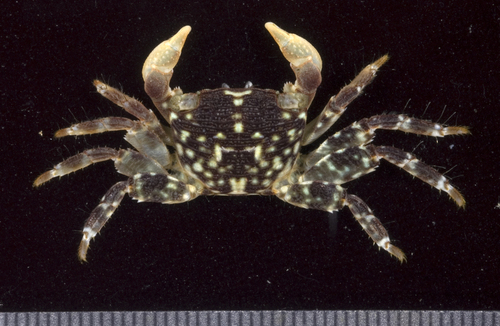
Pachygrapsus plicatus
species of crustacean

Chasmagnathus convexus
Chasmagnathus convexus is a common mud-flat crab of the family Varunidae, which is endemic to East Asia. In Japan, this crab is commonly called hamagani. This crab has two forms that differ in color; one is olive green and the other is purple. Differences in diet are believed to be responsible for the color variation between the two forms. C. convexus is large, relative to related crabs, and can reach wide across its carapace. It is predominantly nocturnal.

Johngarthia planata
species of crustacean

Brachynotus sexdentatus
species of crustacean

Cardisoma crassum
species of crustacean
Geosesarma hagen
species of crustacean
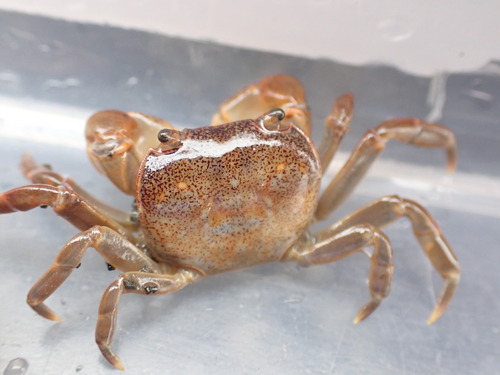
Cyclograpsus
Cyclograpsus is a genus of crabs, containing the following species:

Guinusia chabrus
species of crustacean
Percnidae
Percnidae is a family of crabs in the superfamily Grapsoidea. Percnidae contains about six described species in one genus: Percnon (Gistel, 1848).

Hemigrapsus sexdentatus
species of crustacean
Tunnelling mud crab
species of crustacean
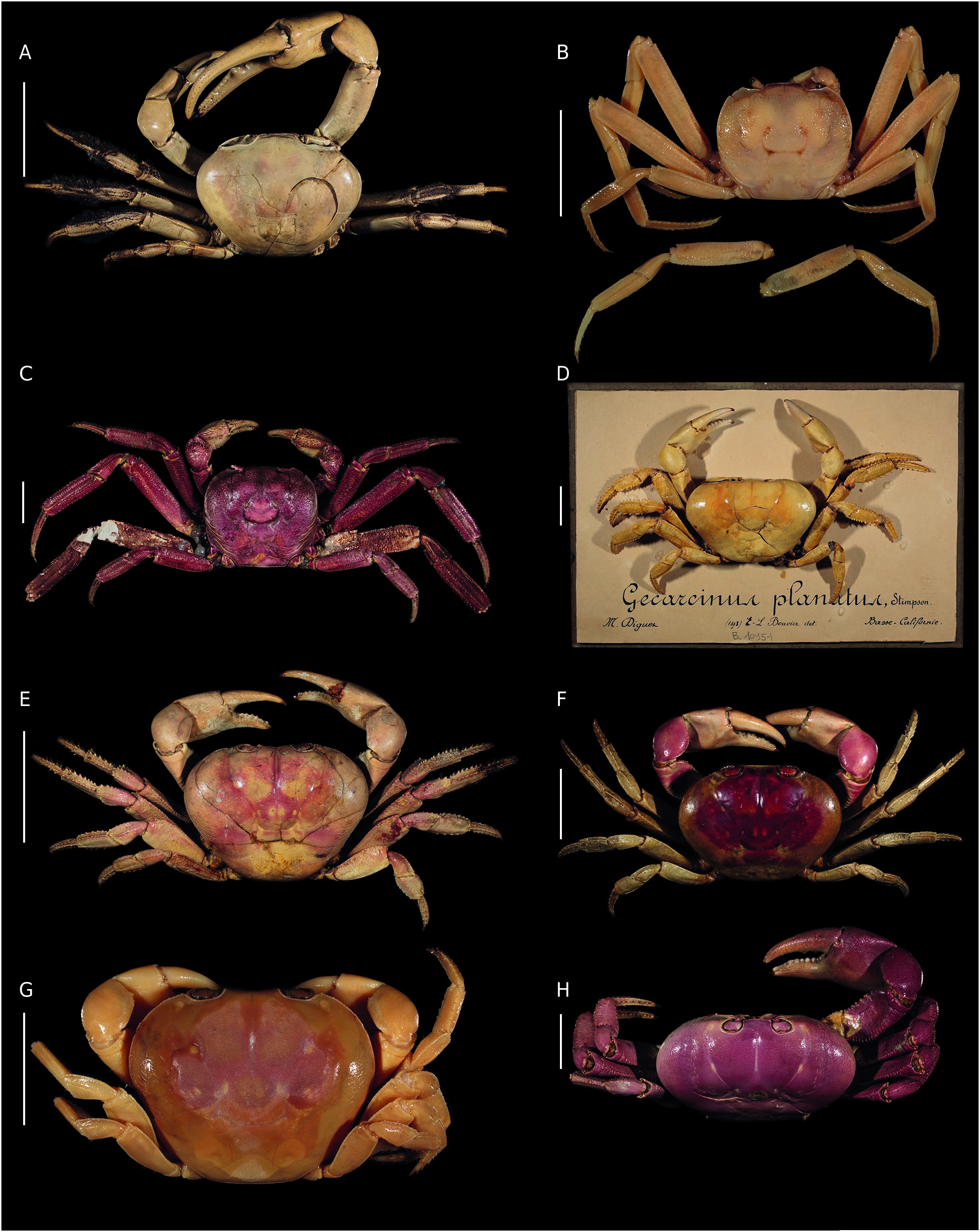
Discoplax gracilipes
species of crustacean
Helicana
Helicana is a genus of crabs, containing three species:
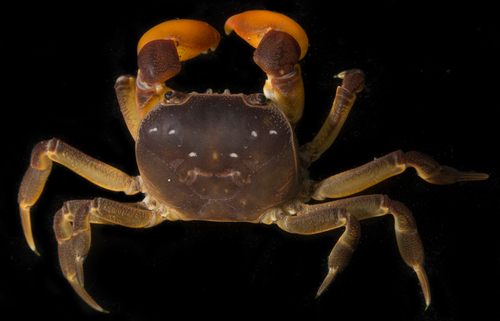
Cyclograpsus henshawi
species of crustacean
Paragrapsus
Paragrapsus is a genus of crabs from South Eastern Australia, containing the following species:
Discoplax longipes
species of crustacean

Helice
genus of crabs

Brachynotus
Brachynotus is a genus of crabs, comprising the following species:
Brachynotus atlanticus Forest, 1957
Brachynotus foresti Zariquiey Alvarez, 1968
Brachynotus gemmellari (Rizza, 1839)
Brachynotus gemmellaroi (Rizza, 1839)
Brachynotus sexdentatus (Risso, 1827)
Brachynotus spinosus (H. Milne-Edwards, 1853)
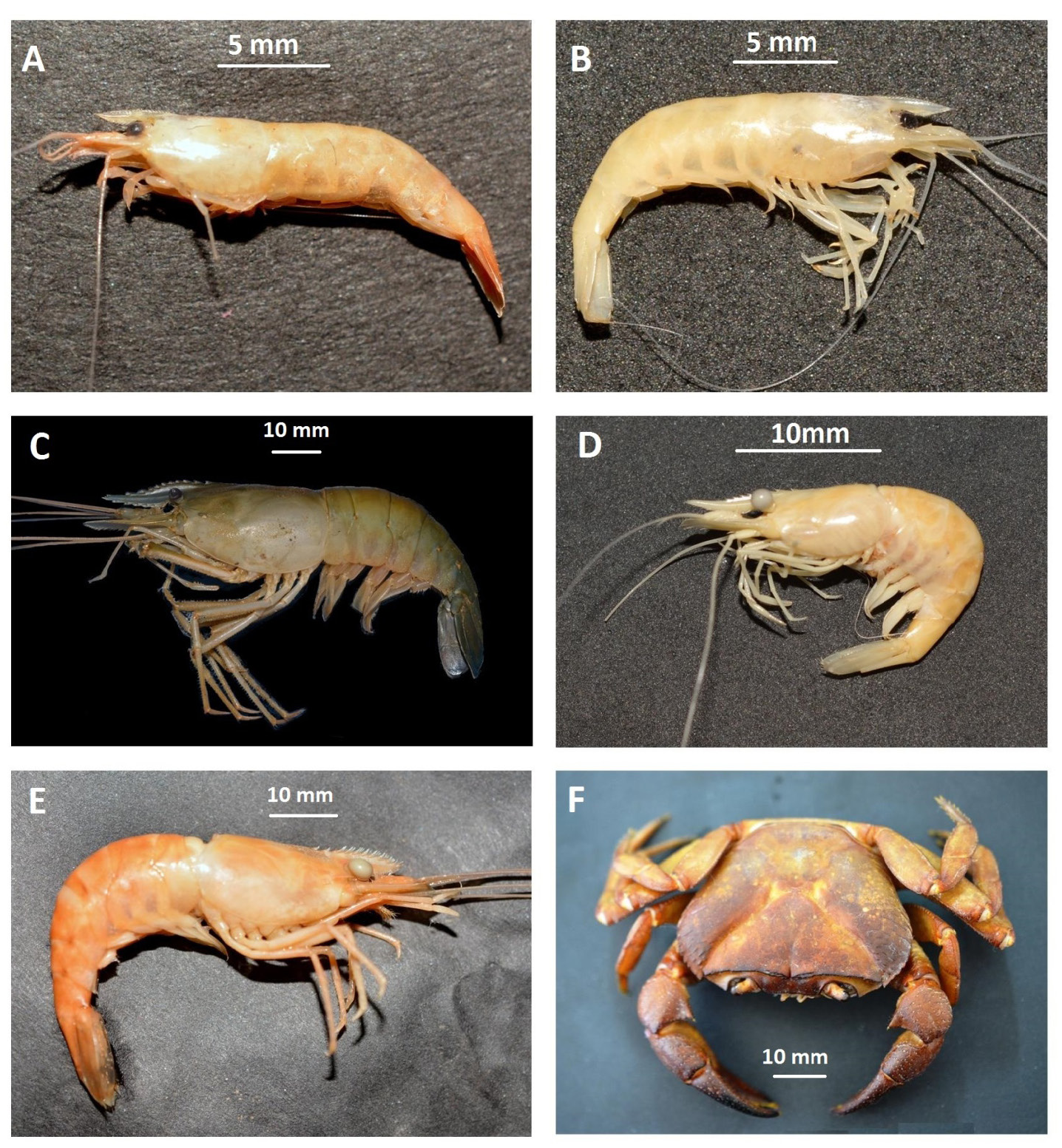
Barytelphusa cunicularis
species of crustacean