Category
page 1Gryphaeidae

Gryphaeidae
thumb|Praeexogyra hebridica from the Frome Clay (Bathonian, Middle Jurassic) of Langton Herring, Dorset, England.
thumb|Liostrea strigilecula from the Carmel Formation (Middle Jurassic) of southwestern Utah.

Gryphaea
thumb|350x350px|Silicified Gryphaea sp. from the Lower Jurassic. Le Liquier, Aveyron, France. Max Rouger collection.
Gryphaea, one of the genera known as '''devil's toenails''', is a genus of extinct oysters, marine bivalve mollusks in the family Gryphaeidae.
Exogyra
Exogyra is an extinct genus of marine oysters that belongs to the family Gryphaeidae (honeycomb oysters). These bivalves were cemented by the more cupped left valve. The right valve is flatter, and the beak is curved to one side. Exogyra lived on solid substrates in warm seas during the Jurassic and Cretaceous periods.
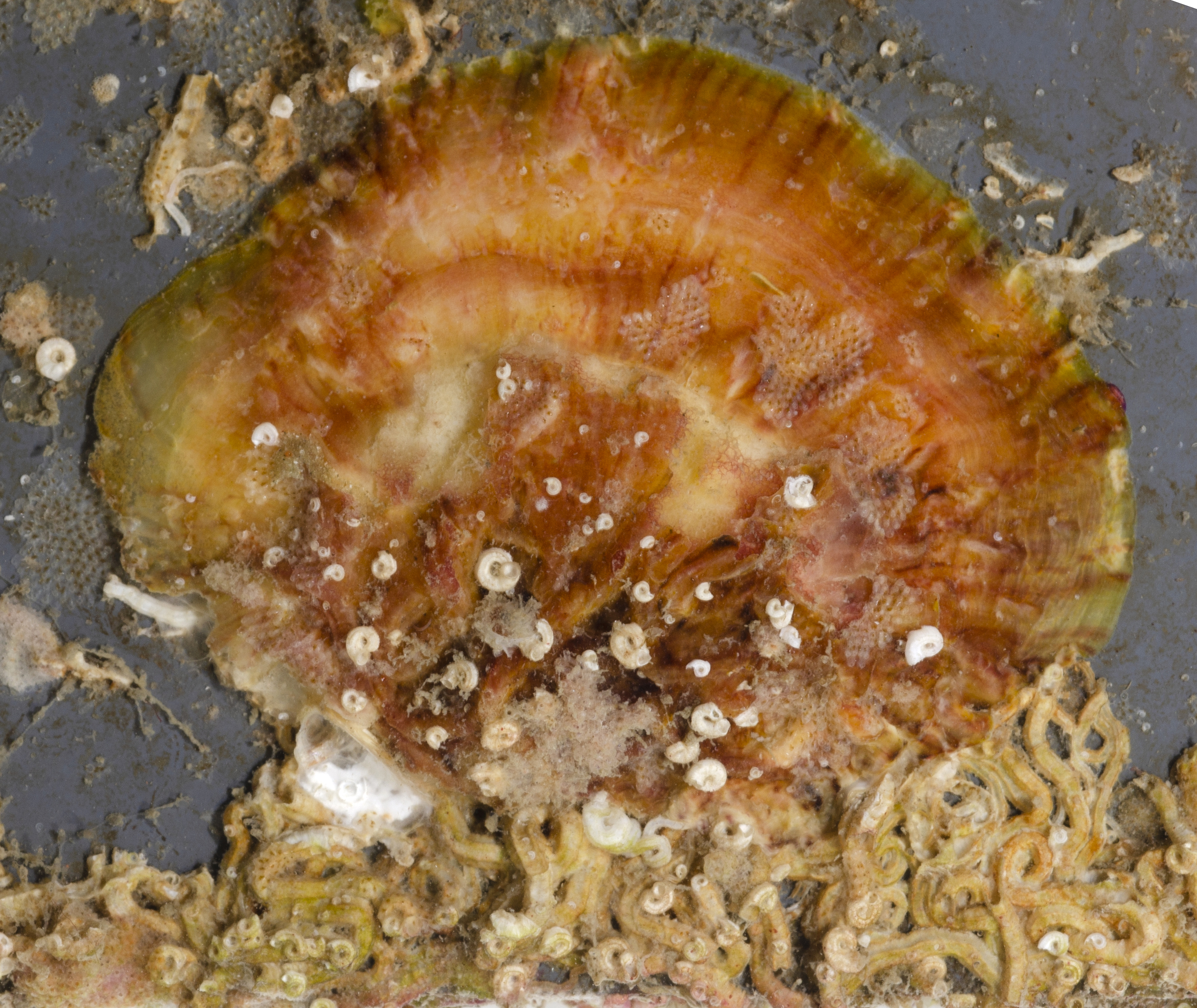
Hyotissa
Hyotissa is a genus of large saltwater oysters, marine bivalve mollusks in the family Gryphaeidae.

Hyotissa hyotis
species of mollusc
Hyotissa mcgintyi
species of mollusc
Neopycnodonte cochlear
species of mollusc
Gryphaea arcuata
species of mollusc (fossil)

Pycnodonte
Pycnodonte is a genus of extinct oysters, fossil marine bivalve mollusks in the family Gryphaeidae, the foam oysters or honeycomb oysters. Shells of species in this genus are found around the world in fossil shell beds from the Valanginian (140.2 Ma) to the Early Pleistocene (0.781 Ma). They are a commonly found fossil in Cretaceous shellbeds of the Navesink Formation in New Jersey.