Category
page 1Gyalectales genera
Gyalecta
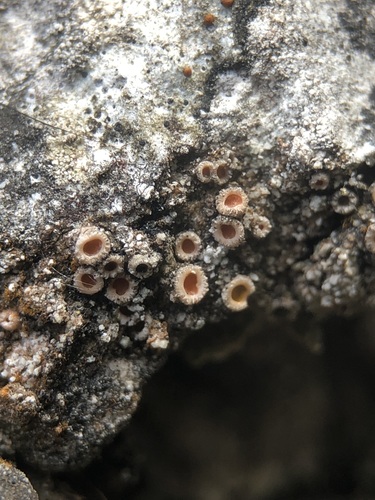
Gyalecta is a genus of lichen-forming fungi in the family Gyalectaceae that contains 50 species. Gyalecta was circumscribed by lichenologist Erik Acharius in 1808. It forms associations with Trentepohlia algae.

Coenogonium
Coenogonium is a genus of filamentous lichens in the monotypic family Coenogoniaceae. It has about 90 species. Most species are leaf-dwelling or grow on bark, although a few are known to grow on rocks under certain conditions, and some are restricted to growth on termite nests. The genus was circumscribed in 1820 by German naturalist Christian Gottfried Ehrenberg.

Phlyctis
Phlyctis is a genus of lichen-forming fungi in the order Gyalectales, and the type genus of the family Phlyctidaceae. Members of the genus are commonly called whitewash lichens. These parasitic lichens typically form very thin, patchy crusts on host surfaces or live almost entirely within their hosts, producing minute fruiting bodies that remain largely hidden beneath a coarse white . The genus is characterised by spores that are densely divided by many walls into a net-like pattern and often have tiny points at their ends. Phlyctis contains about 20 species distributed worldwide, with several

Trichothelium
Trichothelium is a genus of lichen-forming fungi in the family Porinaceae. It has an estimated 40 species. The genus was circumscribed by the Swiss lichenologist Johannes Müller Argoviensis in 1885, with Trichothelium epiphyllum assigned as the type species.
Porina
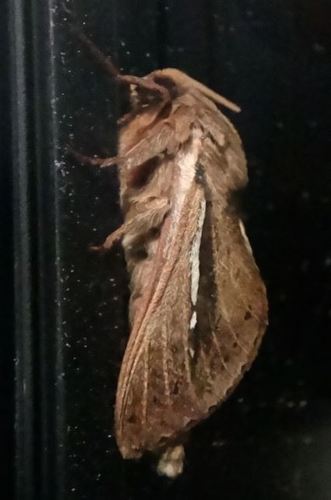
Porina is a genus of crustose lichens in the family Porinaceae. , Species Fungorum (in the Catalogue of Life) accepts 161 species of Porina.

Ramonia
Ramonia is a genus of lichen-forming fungi in the family Gyalectaceae. Species form thin crusts on bark or rock and partner with the green alga Trentepohlia as their photosynthetic partner. They are recognized by their distinctive urn-shaped apothecia (fruiting bodies), whose inrolled rims nearly close over the spore-producing surface, leaving only a small central pore. About 22 species are accepted, found mainly in tropical and temperate regions.

Clathroporina
Clathroporina is a genus of lichenized fungi in the family Porinaceae. It was circumscribed by Swiss lichenologist Johannes Müller Argoviensis in 1882.
Gallaicolichen pacificus
Gallaicolichen is a fungal genus that contains the single species Gallaicolichen pacificus, a foliicolous (leaf-dwelling) lichen. Originally discovered in Hawaii in 2007, G. pacificus has since been found in various locations across the Pacific, including Australia, New Caledonia, Vanuatu, the Philippines, and Japan. The lichen forms small, pale greenish-yellow to yellowish-grey patches on leaves, typically in mid-altitude forests and along forest edges. G. pacificus is notable for its unique reproductive structures called , which produce disc-shaped propagules (peltidia) for asexual repr
Pseudosagedia
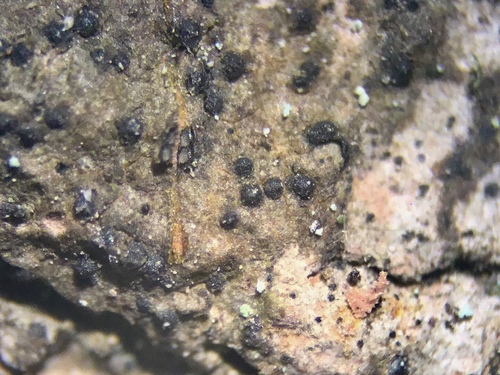
Pseudosagedia is a genus of corticolous (bark-dwelling) lichens in the family Porinaceae. It was first circumscribed as a section of genus Arthopyrenia by Swiss botanist Johannes Müller Argoviensis in 1862. Maurice Choisy elevated it to distinct generic status in 1949. Pseudosagedia was little used until, in 1995, Josef Hafellner and Klaus Kalb resurrected the genus to contain members of the Porina nitidula species group with the perithecial pigment called Pseudosagedia-violet and lacking setae.

Myeloconis
Myeloconis is a genus of corticolous (bark-dwelling), crustose lichens in the family Porinaceae. It has four species. The genus was circumscribed in 1996 by Patrick M. McCarthy and John Elix, with M. fecunda assigned as the type species. The genus name, derived from the Greek ("marrow", or "pith") and ("dust"), refers to the powdery yellow-orange pigments in the medulla.
Semigyalecta
Semigyalecta is a genus of lichenized fungi in the family Gyalectaceae. It is a monotypic genus, containing the single species Semigyalecta paradoxa, described as new to science in 1921 by Finnish lichenologist Edvard August Vainio.