Category
page 1Haemodoraceae

Haemodoraceae
thumb|upright|Anigozanthos Bush Pearl. [[Royal Botanic Gardens, Cranbourne.]]

Wachendorfia
Wachendorfia is a genus of perennial herbaceous plants that is assigned to the bloodroot family. The plants have a perennial rootstock with red sap. From the rootstock emerge lance- or line-shaped, sometime sickle-shaped, pleated, simple leaves set in a fan, that are flattened to create a left and right surface rather than an upper and lower surface. The leaves die when the seeds are shed in three of the species, and are perennial in one species.

Xiphidium
Xiphidium is a genus of herbs in the family Haemodoraceae first described as a genus in 1775. It is native to tropical Americas, from southern Mexico through the Caribbean, Central America, and northern South America to Bolivia and central Brazil.

Dilatris
Dilatris is a genus of four species of evergreen perennial herbaceous plants of up to high, that are assigned to the bloodroot family. The plants have hairless, line- to lance-shaped leaves set in a fan that emerges from a red or orange coloured rootstock. Six free tepals with some gland dots near their tips are present on the mauve or dirty yellow flowers' six free petals. The other two stamens are longer and spreading with smaller scarlet anthers, while the one stamen is short, upright, and has a large, yellow anther. The style is diverted from the centre opposite both longer stamens. The sp
Schiekia orinocensis
Schiekia is a monotypic genus of herbs belonging to the family Haemodoraceae and first described as a genus in 1957. The sole recognised species, S. orinocensis is native to South America (Brazil, Bolivia, Colombia, Venezuela, Guyana, Suriname, French Guiana). This plant grasped the minds of many scientists who tried fruitlessly to discover its purpose in the natural order.
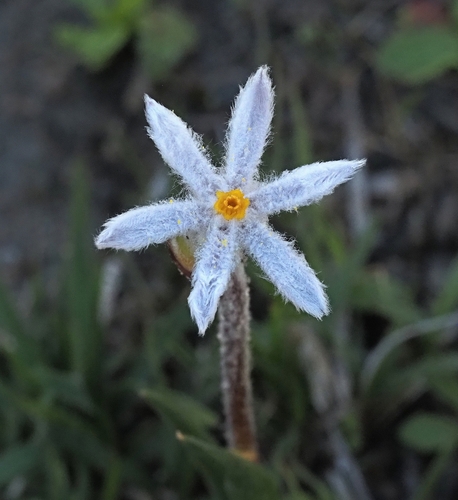
Tribonanthes
Tribonanthes a genus of Australian plants endemic to Western Australia in the bloodwort family, Haemodoraceae.
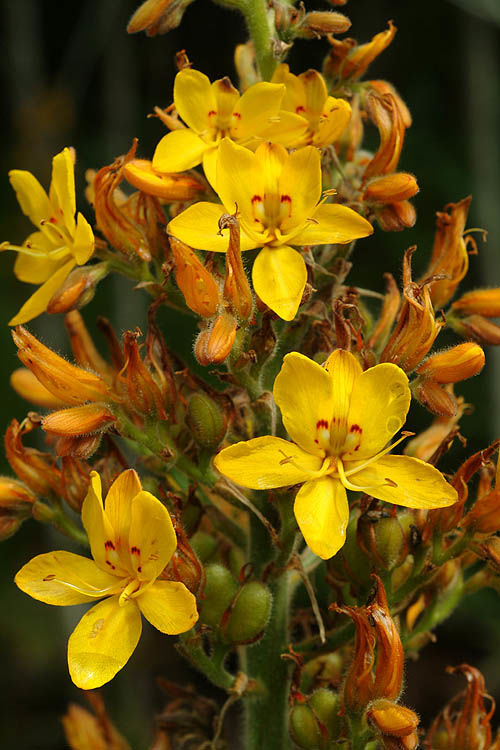
Wachendorfia thyrsiflora
species of plant
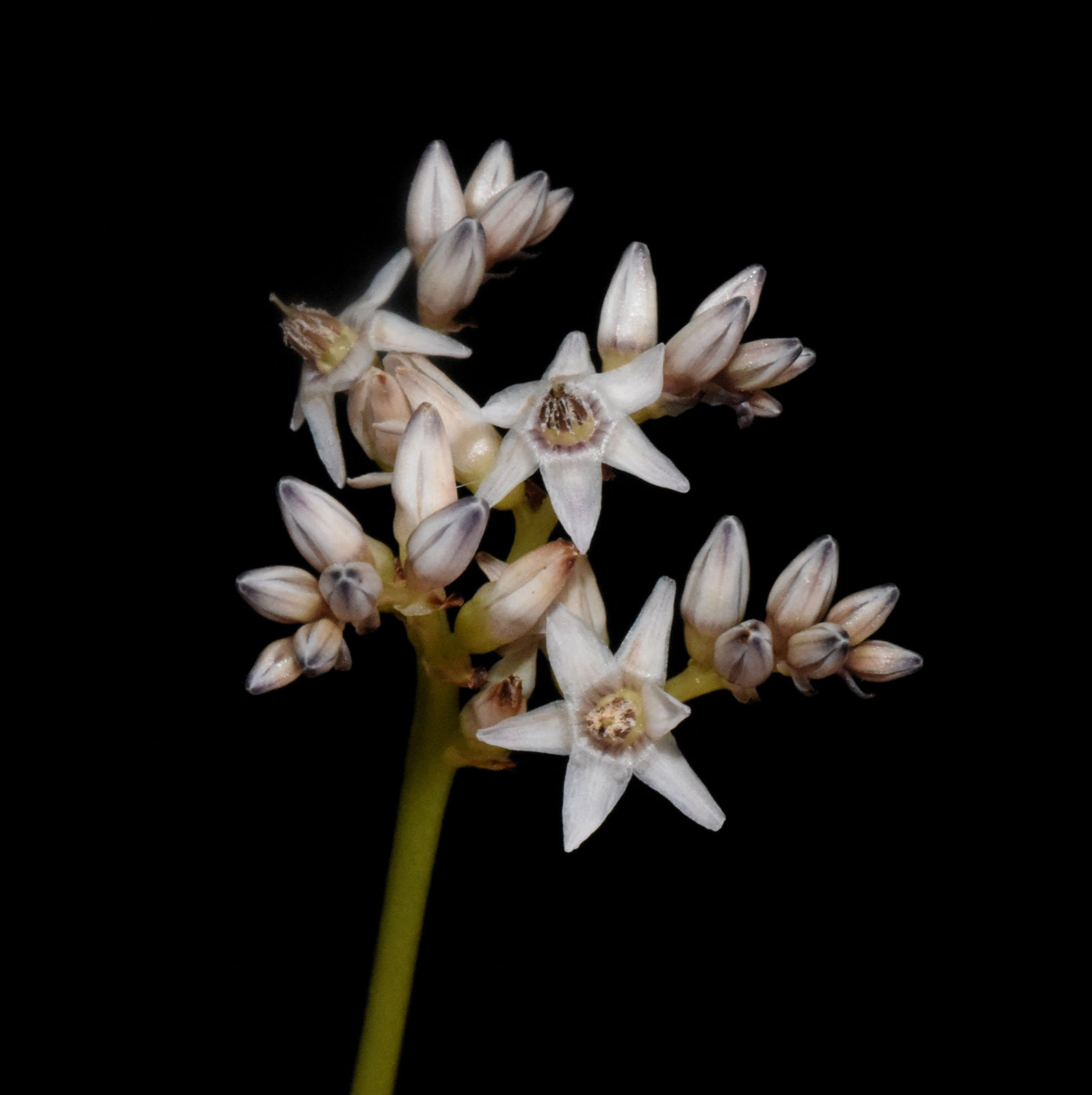
Phlebocarya
Phlebocarya is a genus of herbs in the family Haemodoraceae, first described as a genus in 1810. The entire genus is endemic to the southwestern part of Western Australia.

Blancoa
Blancoa is a monotypic genus of perennial herbs in the family Haemodoraceae; the single species is Blancoa canescens, commonly known as the winter bell. It is endemic to the southwestern corner of Western Australia. It has nodding red to pink flowers, a clumping habit and grows to be 10 to 40 cm in height. The genus is named in honour of Francisco Manuel Blanco, a Spanish friar and botanist who compiled the first comprehensive flora of the Philippines.
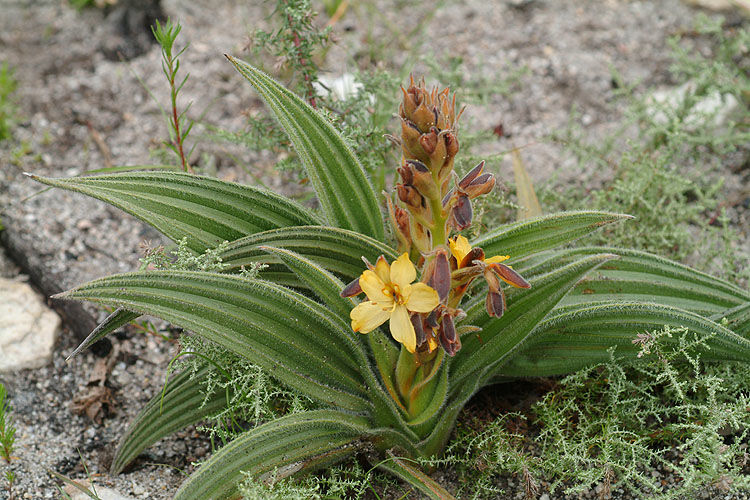
Wachendorfia paniculata
species of plant
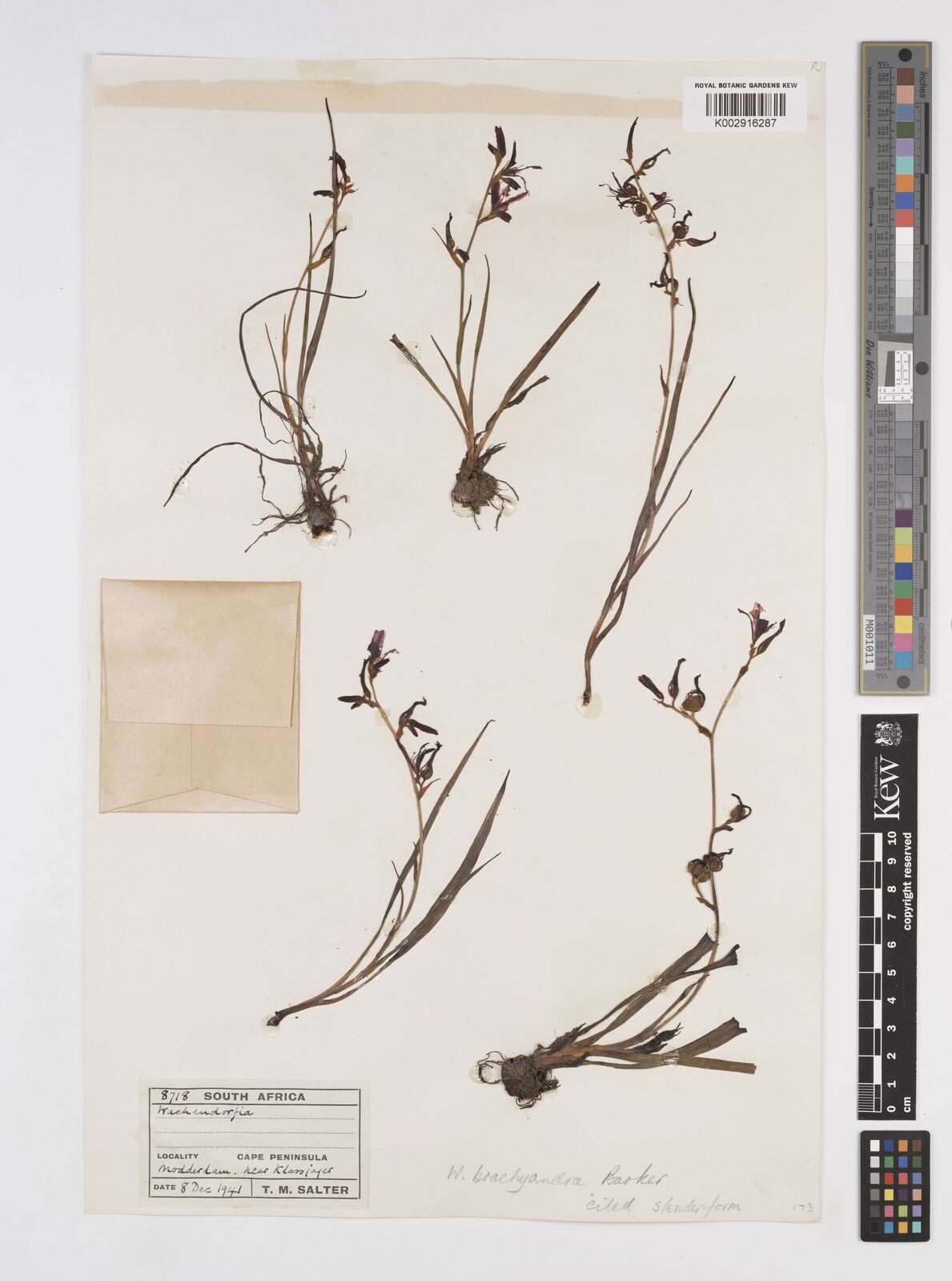
Wachendorfia brachyandra
species of plant
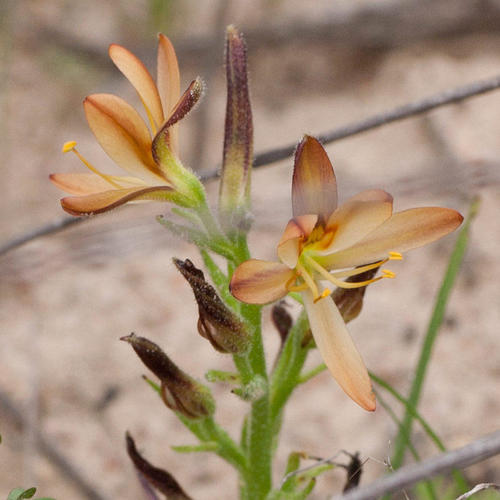
Wachendorfia multiflora
species of plant
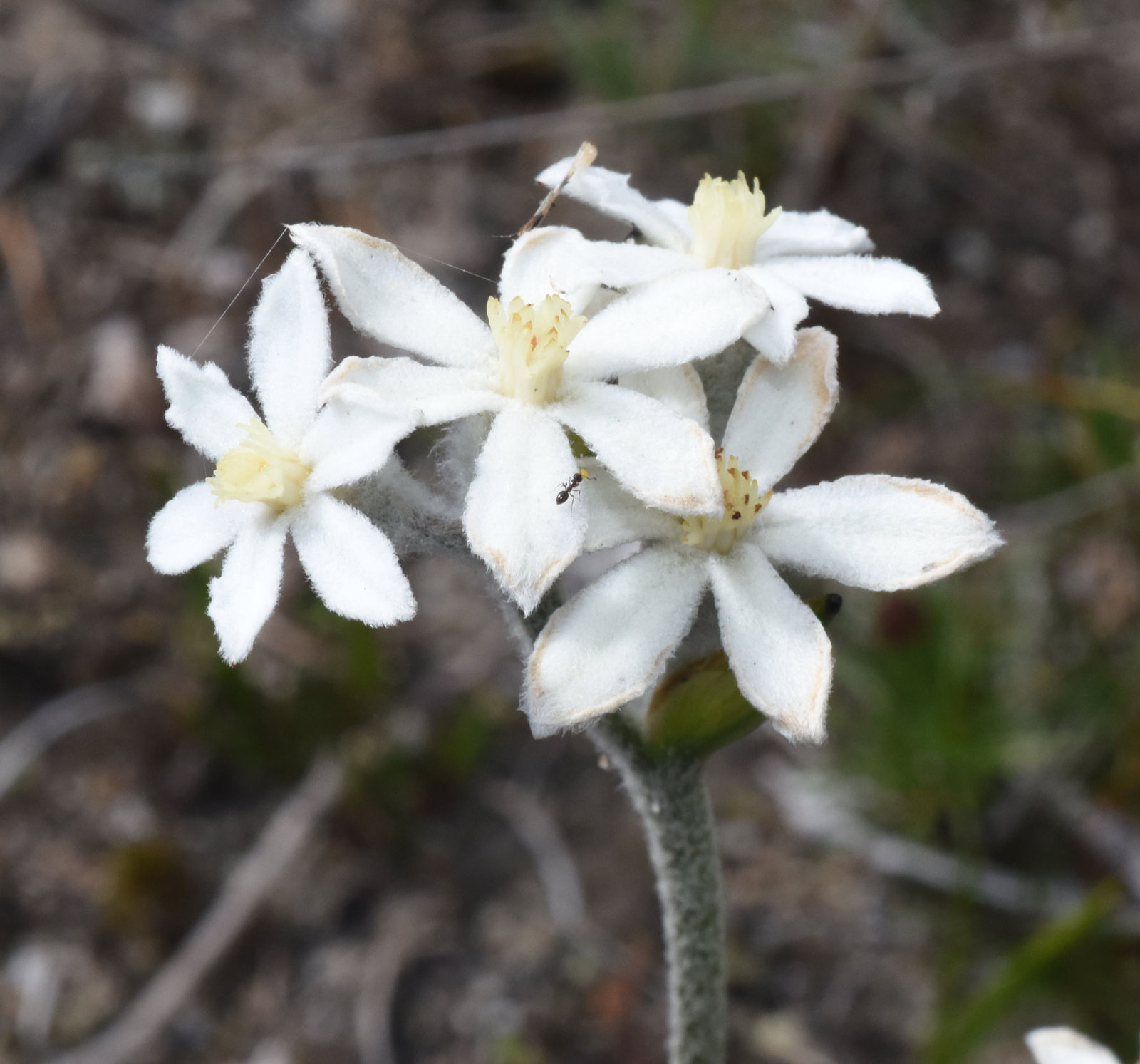
Tribonanthes australis
species of plant
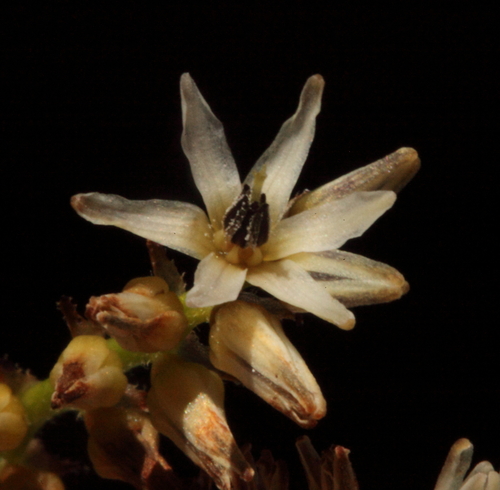
Phlebocarya pilosissima
species of plant

Tribonanthes violacea
species of plant
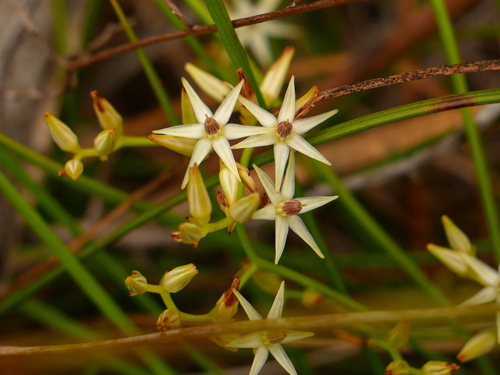
Phlebocarya filifolia
species of plant

Tribonanthes brachypetala
species of plant

Haemodorum coccineum
species of plant
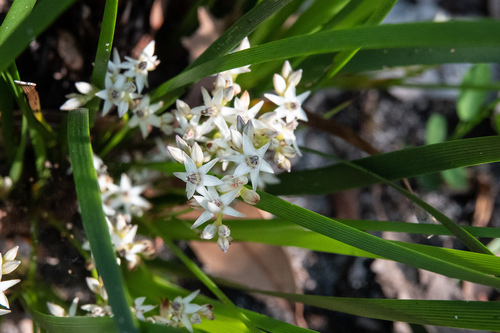
Phlebocarya ciliata
species of plant

Haemodorum brevicaule
species of plant
Tribonanthes purpurea
species of plant
Pyrrorhiza
Pyrrorhiza is a genus of herbs in the family Haemodoraceae, first described as a genus in 1957. It contains only one known species, Pyrrorhiza neblinae, endemic to the Sierra de la Neblina in Amazonas State, Venezuela.
Barberetta
Barberetta is a genus of herbaceous perennial plants in the family Haemodoraceae. It contains only one known species, Barberetta aurea.