Category
page 1Hallucinations
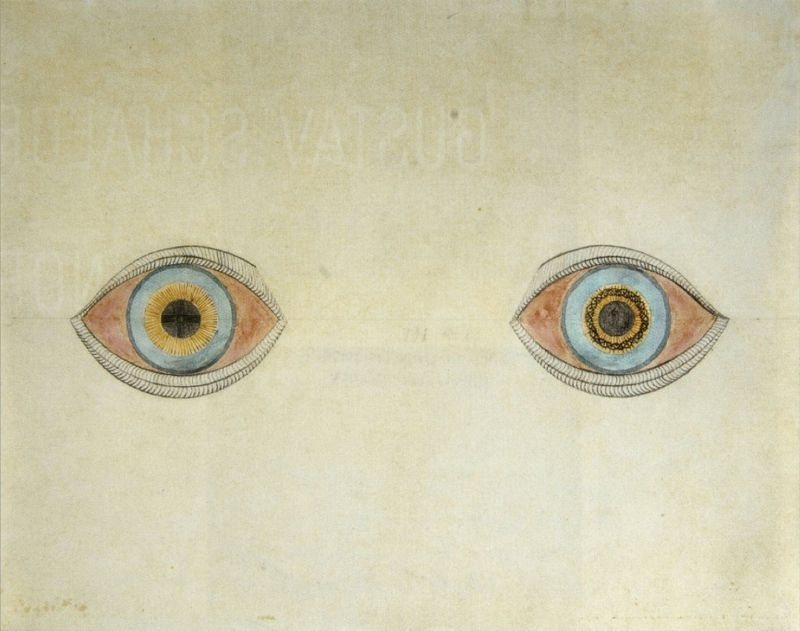
hallucination
A hallucination is a perception in the absence of an external context stimulus that has the compelling sense of reality. They are distinguishable from several related phenomena, such as dreaming (REM sleep), which does not involve wakefulness; pseudohallucination, which does not mimic real perception, and is accurately perceived as unreal; illusion, which involves distorted or misinterpreted real perception; and mental imagery, which does not mimic real perception, and is under voluntary control. Hallucinations also differ from "delusional perceptions", in which a correctly sensed and interpre

sleep paralysis
phenomenon

hallucinogen
Hallucinogens, also known as psychedelics, entheogens, or historically as psychotomimetics, are a broad and diverse class of psychoactive drugs that can induce altered states of consciousness characterized by marked changes in perception, mood, cognition, and self-experience, along with a range of other psychological alterations. Hallucinogens are often categorized as either being psychedelics, dissociatives, or deliriants, but not all hallucinogens fall into these three classes.
paresthesia
Paresthesia is a sensation of the skin that may feel like numbness (hypoesthesia), tingling, pricking, chilling, or burning. It can be temporary or chronic and has many possible underlying causes. Paresthesia is usually painless and can occur anywhere on the body, but does most commonly in the arms and legs.
psychedelic drug
serotonin receptor agonist temporarily altering states of consciousness
phantom limb
perception of painful and nonpainful phantom sensations that occur following the complete or partial loss of a limb
Alice in Wonderland syndrome
neuropsychological condition
sensory deprivation
the act of deliberately removing or reducing stimuli

phosphene
An artist's representation of how some people may see phosphenes by retinal stimulation|alt=artistic representation of phosphenes|thumb
A phosphene is the phenomenon of seeing light without light entering the eye. The word phosphene comes from the Greek words phos (light) and phainein (to show). Phosphenes that are induced by movement or sound may be associated with optic neuritis.
visual snow syndrome
visual impairment
aura
eye disturbance with/without headache
exploding head syndrome
syndrome where people perceive loud imagined noises when falling asleep or waking up
folie à deux
shared psychosis, a psychiatric syndrome in which symptoms of a delusional belief are transmitted from one individual to another
hypnagogia
Hypnagogia is the transitional state from wakefulness to sleep, also defined as the waning state of consciousness during the onset of sleep. Its corresponding state is sleep to wakefulness. Mental phenomena that may occur during this "threshold consciousness" include hallucinations, lucid dreaming, and sleep paralysis.
imaginary friend
phenomenon where a friendship or other interpersonal relationship takes place in imagination
altered state of consciousness
any condition which is significantly different from a normal waking state
Shadow people
Supposed paranormal phenomenon

tulpa
In traditions of mysticism and the paranormal inspired by Tibetan Buddhism, a tulpa is a materialized being or thought-form, typically in human shape, that is created through spiritual practice and intense concentration. The term is borrowed from the Tibetan language. Modern practitioners, who call themselves "tulpamancers", use the term to refer to a type of willed imaginary friend whom practitioners consider sentient and relatively independent. Modern practitioners predominantly consider tulpas a psychological rather than a paranormal phenomenon. The idea became an important belief in theoso
psychotic depression
major depressive episode that is accompanied by psychotic symptoms
Charles Bonnet syndrome
visual disturbances and the experience of complex visual hallucinations in a blind person
delusional parasitosis
mental disorder
hallucinogen persisting perception disorder
non-psychotic disorder after a previous use of drugs
auditory hallucination
hearing sounds without finding external stimuli, but having the characteristic of actually hearing sounds
psychedelic experience
altered state of consciousness brought upon by the consumption of psychoactive substances
photopsia
Photopsia is the presence of perceived flashes of light in the field of vision.
scintillating scotoma
visual aura
phantom vibration syndrome
Perception that one's mobile phone is vibrating or ringing when it is not
microwave auditory effect
Concept in human perception of sound

phantosmia
Phantosmia (phantom smell), also called an olfactory hallucination or a phantom odor, is smelling an odor that is not actually there. It can occur in one nostril or both. Unpleasant phantosmia, also called cacosmia, is more common and is often described as smelling something that is burned, foul, spoiled, or rotten. Experiencing occasional phantom smells is normal and usually goes away on its own in time. When hallucinations of this type do not improve on their own or when they keep coming back, it can be very upsetting and can disrupt an individual's quality of life.
pseudohallucination
A pseudohallucination (from + hallucination) is an involuntary sensory experience that is vivid enough to be perceived as a hallucination, but is recognised by the individual as subjective and lacking objective reality.
deathbed phenomena
range of phenomena reported by dying people
formication
Formication is the sensation resembling that of small insects crawling on (or under) the skin, in the absence of actual insects. It is one specific form of a set of sensations known as paresthesias, which also include the more common prickling, tingling sensation known as pins and needles. Formication is a well-documented symptom which has numerous possible causes. The word is derived from formica, the Latin word for ant.
Ganzfeld effect
psychological phenomenon
closed-eye hallucination
type of hallucination
Private revelation
in the Catholic Church, a revelation from God to a specific Christian
flying ointment
hallucinogenic salve used in witchcraft to enable flight
visual hallucination
type of hallucination; seeing things that aren’t actually there
night hag
name given to a supernatural creature, used to explain the phenomenon of sleep paralysis
anomalous experience
hallucination in the absence of obvious physical or psychological triggers (fatigue, psychoactive substances, mental illness etc.)

phantom eye syndrome
condition of pain in a lost eye
prosopometamorphopsia
Prosopometamorphopsia (PMO), also known as demon face syndrome, is a neurological disorder characterized by altered perceptions of faces. In the perception of a person with the disorder, facial features are distorted in a variety of ways including drooping, swelling, discoloration, and shifts of position.
musical hallucination
neurological disorder
musical ear syndrome
auditory hallucination associated with hearing loss