Category
page 1Hatshepsut

Hatshepsut
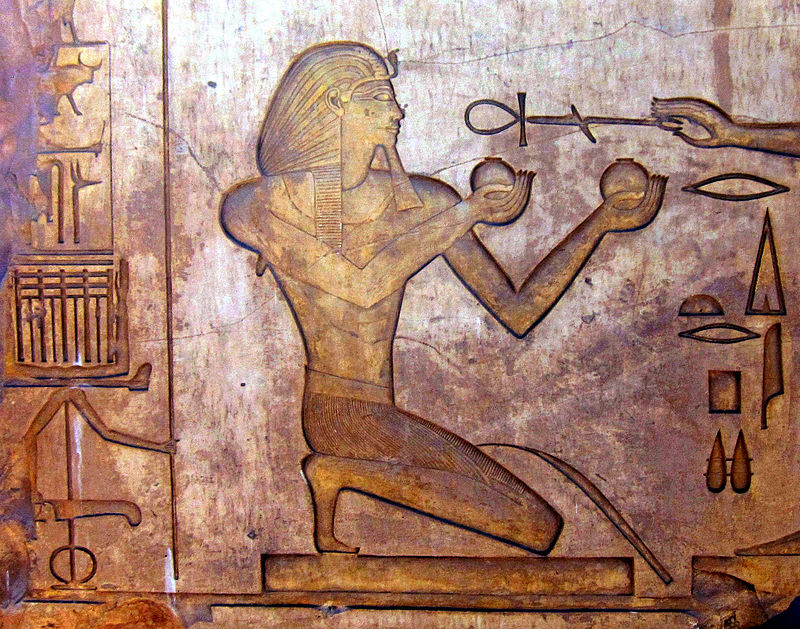
Hatshepsut ( ; BC) was the sixth pharaoh of the Eighteenth Dynasty of Egypt, ruling first as regent, then as queen regnant from until (Low Chronology) and the Great Royal Wife of Pharaoh Thutmose II. She was Egypt's second confirmed woman who ruled in her own right, the first being Sobekneferu/Neferusobek in the Twelfth Dynasty.
Thutmose II
Fourth Egyptian Pharaoh of the 18th Dynasty (c. 1493/1482 – 1479 BC)
mortuary temple of Hatshepsut
temple in Luxor, Egypt

Neferure
Neferure or Neferura (, meaning The Beauty of Re) was an Egyptian princess of the Eighteenth Dynasty of Egypt. She was the daughter of two pharaohs, Hatshepsut and Thutmose II. She served in high offices in the government and the religious administration of Ancient Egypt.

KV20
KV20 is a tomb in the Valley of the Kings in Egypt. It was probably the first royal tomb to be constructed in the valley. KV20 was the original burial place of Thutmose I (who was later re-interred in KV38) and later was adapted by his daughter Hatshepsut to accommodate her and her father. The tomb was known to Napoleon Bonaparte's expedition in 1799 and had been visited by several explorers between 1799 and 1903. A full clearance of the tomb was undertaken by Howard Carter in 1903–1904. KV20 is distinguishable from other tombs in the valley, both in its general layout and because of the atypi

KV60
Tomb KV60 is an ancient Egyptian tomb in the Valley of the Kings, Egypt. It was discovered by Howard Carter in 1903, and re-excavated by Donald P. Ryan in 1989. It is one of the more perplexing tombs of the Theban Necropolis, due to the uncertainty over the identity of one female mummy found there (KV60A). She is identified by some, such as Egyptologist Elizabeth Thomas, to be that of the Eighteenth Dynasty pharaoh Hatshepsut; this identification is advocated for by Zahi Hawass.

kermesite
Kermesite (also known as antimony oxysulfide, red antimony, or purpur blende) is a mineral with the chemical formula Sb2S2O. Its color can range from cherry red to a dark red to a black. Kermesite is the result of partial oxidation between stibnite (Sb2S3) and other antimony oxides such as valentinite (Sb2O3) or stibiconite (Sb3O6(OH)). Under certain conditions with oxygenated fluids the transformation of all sulfur to oxygen would occur but kermesite occurs when that transformation is halted.
Speos Artemidos
Archaeological site in Middle Egypt
The Pharaohs' Golden Parade
transport of royal mummies in Egypt into a new museum on April 3rd, 2021
Stele of Ankh-ef-en-Khonsu
Painted, wooden offering stele located in Cairo, Egypt
Red Chapel of Hatshepsut
religious site in Egypt, made by the pharaoh Hatshepsut
Cliff tomb of Hatshepsut
ancient Egyptian tomb in Wady Sikkat Taqet Zaid
Djehuty
ancient Egyptian treasurer