Category
page 1Hebrew Bible mountains

Mount Sinai
mountain in the Sinai Peninsula of Egypt
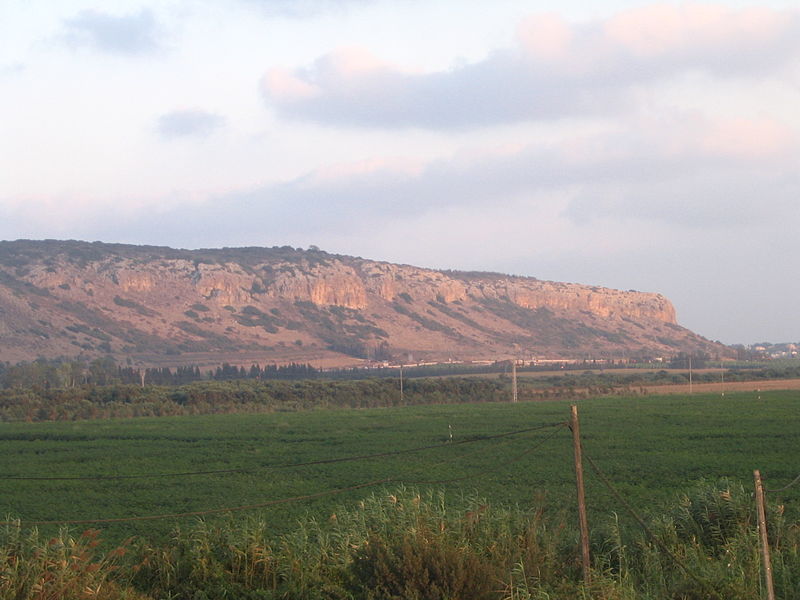
Mount Carmel
mountain in Israel

Temple Mount
religious hilltop in the Old City of Jerusalem

Mount of Olives
mountain in Jerusalem that is mentioned several times in the Bible

Mount Hermon
mountain range in Syria and Lebanon

Mount Zion
hill in Jerusalem

City of David
archaeological site in Palestine

Aṭ-Ṭūr
At-Tur (, ; The Mount) is the 52nd chapter (sūrah) of the Quran with 49 verses (ayat). The surah opens with the oath of Allah swearing by the Mount, which some believe is Mount Sinai, where the Tawrat was revealed to Musa. The chapter takes its name from "the mount" (ṭūr) mentioned in verse 1.

Mount Tabor
mountain in northern Israel traditionally believed to be the scene of the Transfiguration of Jesus

Judaean Mountains
mountain range in Israel and the West Bank

Mount Gerizim
mountain in Judea and Samaria Area, Palestine

Mount Nebo
mountain in Jordan
Mount Gilboa
mountain range in northern Israel
Biblical Mount Sinai
Mount Sinai in bible

Gibeah
thumb|Royal Palace, Tell el-Ful|Tell el-Ful in northern Jerusalem is usually identified with Gibeah of BenjaminGibeah (; Gīḇəʿā; Gīḇəʿaṯ) is the name of three places mentioned in the Hebrew Bible, in the tribes of Benjamin, Judah, and Ephraim respectively.
Mount Ebal
mountain in the immediate vicinity of the city of Nablus in the West Bank
Abarim
Abarim () is the Hebrew name used in the Bible for a mountain range "across the Jordan", understood as east of the Jordan Rift Valley, i.e. in Transjordan, to the east and south-east of the Dead Sea, extending from Mount Nebo — its highest point — in the north, perhaps to the Arabian desert in the south.

Moriah
thumb|Map of Jerusalem in 1925, showing the location of Mount Moriah according to Jewish sources
thumb|The area around Mount Gerizim is identified by the [[Samaritans as the "land of Moriah", or "Moreh".]]
Moriah (Hebrew: ) is the name given to a region in the Book of Genesis where the binding of Isaac by Abraham is said to have taken place. Jews identify the region mentioned in Genesis and the specific mountain in which the near-sacrifice is said to have occurred with "Mount Moriah", mentioned in the Book of Chronicles as the place where Solomon's Temple is said to have been built, and both t
Mount Sodom
mountain in Israel
Mount Seir
mountainous region stretching between the Dead Sea and the Gulf of Aqaba
Mount Horeb
mountain at which the book of Deuteronomy in the Hebrew Bible states that the Ten Commandments were given to Moses
Mount Hor
mountain mentioned in the Bible
Givat HaMoreh
mountain in Israel
Hazzi
mountain on the Syria–Turkey border
Tall Asur
mountain in Palestine

Batanaea
thumb|250px|right|The Herodian Tetrarchy|tetrarchy of Philip (4 BCE - 34 AD), then kingdom of [[Herod Agrippa I (37 - 44 AD) and Herod Agrippa II (53 - 100 AD): Iturea, Trachonitis, Gaulanitis, Batanea and Auranitis]]
Batanaea or Batanea was an area often mentioned between the first century BCE and the fourth century CE. It is often mixed with the biblical Bashan, the part of the Biblical Holy Land, northeast of the Jordan River, as its Latinized form.
Mount Ephraim
historical district of Israel
Israelite highland settlement
Iron Age shift to sedentary society in Samaria
Mountains of Ararat
location mentioned in Genesis as place where Noah's Ark came to rest after the great flood
Tel Hanaton
mountain in Israel
Baal-zephon
300px|thumb|Mount Ṣapōn
Mount Betarim
Peak of Mount Dov, Golan Heights
Bezetha
Bezetha (), also called by Josephus the New City, was a suburb of Jerusalem during the late Second Temple period. It was located north and north-west of the Temple, built opposite the Antonia Fortress (now in proximity to the Convent of the Sisters of Zion and Ecce Homo on Via Dolorosa Street) and extending as far as Herod's Gate westward and beyond. Originally, this part of the city was outside the area enclosed by the second wall, but during the reign of Agrippa I, had been enclosed by the newer third wall. In Josephus' time, the hill on which Bezetha was built could be distinguished by its
Mount Pisgah
mountain range east of the Jordan River, mentioned in the Bible