Category
page 1Hell (Christianity)

Lucifer
thumb|The Fallen Angel (painting)|The Fallen Angel (1847) by [[Alexandre Cabanel|250x250px]]
Lucifer is believed to be a fallen angel and the Devil in Christian theology. Lucifer is associated with the sin of pride and believed to have attempted an usurpation of God, whereafter being banished to Earth.

Abaddon
right|Apollyon (top) battling Christian in John Bunyan's ''[[The Pilgrim's Progress|250px|thumb]]
The Hebrew term Abaddon ( , meaning "destruction", "doom") and its Greek equivalent Apollyon (, Apollúōn meaning "Destroyer") appear in the Bible as both a place of destruction and an angel of the abyss. In the Hebrew Bible, abaddon'' is used with reference to a bottomless pit, often appearing alongside the place Sheol ( ), meaning the resting place of dead peoples.
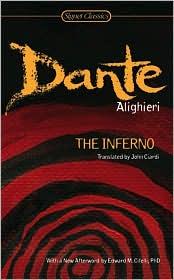
Inferno
first part of Dante Alighieri's "Divine Comedy"
.jpg)
Azazel
thumb|"And Aaron shall cast lots over the two goats, one lot for the LORD and the other lot for Azazel." Lincoln Cathedral
thumb|The Scapegoat (painting)|The Scapegoat, by [[William Holman Hunt, 1854]]
thumb|Illustration of Azazel in Dictionnaire infernal by Collin de Plancy (1863)
In the Hebrew Bible, the name Azazel (; ʿĂzāʾzēl) represents a desolate place where a scapegoat bearing the sins of the Jews was sent during Yom Kippur. During the late Second Temple period (after the closure of the Hebrew Bible canon), Azazel came to be viewed as a fallen angel responsible for introducing humans to
Harrowing of Hell
In Christianity, the period of time between Christ’s crucifixion and resurrection, during which he saved souls held captive in the underworld
Parable of Drawing in the Net
parable of Jesus: “the kingdom of heaven is like unto a net, that was cast into the sea, and gathered of every kind: Which, when it was full, they drew to shore, and sat down, and gathered the good into vessels, but cast the bad away.” (Mt 13:47–48)
hell in Christianity
Christian views on Hell
Pandæmonium
fictional location

Hellmouth
thumb|Miniature from the Hours of Catherine of Cleves, Morgan Library & Museum, MS M.945, f. 107r
A Hellmouth, or the jaws of Hell, is the entrance to Hell envisaged as the gaping mouth of a huge monster, an image that first appeared in Anglo-Saxon art, and then spread all over Europe. It remained very common in depictions of the Last Judgment and Harrowing of Hell until the end of the Middle Ages, and was still sometimes used during the Renaissance and after. It enjoyed something of a revival in polemical popular prints after the Protestant Reformation, when figures from the opposite side wou
lake of fire
place of punishment for evildoers in Christianity and ancient Egyptian religions; less literally, the infinite misery which must befall those who come short in loyalty to truth and duty
Hades in Christianity
aspect of religion
Dis
the fictional city in The Divine Comedy that contains the lower circles of hell
Malebolge
thumb|Sinners in the second bolgia, as illustrated by Stradanus.
In Dante Alighieri's Inferno, part of the Divine Comedy, Malebolge ( ; ; ), or Fraud, is the eighth circle of Hell. It is a large, funnel-shaped cavern, itself divided into ten concentric circular trenches or ditches, each called a or 'ditch'). Long causeway bridges run from the outer circumference of Malebolge to its center, pictured as spokes on a wheel. At the center of Malebolge is the ninth and final circle of hell, known as Cocytus.
fire and brimstone
idiomatic expression of signs of God's wrath in the Hebrew Bible (Old Testament) and the New Testament.