Category
page 1Hematophages

Mosquito
Mosquitoes, the Culicidae, are a family of small flies consisting of 3,600 species. The word mosquito (formed by mosca and diminutive -ito) is Spanish and Portuguese for little fly. Mosquitoes have a slender, segmented body, one pair of wings, three pairs of long hair-like legs, and specialized, highly elongated, piercing-sucking mouthparts. All mosquitoes drink nectar from flowers; females of many species have adapted to also drink blood. The group diversified during the Cretaceous period. Evolutionary biologists view mosquitoes as micropredators, small animals that parasitise larger ones by
%3B%20adult%2C%20pupa%2C%20egg%20and%20lar%20Wellcome%20V0022501EL.jpg)
flea
Flea, the common name for the order Siphonaptera, includes 2,500 species of small flightless insects that live as external parasites of mammals and birds. Fleas live by ingesting the blood of their hosts. Adult fleas grow to about long, are usually dark in color, and have bodies that are "flattened" sideways or narrow, enabling them to move through their hosts' fur or feathers. They lack wings; their hind legs are extremely well adapted for jumping. Their claws keep them from being dislodged, and their mouthparts are adapted for piercing skin and sucking blood. Some species can leap 50 times t

Ixodida
Ticks are parasitic arachnids of the order Ixodida. They are part of the mite superorder Parasitiformes. Adult ticks are approximately 3 to 5 mm in length depending on age, sex, and species, but can become larger when engorged. Ticks are external parasites, living by feeding on the blood of mammals, birds, and sometimes reptiles and amphibians. The timing of the origin of ticks is uncertain, though the oldest known tick fossils are around 100 million years old, and come from the Cretaceous period. Ticks are widely distributed around the world, especially in warm, humid climates.

vampire bat
subfamily of mammals

lamprey
upright=1.2|thumb|Sea lamprey, Petromyzon marinusthumb|Mouth of a sea lamprey, [[Petromyzon marinus]]
thumb|318x318px|Median plane|Median section of lamprey demonstrating internal anatomy
thumb|Microscopic cross section through the pharynx of a larva from an unknown lamprey species
%20on%20impala%20(Aepyceros%20melampus).jpg)
Buphagus
thumb|Buphagus erythrorhynchus on an impala
The oxpeckers are two species of bird which make up the genus Buphagus, from Ancient Greek βοῦς (boûs), meaning "ox", and φάγος (phágos), meaning "eater", and family Buphagidae. The oxpeckers were formerly usually treated as a subfamily, Buphaginae, within the starling family, Sturnidae, but molecular phylogenetic studies have consistently shown that they form a separate lineage that is basal to the sister clades containing the Sturnidae and the Mimidae (mockingbirds, thrashers, and allies). Oxpeckers are endemic to the savanna of Sub-Saharan Africa.
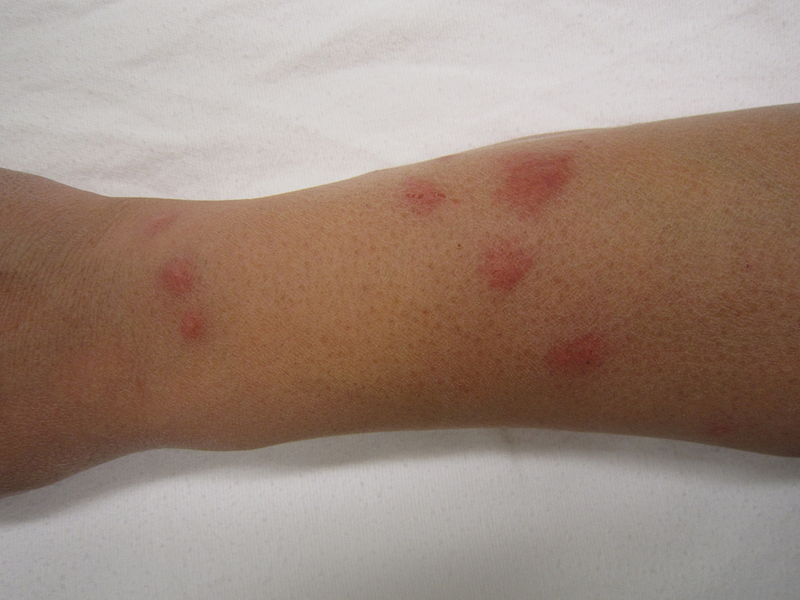
bed bug
parasitic insects

Triatominae
The members of the Triatominae , a subfamily of the Reduviidae, are also known as conenose bugs, kissing bugs (so-called from their habit of feeding from around the mouths of people), or vampire bugs. Other local names for them, used in Latin America and by Latinos generally, include barbeiros, vinchucas, pitos, chipos and chinches. Most of the 130 or more species of this subfamily feed on vertebrate blood; a very small portion of species feed on invertebrates. They are mainly found and widespread in the Americas, with a few species present in Asia and Africa. These bugs usually share shelter

Geospiza septentrionalis
species of bird

Culex quinquefasciatus
species of mosquito
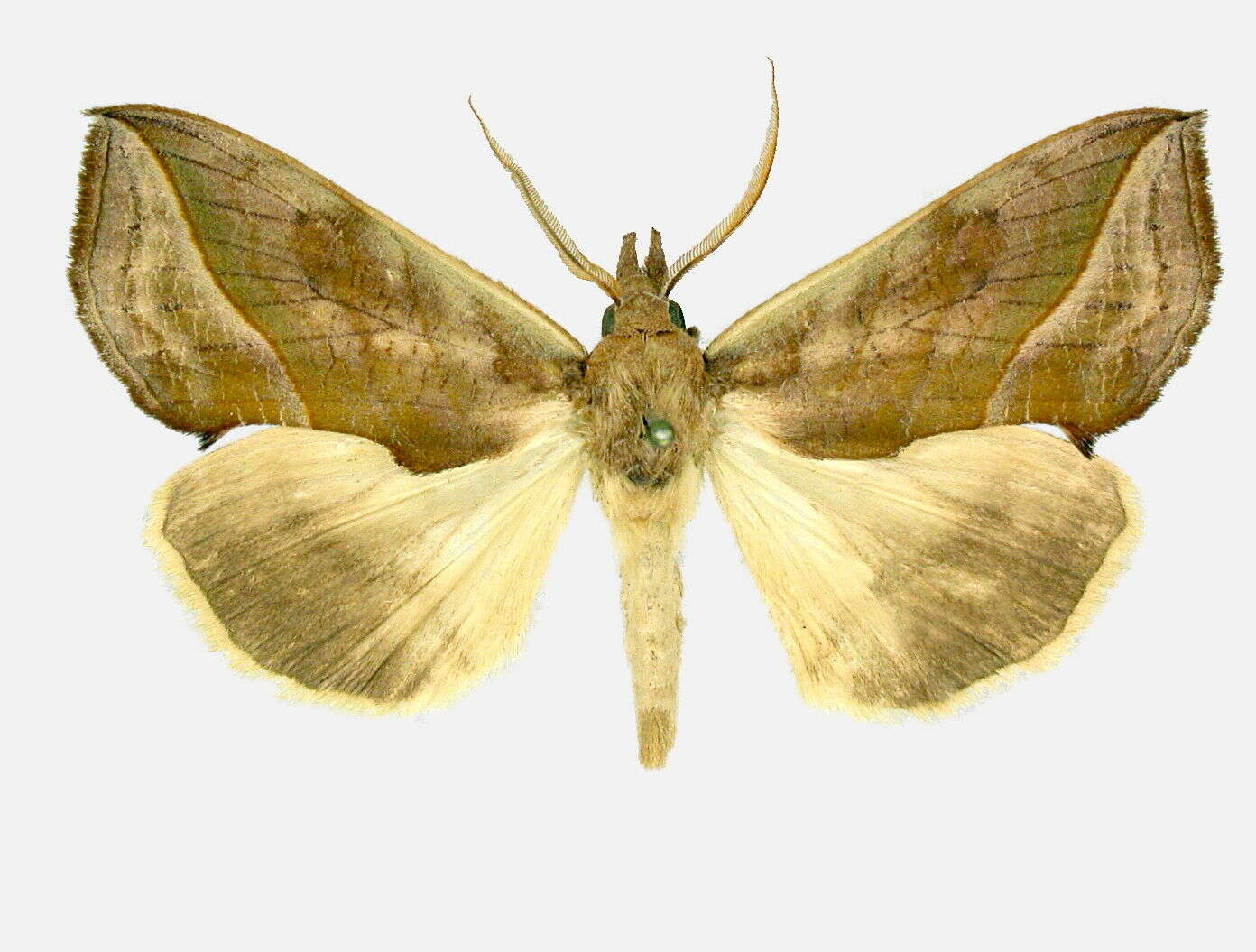
Calyptra thalictri
species of moth

Calyptra
genus of insects
Opifex fuscus
species of insect

Cancellaria cooperii
species of mollusc
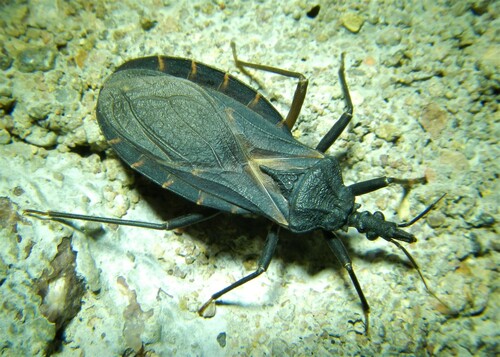
Triatoma indictiva
species of insect
Austrosimulium australense
species of insect
Leptoconops myersi
species of insect
Austrosimulium ungulatum
species of insect