Category
page 1Hindu ascetics
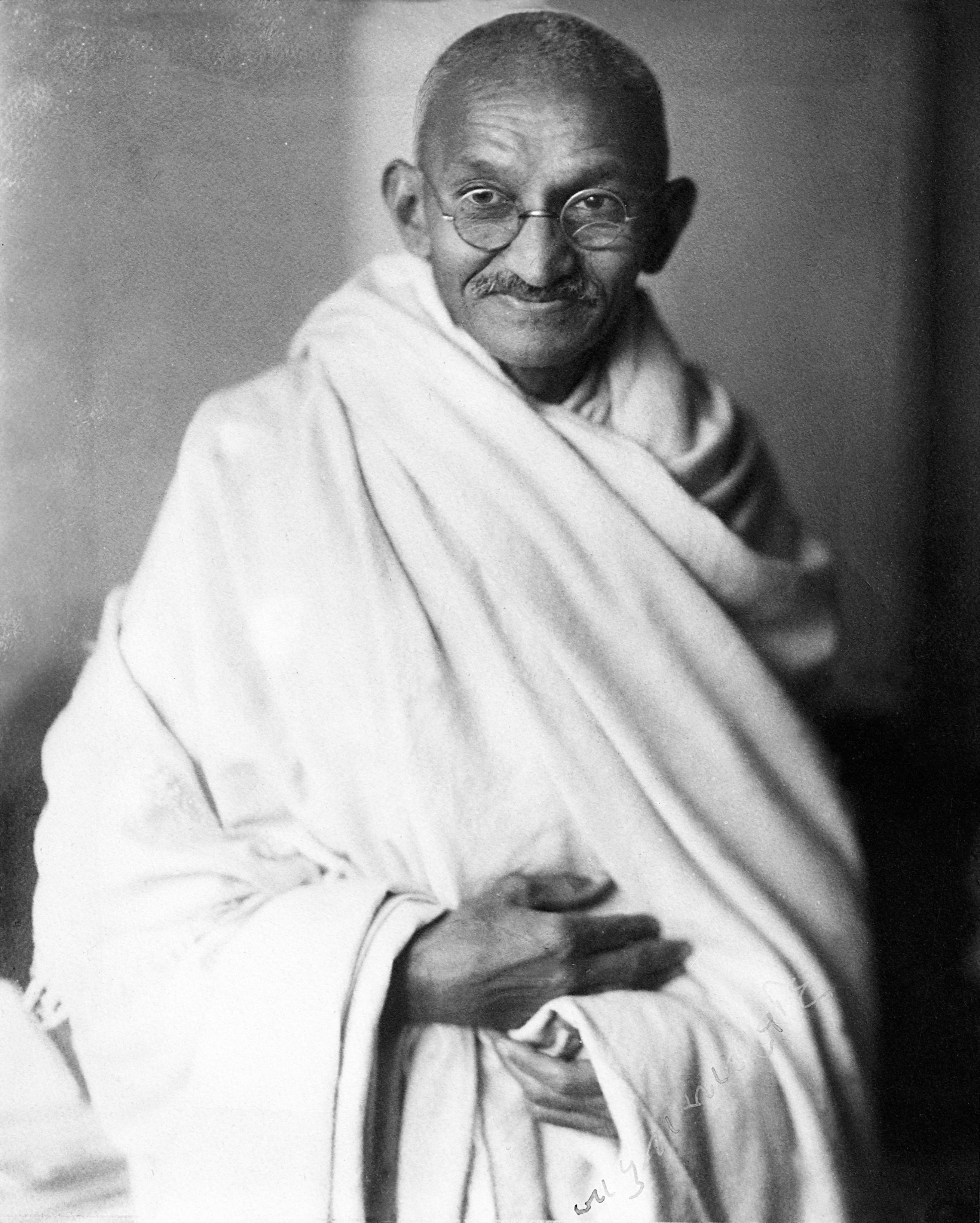
Mahatma Gandhi
Mohandas Karamchand Gandhi was an Indian lawyer, anti-colonial nationalist and political ethicist who employed nonviolent resistance to lead the successful campaign for India's independence from British rule, and to later inspire movements for civil rights and freedom across the world. The honorific Mahātmā, first applied to him in 1914 in South Africa, is now used throughout the world.

Shiva
Shiva (; , , , ), also known as Mahadeva (; , , [mɐɦaːd̪eːʋɐh], ) and Hara (, ), is one of the principal deities of Hinduism. He is the Supreme Being in Shaivism, one of the major traditions within Hinduism.

Swami Vivekananda
Indian Hindu monk and philosopher (1863–1902)

Paramahansa Yogananda
Yogi, Kriya Yoga guru and founder of Self-Realization Fellowship (1893-1952)

Chaitanya Mahaprabhu
15th century Indian Vaishnavite saint

Maharishi Mahesh Yogi
Indian spiritual master

Sai Baba of Shirdi
Indian saint
Mahavatar Babaji
Hindu Yogi
Shyama Charan Lahiri
Indian yogi and guru (1828–1895)

Gaudapada
Gauḍapāda (Sanskrit: गौडपाद; ), also referred as Gauḍapādācārya (Sanskrit: गौडपादाचार्य; "Gauḍapāda the Teacher"), was an early medieval era Hindu philosopher and scholar of the Advaita Vedanta school of Hindu philosophy. While details of his biography are uncertain, his ideas inspired others such as Adi Shankara who called him a Paramaguru (highest teacher).
%2002.jpg)
Gorakhnath
Gorakhnath (also known as Gorakshanath (Sanskrit: Gorakṣanātha) (Devanagari : गोरक्षनाथ / गोरखनाथ), c. early 11th century) was a Hindu yogi, mahasiddha and saint who was the founder of the Nath Hindu monastic movement in India. He is considered one of the two disciples of Matsyendranath. His followers are known as Jogi, Gorakhnathi, Darshani or Kanphata.
Nath
Yogi-based Shaivism tradition (Hinduism)

Matsyendranath
Matsyendranātha, also known as Matsyendra, Macchindranāth, Mīnanātha and Minapa (fl. early 10th century) was a saint and yogi in a number of Buddhist and Hindu traditions. He is considered the revivalist of hatha yoga as well as the author of some of its earliest texts. He is also seen as the founder of the natha sampradaya, having received the teachings from Shiva. He is associated with Kaula Shaivism. He is also one of the eighty-four mahasiddhas and considered the guru of Gorakshanath, another known figure in early hatha yoga. He is revered by both Hindus and Buddhists and is sometimes rega
Karni Mata
Hindu folk deitie
Lokenath Brahmachari
saint and philosopher in Bengal

Bhikshatana
Bhikshatana (; ; literally, "wandering about for alms, mendicancy") or Bhikshatana-murti () is an aspect of the Hindu god Shiva as the "Supreme mendicant" or the "Supreme Beggar". Bhikshtana is depicted as a nude four-armed man adorned with ornaments who holds a begging bowl in his hand and is followed by goblin attendants and love-sick women.
Lui pa
Luipa or Luipada (c. 10th century) was a mahasiddha siddhacharya from Eastern India. He was a Buddhist saint from the Kãivartā community. He was a writer of a number of Buddhist texts and one of the early poets of Charyapada, a late Apabhraṃśa collection of poems.
Kalamukha
The Kalamukha were a medieval Shaivite sect of the Deccan Plateau who were among the first professional monks of India. Their earliest monasteries were built in Mysore.
Yogi Naraharinath
Nepalese historian and Nath Yogi

Chakradhar Swami
Indian philosopher, Founder of Mahanubhava Sect in Vaishnavism